[.green-span]SBA Lending Software: How to Choose a Platform That Speeds Decisions Without Adding Headcount[.green-span]
SBA lending software sets how fast a 7(a) or 504 file moves from application to funded loan—and how many people it takes to get there. This guide covers what the software does, which features matter, what it costs, and how to choose a platform that scales without growing overhead.
What SBA Lending Software Does—and What It Doesn't
SBA lending software is technology that supports an SBA 7(a), 504, or Express loan across its full lifecycle. It covers eligibility screening, document collection, spreading and credit analysis, SBA forms, E-Tran submission, closing, and monthly Form 1502 reporting.
The volume at stake is large. The U.S. Small Business Administration's SBA 7(a) activity report shows 56,130 7(a) loans and $32.4 billion approved in FY2026, as of Sep 30, 2026. That compares with 78,078 loans and about $37.3 billion in FY2025, based on lender-reported data.
Fewer approvals year over year give every SBA lender a reason to look hard at the cost of each file. Lenders that process faster with the same team can compete for every deal that does come through. That starts with knowing which tools actually belong in the SBA workflow:
- Loan marketplaces: Match borrowers with lenders, but don't carry the file through SBA forms, E-Tran, and servicing.
- Core banking systems: Hold deposits and booked loans, but rarely handle SBA eligibility, credit memos, or 1502 reporting.
- Generic document AI: Extracts data from PDFs, but lacks SBA rules, DSCR logic, and audit trails tied to the loan file.
Lendflow frames SBA loan origination software as three connected layers—data, decisioning, and execution—instead of one monolith. Separate layers let a lender upgrade the slowest part of its SBA 7(a) software stack without replacing everything else.
- Data layer: Pulls in applications, documents, bank data, and credit data in one consistent format.
- Decisioning layer: Applies credit policy, eligibility rules, and DSCR logic to that data.
- Execution layer: Moves the approved file through forms, borrower communication, closing, and reporting.
Origination vs. Underwriting: The Two Layers of SBA Software
Most SBA lending stacks split into two jobs. One layer is the system of record, and the other is the analysis layer that prepares the credit decision:
- System of record: The SBA loan origination system, or LOS, stores the loan, generates forms, submits through E-Tran, and supports servicing.
- Analysis layer: SBA underwriting software handles document intake, spreading, DSCR calculations, and the credit memo.
Many lenders keep their existing LOS and add an intelligence and automation layer on top. Coexistence beats rip-and-replace—the system of record stays put while the slowest analysis steps get faster.
Signs the bottleneck sits in your analysis layer:
- Rekeyed data: Analysts copy figures from PDFs into spreadsheets before every credit memo.
- Long document loops: Files wait days for missing tax returns or bank statements.
- Inconsistent memos: Credit memos vary by analyst, which slows credit committee review.
Lendflow's model follows that split. Lendflow Connect links data sources and integration partners, Lendflow Intelligence runs decisioning, and Lendflow Automate handles document and communication work. For a deeper look at the trade-offs, see this comparison of API-first vs. traditional LOS platforms.
Key Features to Evaluate in SBA Lending Software
Three feature groups separate SBA lending software that saves time from software that only moves paperwork around. Each one maps to a point where SBA files tend to stall—compliance steps, credit analysis, and decisioning.
Evaluate each group on your own recent files—demo data hides the edge cases that slow real SBA deals. The questions below test whether a platform handles SBA-specific work or only general commercial lending.
SBA Compliance Workflows: E-Tran, Forms, and 1502 Reporting
Skip rekeying—push application data straight into SBA E-Tran from the same record your team already built. The platform should also populate SBA Form 159 from that record.
Monthly reporting needs the same treatment. The U.S. Small Business Administration's SBA Form 1502 instructions say the form is completed monthly by lenders participating in SBA's 7(a) loan program. Completed forms go to SBA's fiscal and transfer agent.
Ask vendors to show these steps live, including how they track 1502 reporting cycles. Three questions sharpen the demo:
- Data reuse: Does E-Tran submission draw from the same record as the credit memo?
- Form accuracy: Do forms update automatically when loan terms change after approval?
- Reporting status: Can servicing staff see which loans are due in the next 1502 cycle?
Credit Analysis: Spreading, Global Cash Flow, and DSCR
Credit analysis is where SBA files spend the most analyst time. Look for multi-year tax return spreading, global cash flow across affiliated businesses and guarantors, and DSCR calculated against the right SBA floor.
The U.S. Small Business Administration's SBA SOP 50 10 8.1, effective Oct 1, 2026, sets DSC at 1.15 or higher for Standard 7(a) loans. It also requires 1:1 on a global basis.
7(a) Small Loans carry a 1.10:1 floor, excluding changes of ownership, which use separate minimums. Your software should apply the correct threshold by loan type—a single hard-coded ratio will misclassify files.
Real-Time Data, Decisioning, and Audit Trails
Decisions built on stale data slow everything downstream. Strong platforms pull live credit and bank data, run configurable decision waterfalls, and explain every score they produce.
Lendflow's Data Orchestration lets lenders connect integration partners in minutes and build decline waterfalls so no deal leaves money on the table. The Lendflow Intelligence decisioning layer adds credit decisioning with explainable Trust Scores.
Compliance teams need the same clarity. Confirm role-based access controls and a full audit trail that logs who changed what, when, and why. Explainability matters here too—examiners and credit committees should see the data behind every score and decline.
How AI Removes the Biggest SBA Workflow Bottlenecks
Pre-qualified offers hosted on Lendflow's embedded lending platform drive an average of 42% faster speed to funding. Lendflow's embedded finance customers operate with 80% smaller teams while converting similar funding volumes—learn more about Lendflow's customers. Both are platform-wide results, not SBA-specific figures.
The same principle applies to SBA files—remove manual steps while credit decisions stay with people. Five bottlenecks slow most SBA files:
- Document intake: Staff chase, sort, and rename tax returns, bank statements, and forms by hand.
- Spreading: Analysts retype figures from PDFs into spreadsheets before analysis can start.
- Repayment analysis: DSCR and global cash flow wait on complete, clean financial data.
- Borrower follow-up: Missing documents trigger email and phone loops that stall the file.
- Approval handoffs: Files sit in queues between processors, underwriters, and credit committees.
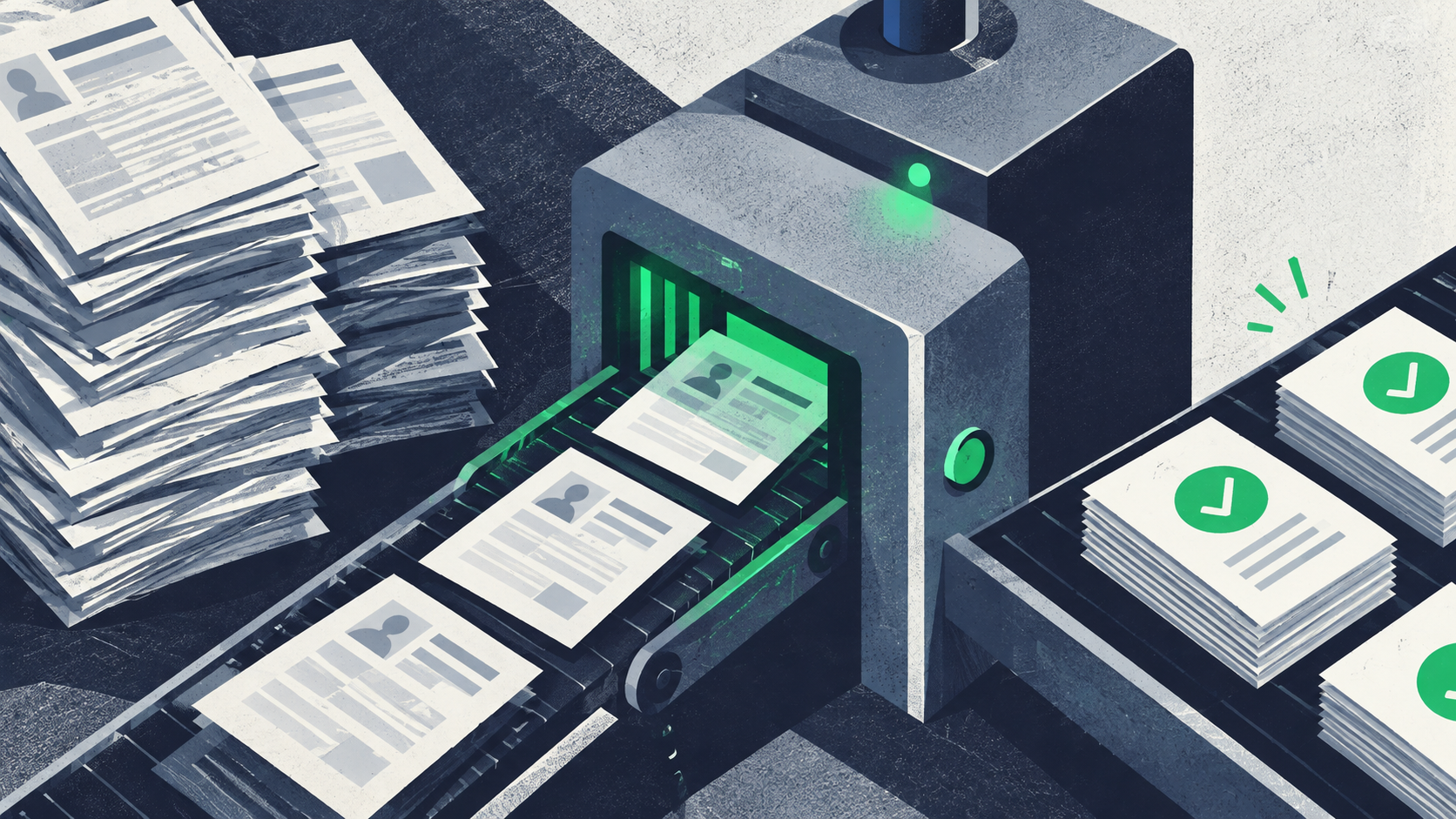
AI document analysis extracts structured data from PDFs, tax returns, and bank statements. Standardized data cuts manual-entry errors and gives analysts a consistent starting point—see how data aggregation replaces manual review.
Lendflow Automate puts agents to work on these steps. Doc Analyzer handles document analysis, Trust Score supports risk review, and Voice AI manages borrower communication.
The last row matters most. AI prepares the data, but the lender keeps credit judgment—and full responsibility for the decision. The automated credit decisioning guide covers where automation fits and where human review stays.
Start where volume is highest. Document intake and spreading touch every SBA file, so automating them first clears the most analyst time.
How the March 2026 SBA Rule Change Raises the Stakes
As of Mar 1, 2026, SBA no longer provides an SBSS score for 7(a) Small Loans of $350,000 or less. The U.S. Small Business Administration's SBA's SBSS sunset notice states SBA will no longer screen 7(a) Small loan applications using the SBSS Score.
SBA Express loans are not affected. Lenders may still use their own regulator-permitted scoring models. The U.S. Small Business Administration sets the new bar in SBA's supplemental small-loan guidance—documented credit analysis on every 7(a) Small Loan file and DSCR of at least 1.10:1.
That shifts work onto the lender. Every small file now needs documented analysis of credit history and repayment ability, so analysis speed drives cost—automate intake and spreading so analysts focus on judgment.
Small Loans are where manual analysis costs the most relative to loan size. Software that pulls bank data, spreads returns, and drafts a standard memo keeps those files profitable to originate.
SBA Lending Software Pricing and the LSP Question
Most SBA lending software vendors quote pricing instead of publishing it. Ask whether pricing is per loan, per user, or per platform, and what implementation and integration work costs.
Request a quote based on your actual file volume and program mix. Total cost goes beyond the license. Factor in the analyst time each file takes today, the integration work your team must do, and how long a new workflow takes to launch.
Under SOP 50 10 8.1, lenders may charge fees for technology services as part of a reasonable, itemized packaging fee on 7(a) loans. The same SOP adds a key condition—entities providing technology services that include underwriting are considered lender service providers, or LSPs.
LSPs must serve the lender under an SBA-reviewed LSP Agreement. The lender still bears full responsibility for its SBA loan operation, and LSP fees cannot be passed on to the applicant.
Only vendors providing underwriting services fall under LSP rules. That distinction shapes the buy-versus-outsource choice:
- Buy software: Your team keeps control of underwriting and uses technology to work faster.
- Outsource to an LSP: You add capacity, but need an SBA-reviewed agreement and close oversight.
- Combine both: Keep core underwriting in-house and use automation to clear document and data work.
Have compliance review any vendor agreement before signing. Confirm in writing whether the vendor's services include underwriting.
Why Community Banks and Small Lenders Need a Lighter Stack
The Conference of State Bank Supervisors' CSBS community bank survey shows responding banks that offer and plan to keep offering SBA loans declined to 60% from 66%. The share planning to exit or substantially limit SBA lending rose to 5% from 2%.
AI adoption is still early in the same CSBS survey. About 53% of responding banks are piloting AI or using it in limited functions, and only 9% have deployed it across multiple functions.
CSBS respondents also rated workflow processing the lowest of their technology areas for satisfaction. The survey is a convenience sample of 330 self-selected community banks under $10 billion in assets.
Lean teams need SBA software for community banks and credit unions that doesn't require a long build. A layered, API-based approach fits—add one capability at a time instead of replacing the core. Small teams can automate document intake first, then add decisioning once data flows cleanly.
Lendflow helps teams launch in days with widgets, landing pages, and APIs. Lenders can also grow deal flow through Lendflow's network of 75+ specialty and bank lenders—see how multi-lender marketplace platforms route SBA loans and other products to the right capital.
Lendflow supports SBA Loans alongside Term Loans, Lines of Credit, Equipment Financing, and other financing types. A borrower who falls outside SBA criteria can move down a decline waterfall to another product—so the relationship stays with your institution.
SBA Lending Software Buying Checklist
Knowing how to choose SBA lending software starts with your own files—a vendor's feature list comes second. Use this checklist to structure evaluation and implementation:
- Map file volume: Count SBA files by program and loan size to size the platform and pricing.
- Find the slowest step: Time each stage, from intake to closing, and target the biggest delay first.
- Test on real files: Run recent closed files through a demo and compare results with your analysts' work.
- Confirm E-Tran and 1502 coverage: Watch the vendor submit through E-Tran and produce 1502 reporting live.
- Check LSP status: Ask whether services include underwriting and whether an SBA-reviewed LSP Agreement applies.
- Verify integrations and APIs: Confirm connections to your LOS, core, credit bureaus, and bank data sources.
- Plan data migration: Ask how open loans, documents, and history move into the new platform.
- Phase the rollout: Start with one program or step, measure results, then expand.
Three pitfalls derail most implementations:
- Legacy integration: Older systems may lack APIs, so confirm the connection method before signing.
- Inconsistent data formats: Mismatched fields across systems break automation, so standardize data early.
- Compliance logging: Gaps in audit trails create exam risk, so test logging before go-live.
For more on avoiding these issues, review these multi-lender orchestration best practices.
Frequently Asked Questions
What software do SBA lenders use?
Most SBA lenders use an origination system or LOS for forms and E-Tran submission. Many add analysis, decisioning, and automation layers to speed up document intake, spreading, and credit review.
How much does SBA lending software cost?
Most vendors quote pricing based on volume, users, and integrations instead of publishing it. SOP 50 10 8.1 permits lenders to include technology costs in a reasonable, itemized packaging fee on 7(a) loans.
How is SBA underwriting software different from an SBA loan origination system?
SBA underwriting software is the analysis layer that handles document intake, spreading, DSCR, and the credit memo. An SBA loan origination system is the system of record for forms, E-Tran submission, and servicing.
Does SBA lending software handle E-Tran and 1502 reporting?
Origination and servicing tools typically handle E-Tran submission and monthly 1502 reporting for 7(a) loans. Confirm coverage with a live demo on your own files before you buy.
Can AI underwrite an SBA loan on its own?
No—AI prepares and analyzes data, but the lender owns the credit decision and full responsibility for it. Under SBA's SOP, technology vendors whose services include underwriting are LSPs and need an SBA-reviewed LSP Agreement.
Is an LSP better than buying SBA software?
It depends on whether you value control or added capacity more. Either way, the lender keeps full responsibility for its SBA loan operation.
Are SBA loans hard to get right now?
Among applicants in the Federal Reserve Banks' Fed small business credit survey, 32% of SBA loan or line applicants were fully approved—the lowest full-approval rate shown. The figures are self-reported by applicants in a convenience sample.
Ready to speed SBA decisions without adding headcount? Book a demo or talk to our team to see how Lendflow can help you scale smarter.