[.green-span]How to get access to FICO SBSS scores in 2026[.green-span]
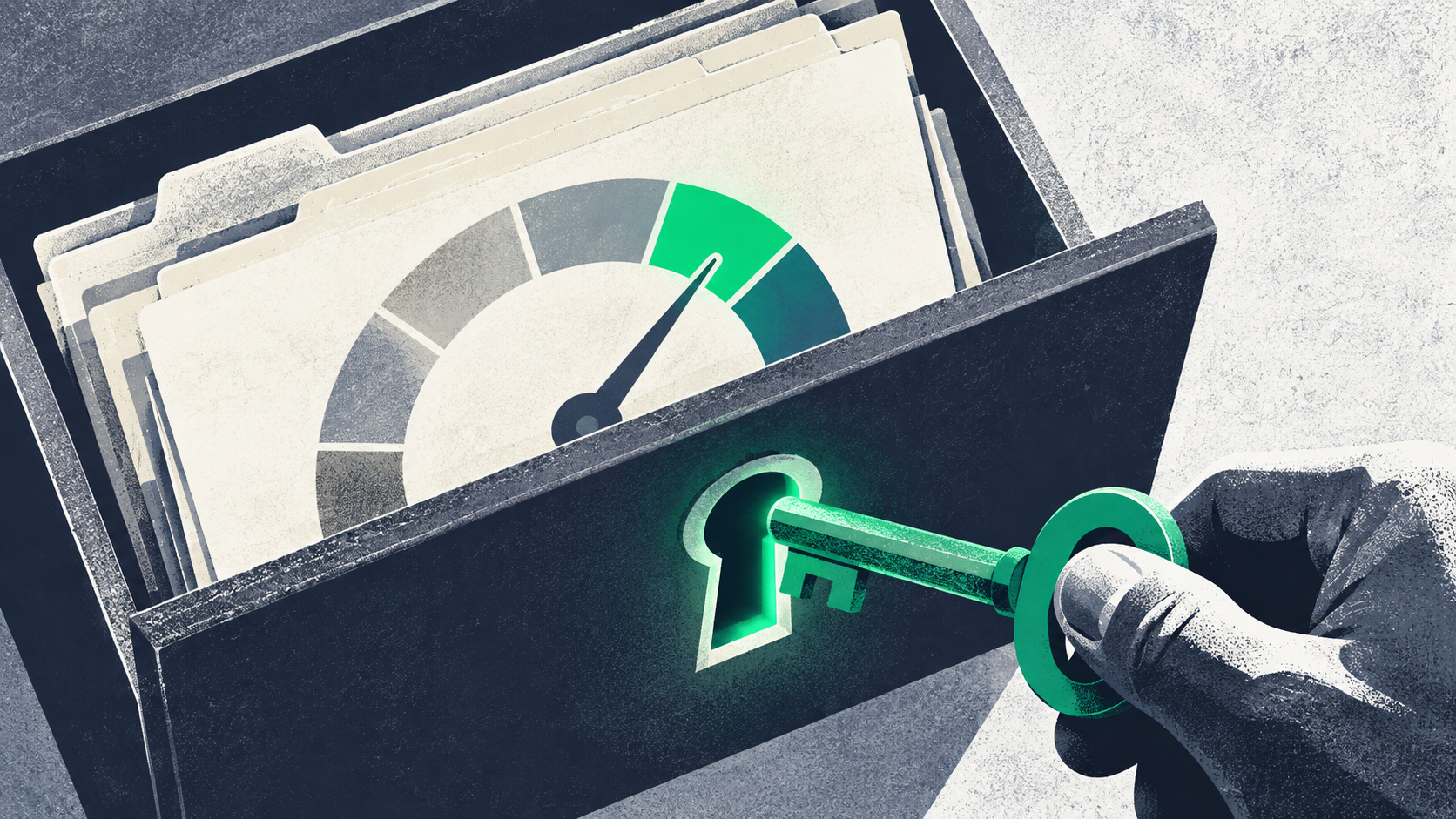
Lenders get access to FICO SBSS scores through three main paths. They contract with FICO for its LiquidCredit service or pull the score inside a lending platform that has integrated it. They can also buy it through an authorized reseller or credit-data provider. Abrigo, for example, says SBSS is available via FICO LiquidCredit and integrates with Abrigo Sageworks.
Business owners can't pull an SBSS score from FICO directly. FICO offered SBSS to "small business credit grantors," according to its 2012 launch release. Some third-party services offer a workaround. Nav says it "provides access to one version of your FICO SBSS scores."
The 2026 context matters just as much. As of October 2026, SBA no longer issues or screens with SBSS for 7(a) Small Loans. This guide covers what SBSS measures, each access path, what changed at SBA, and how to decide whether SBSS access fits your credit policy.
What FICO SBSS scores measure
FICO's Small Business Scoring Service (SBSS) is an application risk score for small business credit. Abrigo's partner page describes SBSS as scores "that blend business and personal credit data."
NerdWallet and Nav both describe a range of 0 to 300. Nav adds that a higher score indicates lower risk to lenders. Confirm the current range, inputs, and score version with FICO or your provider during onboarding.
SBSS 7.0 and LiquidCredit
FICO introduced SBSS 7.0 in December 2012 and offered it through LiquidCredit. The FICO release called LiquidCredit "a cloud-based, single or multi-lender, automated origination platform."
Per that release, SBSS 7.0 supported decisioning on term loans and lines of credit up to $1 million. It also supported leasing transactions up to $250,000.
Three paths to FICO SBSS access
The paths differ in who holds the contract, where the score shows up, and how much integration work your team takes on.
Contract directly with FICO for LiquidCredit
FICO delivers SBSS through its LiquidCredit service. Going direct means a contract and onboarding process with FICO itself.
We couldn't find publicly posted SBSS pricing; contact FICO or an authorized provider for a quote. Expect a sales conversation and negotiated terms. This path tends to suit lenders that want SBSS inside their own origination stack.
Pull SBSS inside a lending or portfolio platform
Some lending platforms have already integrated SBSS. Abrigo's partner page states that SBSS "integrates easily with Abrigo Sageworks."
If your institution already runs on a platform with an SBSS integration, start with your vendor. Ask which agreements apply, how the score appears in the workflow, and how results are stored.
Buy through a reseller or credit-data provider
Some providers package SBSS with business and consumer credit reports under their own arrangement with FICO. For example, a 2024 page from Business Credit Reports, Inc. says it has partnered with FICO to make SBSS accessible.
That provider describes the score's inputs as "a consumer credit report, business credit report, financial information and application information." Bureau data feeds the model, but confirm directly that any provider is authorized to deliver the score itself.
Can business owners get their own SBSS score?
Not from FICO directly. FICO positioned SBSS for credit grantors in its 2012 release, and Nav says FICO does not sell an SBSS product directly to business owners.
Nav says it "provides access to one version of your FICO SBSS scores" through its credit monitoring platform. A lender may see a different version, so treat any owner-facing score as a guide.
Owners can also improve the inputs lenders see. That means personal credit, business credit files, clean financials, and a complete application. If a lender declines an application, ask which factors drove the decision.
What changed for SBA lenders in 2026
Some guides published in 2026 still list an SBSS minimum as a current SBA requirement. For 7(a) Small Loans, that requirement has been discontinued.
SBA sunset SBSS for 7(a) Small Loans
SBA Procedural Notice 5000-875701 was published January 16, 2026, and took effect March 1, 2026. It states that SBA "will no longer screen 7(a) Small loan applications using the SBSS Score."
The change covers 7(a) Small Loans of $350,000 or less. The notice states that SBA Express loans are not affected.
Applications approved in E-Tran before 11:59 PM Eastern on February 28, 2026, could continue to use the SBSS score.
What lenders can use instead
The original notice 5000-875701 let lenders use a business credit scoring model permitted by their primary Federal regulator. That model could not rely solely on consumer credit scores. The notice also called for documenting results in the loan file and in E-Tran.
SBA then issued Procedural Notice 5000-876777 on February 20, 2026. Per NAGGL's summary, it replaced the underwriting text in the original notice.
NAGGL says lenders may use the same model they use for similar conventional loans. The model must be permitted by their primary Federal regulator and not rely solely on consumer credit scores. NAGGL also notes a minimum debt service coverage ratio of 1.10:1 for Small Loans.
SOP 50 10 8.1 makes the sunset standard policy
Coleman Report reports that SOP 50 10 8.1 applies to applications issued an SBA loan number on or after October 1, 2026. It incorporates recent notices, including the SBSS sunset for 7(a) Small Loans.
How SBA used SBSS before March 2026
Until March 1, 2026, SBA prescreened 7(a) Small Loans with SBSS. According to Nav, SBA raised the minimum from 140 to 155 in October 2020.
SBA Information Notice 5000-866746 announced the next increase, from 155 to 165. It took effect with SOP 50 10 8 on June 1, 2025.
Those minimums are history. If your credit policy or decision rules still reference them for 7(a) Small Loans, update them.
A framework for deciding whether to get SBSS access
SBSS is now a lender choice for 7(a) Small Loans. Use these six steps to decide whether you need it and how to roll it out.
1. Define the use case
Start with the decision the score will drive. Common candidates include prescreening, routing applications to manual review, and setting approval tiers.
List the products and loan sizes in scope. FICO's 2012 release validated SBSS 7.0 for term loans and lines of credit up to $1 million, so confirm current validation for your portfolio.
If SBA 7(a) Small Loans were your only reason for SBSS, revisit the case. SBA no longer requires it there.
2. Choose the access path
Match the path to your stack and team:
- Contract with FICO directly if you want SBSS embedded in your own origination system.
- Enable an existing integration if your lending platform, such as Abrigo Sageworks, already offers SBSS.
- Use an authorized provider if you want SBSS bundled with credit reports under one agreement.
3. Contract and onboard with FICO or your provider
We couldn't find publicly posted SBSS pricing; contact FICO or an authorized provider for a quote. Ask about minimum commitments, score version, data inputs, and test environments.
Confirm who holds each agreement. Platform and reseller paths can add a contract layer between you and FICO.
4. Run a compliance review with counsel
SBSS blends business data with personal credit data on owners. Work with counsel on permissible purpose for pulling owner consumer data, consent language, and adverse action notices.
Review fair lending testing and data security requirements at the same time. For SBA loans, confirm with counsel that your model meets the regulator-permitted standard in the March 2026 notice.
5. Integrate SBSS into decisioning
Map the score to specific rules in your decision engine. Set cutoffs from your own portfolio data, not from the retired SBA minimums of 155 or 165.
Pair SBSS with business credit, bank data, and KYB checks. Log the score and decision so files are ready for review. For SBA loans, check the current SOP for documentation requirements.
6. Monitor and recalibrate
Track approval rates, overrides, and early delinquency by score band. Recheck cutoffs each quarter and after any SBA SOP or notice update.
Best practices for using FICO SBSS scores
These practices keep SBSS useful without letting stale rules or a single score drive your book.
- Date-stamp every SBA reference in your credit policy, such as "as of October 2026."
- Remove retired SBA minimums of 155 and 165 from 7(a) Small Loan rules.
- Treat SBA Express and 7(a) Small Loans as separate programs in your policy.
- Use SBSS as one input alongside business credit, bank data, and KYB checks.
- Ask vendors to show where the score appears, how it's stored, and who owns each contract.
- Get pricing from FICO or an authorized provider, not from old marketing pages.
- Confirm authorization before assuming any bureau or data vendor can deliver the score.
The most common pitfall is copying an old SBA cutoff into a new workflow. The second is treating one score as the decision instead of one signal in it.
Make SBSS one input in a multi-source decision
Lendflow's Intelligence page lists 85% faster time-to-decision.
Whether or not you license SBSS, SMB credit decisions work best with several data sources. Lendflow Intelligence offers ready-made connectors to popular CRM and banking systems. Lendflow says most clients launch Intelligence in 2 to 4 weeks.
- Lendflow Intelligence combines traditional and alternative data and applies configurable rules to produce decisions with justification.
- Lendflow Automate runs AI agents for data extraction, industry classification, and a Trust Score that merges bureau, banking, alternative and industry-risk data.
- Lendflow Connect links brands to 75+ lenders, and Lendflow lists SBA loans among its supported products.
Key takeaways on FICO SBSS access
Lenders get FICO SBSS scores through FICO's LiquidCredit service, an integrated lending platform such as Abrigo Sageworks, or an authorized provider. Business owners can't pull it from FICO directly, though Nav says it provides access to one version of the score.
As of October 2026, SBA no longer issues or screens with SBSS for 7(a) Small Loans, and SOP 50 10 8.1 incorporates that change. Old SBA minimums of 155 and 165 are history.
The key takeaway: SBSS is now a lender choice. If you use it, define the use case, review compliance with counsel, and make it one input in a multi-source decision.
FICO SBSS score FAQs
Can business owners see their SBSS score?
Not from FICO directly, since FICO offers SBSS to credit grantors. Nav says it "provides access to one version of your FICO SBSS scores." A lender may see a different version.
Does SBA still require an SBSS score?
Not for 7(a) Small Loans. Under Procedural Notice 5000-875701, SBA stopped issuing and screening with SBSS for those loans on March 1, 2026. The notice states that SBA Express loans are not affected.
What is the FICO SBSS score range?
NerdWallet and Nav describe a range of 0 to 300, and Nav says higher scores indicate lower risk. Confirm the current range and version with FICO or your provider.
How much does FICO SBSS cost?
We couldn't find publicly posted SBSS pricing; contact FICO or an authorized provider for a quote. Ask about minimum commitments and setup fees.
Is SBSS the only small business scoring option?
No. Per NAGGL's summary of SBA's February 2026 notice, 7(a) Small Loan lenders may use a model their primary Federal regulator permits. The model can't rely solely on consumer credit scores, and lenders can weigh business credit, bank data, and other risk signals.
Explore how Lendflow helps lenders connect credit data and decisioning in one workflow. Learn More