[.green-span]SBA Loan Platforms for Brokers: How to Choose One That Closes More Deals[.green-span]
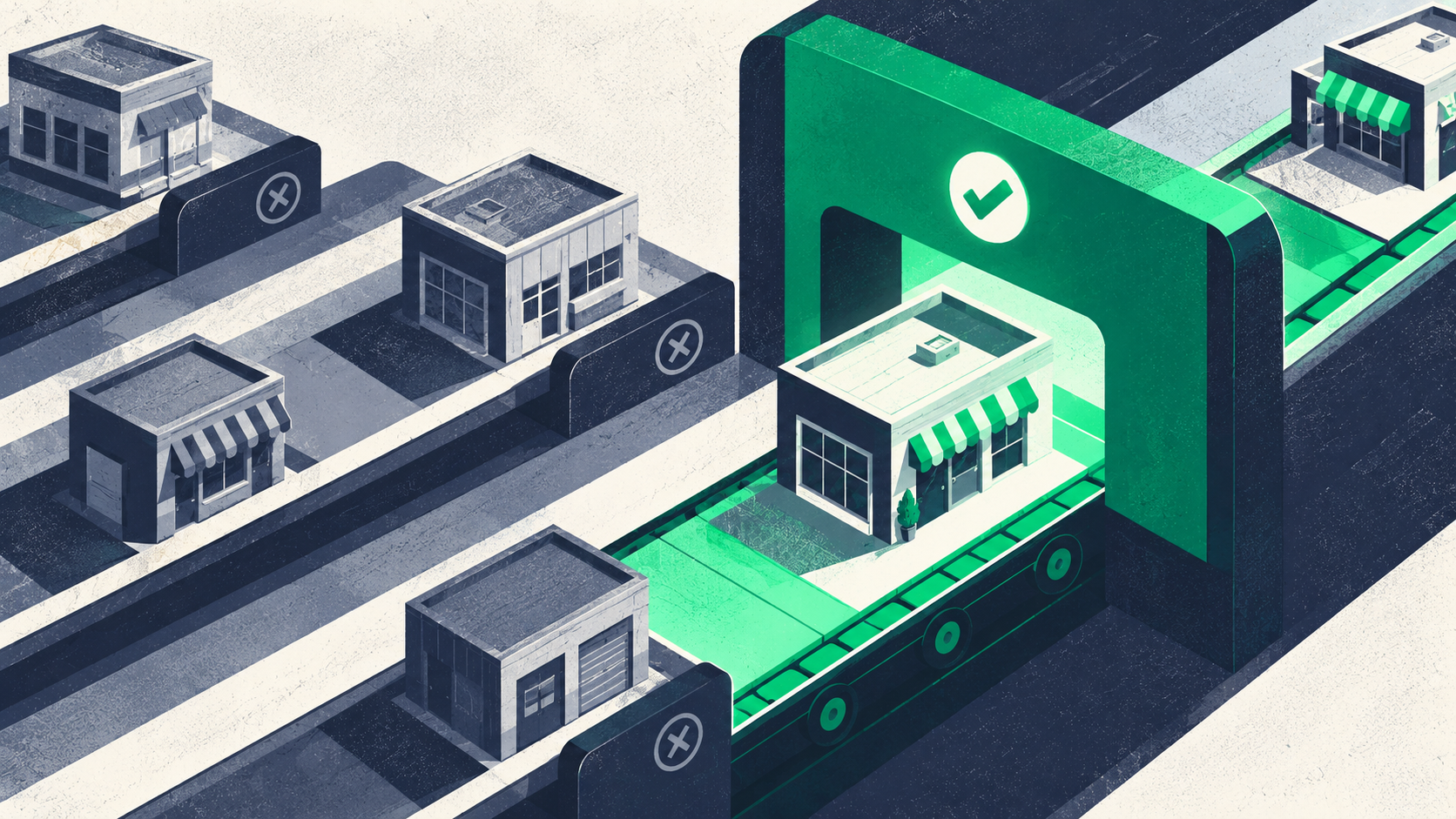
SBA loan platforms for brokers are tools that let a broker collect a client's application and documents once, then match the deal to suitable SBA lenders. The broker submits to multiple lenders and tracks every offer in one place.
The U.S. Small Business Administration reported record FY2025 lending volume of 77,600 7(a) loans for $37 billion. Yet each lender still runs its own intake, and every extra form slows closing.
Lendflow for brokers is built as multi-lender orchestration infrastructure—one intake, many lenders, one view of every offer. The proof points:
- 75+ vetted lenders: Brokers reach Lendflow's curated network through a single submission.
- $1.5B+ in offers: Offers made on the Lendflow platform in the last 12 months, as of March 2025.
- 42% faster speed to funding: The average for pre-qualified offers hosted on Lendflow.
Key features to look for in an SBA loan platform
The best SBA loan platforms for brokers save hours per deal instead of adding another login. Use this list to screen SBA loan software for brokers, and see Lendflow's multi-lender orchestration guide for the mechanics.
- Lender network breadth: More vetted lenders mean more chances to fit a deal by size, industry, and credit profile.
- Multi-lender submission: Lendflow's Multi-Lender Access in One Submission returns multiple competitive offers from one application.
- AI-powered matching and waterfall logic: Built-In Lender Waterfall Logic sets your lender sequence and routes deals by credit profile and loan type.
- Document collection and analysis: Structured uploads keep files with the deal, and Doc Analyzer applies AI document analysis.
- Real-time deal tracking: A unified dashboard shows every deal's status across lenders, with automated notifications.
- Automated borrower communication: Voice AI and chat handle borrower questions, send follow-ups at optimal times, and collect documents automatically.
- Commission tracking: See what you earned on every closed deal, along with payment timelines.
- White-label borrower experience: Clients apply through your branded journey while the platform runs intake and lender connectivity.
Types of SBA loan platforms and tools available to brokers
Brokers place SBA deals three ways: SBA's referral tool, manual lender outreach, or a multi-lender broker platform. Each trades off speed, lender breadth, and control—Lendflow's lending broker software comparison covers the software side.
SBA Lender Match vs. multi-lender broker platforms
The U.S. Small Business Administration describes SBA's Lender Match tool as a way to connect borrowers with lenders who express interest. SBA is direct about its scope: "Lender Match isn't a loan application." According to SBA, "More than 800 lenders participate in Lender Match."
A broker platform works the other way—the broker submits the deal to multiple lenders and receives offers in one portal. The two can work together: Lender Match helps borrowers find interested lenders, while a platform helps brokers package and place deals.
Manual lender outreach
Manual outreach means re-entering the same data into each lender's intake process. Hours go to lenders who never issue a term sheet. Stop shopping deals one by one—submit once and route the file to best-fit lenders.
How SBA lender matching works on a broker platform
Matching turns one structured application into a prioritized set of lender submissions. A typical workflow runs in five steps:
- Structured intake: The client answers guided questions about the business, loan type, and amount.
- Data and document capture: Financials, tax returns, and business details attach to the deal file instead of scattered email threads.
- Rules-based and AI matching: The platform scores lender fit by credit profile, loan type, deal size, and industry.
- Submission: The deal goes to a configured lender sequence or to multiple lenders at once.
- Offers in one dashboard: Responses return to a single view for side-by-side comparison.
Lender preference data—deal size, industry, geography—decides which lenders see a deal first. Fit matters because different lenders may evaluate the same transaction differently, as Lendflow explains in building the right lender network.
Lendflow's Data Orchestration supports decline waterfalls that ensure no deal is leaving money on the table. If one lender passes, the file moves to the next best fit.
How brokers qualify clients for SBA loans
Pre-screening saves lender time and protects your credibility. Start with program limits, then build the file around what lenders review.
The U.S. Small Business Administration's 7(a) terms and eligibility confirm: "Most 7(a) loans have a maximum loan amount of $5 million." Other limits from the same source:
- SBA Express: Loans made under the SBA Express delivery method max out at $500,000.
- Guaranty levels: SBA guarantees up to 85% of loans of $150,000 or less and up to 75% of loans above $150,000.
- 7(a) Small Loans: This category is capped at $350,000.
The U.S. Small Business Administration announced a combined $10 million limit for qualified borrowers who secure a 7(a) loan first. Since July 4, 2026, borrowers can pair up to $5 million in 7(a) with up to $5 million in 504, "for a combined total of $10 million." The individual 7(a) maximum remains $5 million.
Acquisitions need more detail than a working capital request. Lenders review the purchase price, buyer equity, seller financing, the target company's financial performance, the buyer's background, and supporting documents.
Lendflow's business acquisition SBA workflow lets buyers start while exploring, under LOI, or under contract. Guided, white-label intake captures the target business, buyer information, and documents, then routes the file to lenders.
Why SBA approvals are harder to win right now
Federal Reserve Banks' Small Business Credit Survey reports 42% of applicants received the full amount sought, 36% received some or most, and 22% received none. These figures cover employer firms with 1–499 employees applying for any financing. They are not SBA-specific, and the survey uses a convenience sample.
Among loan, line of credit, and cash advance applicants, those at small banks were more likely to be fully approved (57%) than those elsewhere. Lender choice shapes outcomes.
NAGGL reports that SBA's 7(a) Small Loan underwriting changes apply "to all 7(a) Small Loans receiving SBA loan numbers on or after March 1, 2026." Per NAGGL, the changes discontinue the FICO SBSS score for these loans and require a debt service coverage ratio of at least 1.10:1. SBA Express is unaffected.
The fix—match to the right lender first, then keep multiple offers in play if one falls through. Lendflow's multi-lender network delivers multiple quotes for each submission, boosting client approval rates. Learn how to optimize deal flow to funding.
Becoming an SBA loan broker and finding clients
Two levers drive broker growth: compliance and pipeline. SBA loan platforms for brokers lower the barrier to entry by handling lender connectivity, intake, and documents, so brokers can focus on both.
Know SBA's agent rules
eCFR's SBA agent regulations define a Referral Agent as one who "identifies and refers an Applicant to a lender or a lender to an Applicant." Under 13 CFR Part 103, a Referral Agent may be employed and compensated by either the applicant or the lender.
Compensation must be reasonable and covered by a compensation agreement provided to SBA. Fees are disclosed on SBA Form 159, and SBA can require an agent to refund any amount above what it deems reasonable. Form 159 also states SBA does not allow contingency fees—confirm details against the current form and SOP.
Never promise approval—13 CFR Part 103 treats giving an applicant a "guaranty" of approval as good cause for suspension or revocation. Lender relationships keep deals closing, so learn how to find new lending partners.
Build a pipeline of SBA-ready clients
Referral relationships remain a core source of SBA-ready clients. Lendflow's partner network adds another channel—trusted brands embed white-labeled credit applications and send pre-qualified, high-intent leads to brokers.
Scale without growing overhead. Lendflow's embedded finance customers operate with 80% smaller teams while converting similar funding volumes, and brokers process more applications through platform automation.
How to choose the right SBA loan platform: a decision framework
Use this checklist to compare SBA loan platforms for brokers and SBA lender service providers side by side. Ask every vendor the same questions and request proof.
Launch in days, scale without overhead. Book a demo to run your next SBA deal through this checklist with Lendflow.
FAQs
How does an AI-powered SBA loan platform differ from a traditional loan broker?
A platform automates the lender matching, submission, and follow-ups a traditional broker handles manually. The broker still owns the client relationship.
How does a broker platform compare to SBA's Lender Match tool?
Lender Match refers borrowers to lenders who express interest, and SBA states it is not a loan application. A broker platform submits the deal to multiple lenders and consolidates offers in one portal.
How many lenders are in a typical SBA broker platform?
Network size varies, and Lendflow gives brokers access to 75+ vetted lenders. For comparison, SBA says more than 800 lenders participate in Lender Match.
Are SBA loans hard to get right now?
In the Federal Reserve Banks' 2025 Small Business Credit Survey, 22% of employer-firm applicants for any financing received none of what they sought. The figure is not SBA-specific, but it shows why lender fit and multiple offers matter.
How do you become a small business loan broker?
Follow SBA's agent rules in 13 CFR Part 103, keep fees reasonable, and disclose compensation on SBA Form 159. Then build a lender network that covers the deal sizes and industries you serve.
How do you qualify a client for a $200,000 SBA loan?
A $200,000 7(a) loan exceeds the $150,000 threshold, so SBA guarantees up to 75%. It also falls under the $350,000 cap for 7(a) Small Loans. Prepare financials early, since revised underwriting applies to 7(a) Small Loans numbered on or after March 1, 2026.
Can a broker help a client get a $1,000,000 SBA loan to start or buy a business?
Yes—$1,000,000 sits within the $5 million maximum for most 7(a) loans, and 7(a) loans can fund complete or partial changes of ownership. For acquisitions, lenders review buyer equity, seller financing, the target's financials, and supporting documents.
What data do SBA broker platforms use to match borrowers with lenders?
Platforms match on credit profile, loan type, deal size, and industry, along with revenue and cash flow. For acquisitions, Lendflow also captures purchase price, cash contribution, and seller note details.
Ready to place SBA deals faster? Book a demo with the Lendflow team.