[.green-span]What Is Data Aggregation? Can It Replace Manual Review in Lending?[.green-span]

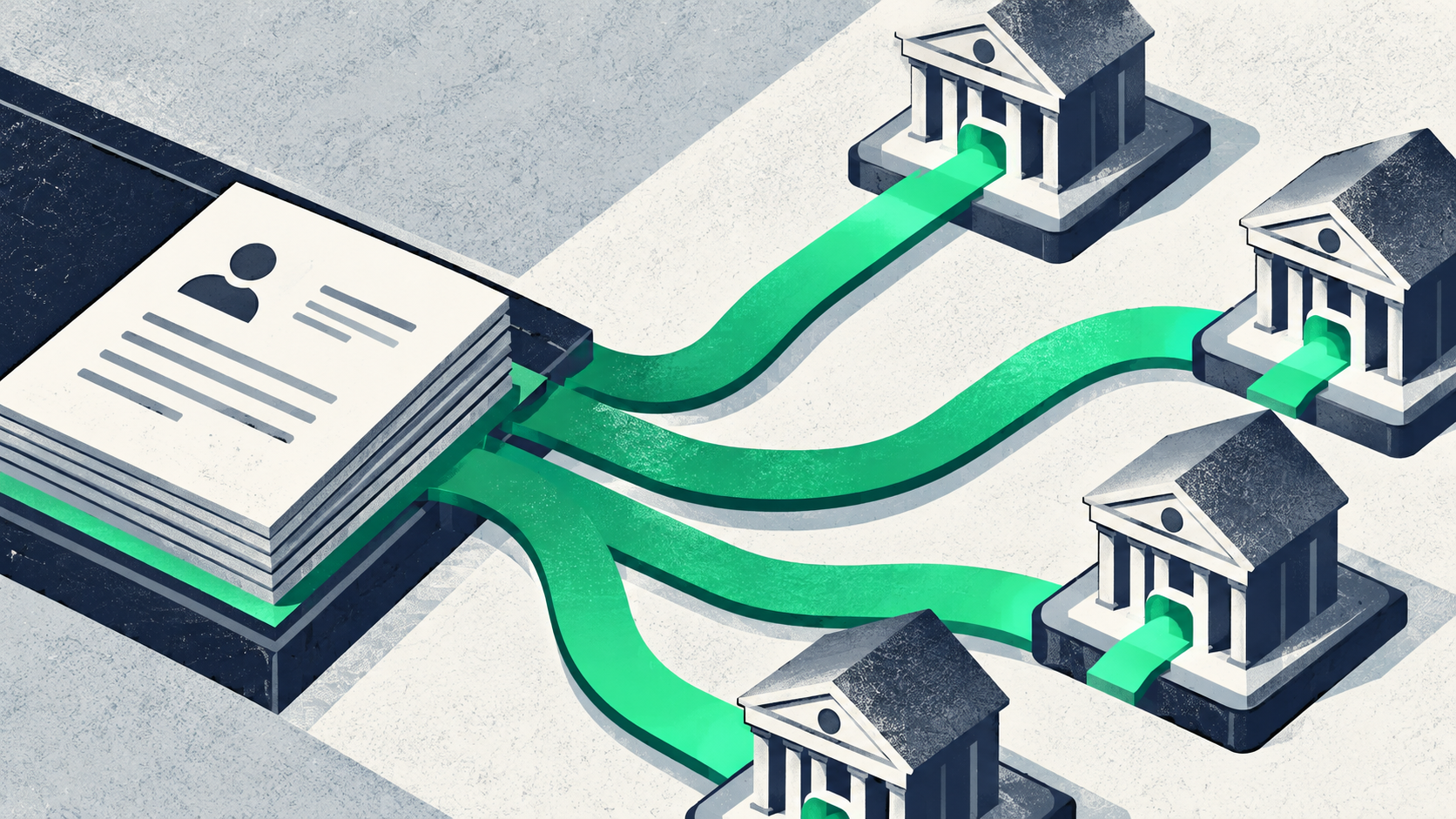
Data aggregation is the process of pulling data from many sources into one standardized place. In lending, it replaces most manual review — the rote collection, data entry, and reconciliation. What it does not replace is human judgment on exceptions and edge cases.
For lenders, that means bank, credit, income, and document data get unified for a single decision. Instead of chasing files across inboxes and portals, your team works from one clean, current view.
This is different from generic business reporting. Here, aggregation exists to power a credit decision — fast, accurate, and ready to act on.
Manual vs. Automated Data Aggregation
Manual data aggregation is human-driven collection and entry. Someone requests documents, keys in numbers, and cross-checks statements by hand.
That approach can work for small or unstructured jobs. But it is slow and more error-prone as volume grows.
Automated data aggregation uses connectors and a credit data API to pull and standardize data in real time. The data arrives structured, current, and ready for a decision.
Most lenders end up blending both. Automation handles the bulk, and manual steps cover the rare or unusual files.
Here is how the two compare:
Can Data Aggregation Replace Manual Review?
The short answer: mostly, but not entirely. Aggregation automates the repeatable work, and people handle the calls that need context.
Manual review in underwriting today means gathering documents, retyping figures, matching statements, and formatting everything for a decision. Most of that is rote work a machine does faster and more consistently.
The result is a shift, not a full replacement. Automated underwriting clears the routine load so your specialists focus on the cases that matter.
Think of it as division of labor. Software reads and sorts at scale, and people apply judgment where the rules stop.
What Automation Replaces
80% smaller teams. Lendflow's embedded finance customers run leaner while converting similar funding volumes — automation absorbs the repeatable steps. It removes rote collection, data entry, cross-referencing statements, and formatting. These are the tasks that scale badly by hand — every new application adds hours. This work is already mainstream in lending, not experimental.
The STRATMOR AI adoption study reports the use of AI/ML has surged, with 38% of lenders employing AI for tasks such as document classification and indexing. The efficiency gains are real for well-defined tasks. In one narrow climate-risk credit-document task, the McKinsey gen AI credit risk analysis found banks reduced the time required to answer climate risk questions by approximately 90 percent, from more than two hours to less than 15 minutes.
That result applies to that one document task, not to all underwriting.
What Still Needs a Human
Some decisions still need a person. Judgment on exceptions, ambiguous documents, fraud edge cases, and policy or compliance calls stays with your team. The model is simple — automation flags, humans adjudicate. The system surfaces the risk, and a specialist decides what to do. Take a borrower with strong cash flow but a thin credit file. The system can surface both signals, but a person weighs them against your risk policy.
Adoption is also still early, so human oversight remains essential. The McKinsey credit AI deployment gap analysis found that just 12 percent of North American survey respondents have deployed any use case at all.
How Data Aggregation Works in Lending Underwriting
Data aggregation follows a clear path from raw sources to a decision. Each step removes a manual handoff.
- Connect sources: Link bank accounts, credit bureau data, income records, and documents through connectors and APIs.
- Standardize data: Convert every source into one clean, consistent format the system can read.
- Feed decisioning: Pass structured data into rules, cash flow underwriting models, and decline waterfalls.
- Deliver a decision: Return an approval, decline, or offer — with flagged cases routed to a human.
Lendflow's Data Orchestration makes these complicated workflows simple. Connect with top integration partners in minutes and build decline waterfalls so no deal leaves money on the table.
Concrete building blocks carry each step. Doc Analyzer extracts figures from statements and tax forms, and Data Graph maps signals across sources. Cash flow underwriting then reads real deposits and expenses instead of static snapshots.
Real-time signals keep decisions current. Live credit and bank data update as an application moves, so your rules read today's numbers — not a snapshot from weeks ago. Intelligent workflows and AI agents adapt as new data flows in.
For a deeper walkthrough, see our guides on financial data aggregation for underwriting and automated credit decisioning.
The Benefits of Automated Data Aggregation
$1.5B+ in offers were made on the Lendflow platform in the last 12 months (as of March 2025). Automated data aggregation drives outcomes like this. 42% faster speed to funding comes from pre-qualified offers hosted on Lendflow. Leaner teams handle the same volume, and clean data reduces errors and supports fraud detection. That combination — faster funding on leaner teams — makes aggregation more than a back-office upgrade.
The mortgage market shows a similar pattern. The Freddie Mac automated underwriting savings release reports a fully digitized mortgage process can help save up to 40% in costs, and that lenders who maximize automation through Freddie Mac originate loans that are $1,500, or 14%, cheaper with a 5-day shorter loan production cycle time.
Those figures are mortgage-specific to Freddie Mac lenders. The sections below break down where Lendflow customers see similar gains in cost and cycle time. Want to move faster? Learn how to optimize your underwriting workflow for speed and accuracy.
Cost and Speed
The Freddie Mac cost-to-originate study reports that in the past three years, loan origination costs have risen 35%, or $3,000, and today the average retail-only lender loses approximately $600 per loan.
That study covers mortgage originators specifically. Still, the pressure is familiar across lending — manual handling makes each file expensive.
Automation reverses the trend. Real-time aggregation cuts the hours per file, so cost per decision drops as volume rises.
Accuracy and Fraud Reduction
The Alloy 2026 State of Fraud Report found that fraud rates rose for 67% of financial institutions and fintechs, and that over one in five organizations (22%) reported losing over $5M in direct fraud losses in 2025.
Standardized, real-time data reduces manual-entry mistakes. Because every source arrives in the same format, there are fewer places for errors to hide.
Clean data also strengthens fraud defenses at scale. Lendflow pairs aggregation with Trust Score and a full fraud detection stack. Suspicious signals get flagged early — before they reach a funding decision.
Risks and Limits of Relying on Data Aggregation
Data aggregation is powerful, but it has limits. Plan for them so your decisions stay sound.
- Data quality: Aggregated data is only as good as its sources — validate coverage and completeness.
- Coverage gaps: Some accounts or documents will not connect, so build manual fallbacks.
- Source reliability: Connections can break or lag, which can leave you with stale data.
- Privacy and compliance: You still own consent, security, and policy for every data pull.
Human oversight closes these gaps. Aggregation informs the decision, but your team owns accountability.
Build an audit trail for every decision. Log which sources fed each call, keep model rules documented, and review flagged cases on a schedule. Clear records make audits and regulator questions easier to answer.
The regulatory direction is also moving toward open banking and consumer-permissioned data. That direction is still developing and not yet settled law, so treat it as context rather than a fixed rule.
Watch how rules like open banking evolve, and design connectors that can adapt. Building for portability now avoids rework later.
How to Implement Data Aggregation in Your Lending Workflow
Getting started is straightforward with the right building blocks. Follow these steps to launch quickly.
- Map your data sources: List the bank, credit, income, and document data each decision needs.
- Choose connectors and APIs: Pick reliable integrations that pull and standardize data in real time.
- Standardize the data: Route every source into one consistent format for decisioning.
- Build decisioning rules: Set up scorecards and decline waterfalls to automate repeatable calls.
- Keep humans on exceptions: Route flagged and ambiguous cases to your specialists.
Start small and expand. Turn on one high-volume product first, prove the lift in speed and cost, then add more sources and rules.
Track a few clear metrics from day one. Watch decision time, cost per file, approval rate, and the share of cases sent to a human. Those numbers show where automation helps and where a rule needs tuning.
Lendflow is the fast path. Skip long build cycles—use plug-and-play widgets, landing pages, and APIs to launch embedded lending in days.
Ready to reduce manual review? See our credit underwriting and decisioning solution, then book a demo or talk to our team.
Frequently Asked Questions
Can data aggregation fully replace manual review in underwriting?
No — data aggregation replaces most manual collection and data entry, but human judgment still decides exceptions, ambiguous documents, and edge cases.
What is the difference between data aggregation and data integration?
Data aggregation gathers and summarizes data from many sources, while data integration focuses on connecting systems so data flows between them.
Is automated data aggregation secure and compliant?
Consumer-permissioned data and secure connectors support compliance, but lenders still own oversight, consent, and policy for every data pull.
How fast can lenders make decisions with automated data aggregation?
Real-time aggregation and automated decisioning compress days into minutes for many applications, so borrowers get answers far sooner.