[.green-span]Credit Bureau Integration: How to Integrate With Credit Bureaus[.green-span]

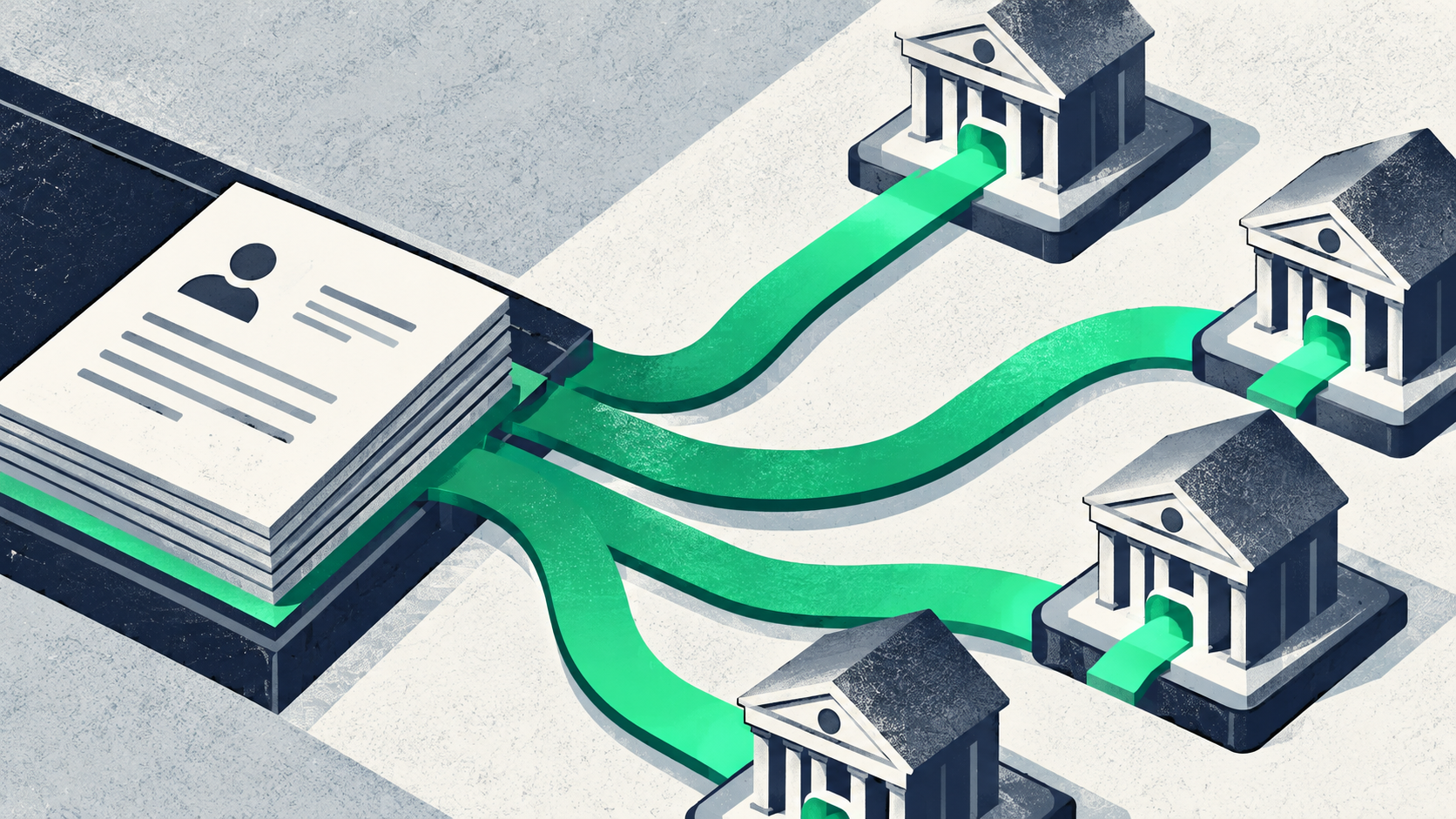
Credit bureau integration is a secure API connection that lets a lending platform request and receive credit data from the credit bureaus automatically. An API, or application programming interface, is simply the channel two systems use to talk to each other.
The three major U.S. bureaus are Equifax, Experian, and TransUnion. Each one holds credit reports and scores on millions of consumers.
Lenders build this connection to replace slow, manual credit checks. Instead of logging in and pulling reports by hand, your platform sends a request and gets data back in seconds.
The smartest teams treat the bureau as one node in a real-time data layer—not a one-off connection. That mindset sets up everything a modern credit data API needs to do next.
Why Credit Bureau Integration Matters for Lenders
Manual credit pulls are slow, error-prone, and hard to scale. Credit bureau integration replaces that busywork—your platform requests a report and returns a decision in seconds.
42% faster speed to funding. 80% smaller teams. $1.5B+ in offers (March 2025). Those Lendflow platform results show what connected, real-time data unlocks.
Bureau data does not cover everyone, though. A credit invisible is a consumer who has no credit record at the bureaus.
According to the CFPB credit invisibles estimate, "The estimated share of credit invisibles in December 2020 was 2.7 percent (7.0 million consumers)." That gap is why strong lenders pair bureau data with alternative data. Alternative data means extra signals like cash flow or bank records that help score more applicants.
Two Ways to Integrate: Direct vs. a Single Reseller API
The first big decision is how you connect. You can build directly to each bureau, or you can use one reseller API that reaches all three.
A reseller—also called an aggregator—is a licensed provider. It connects to all three bureaus and passes data to you through one API.
This choice shapes your cost, timeline, and how much you maintain. Our guide on credit bureau data access covers how startups get connected without meeting bureau volume minimums, which direct contracts often require.
Direct Bureau Integration
Direct integration means connecting your platform straight to Equifax, Experian, and TransUnion. Each bureau has its own API, its own credentialing, and its own data agreement.
This route gives you the most control. It also means more to build and maintain, since terms and pricing vary by bureau and are usually gated behind contracts.
Single / Unified Reseller API
A single reseller API reaches all three bureaus through one integration. The data comes back normalized into one structure, so you build once instead of three times.
The payoff is speed—fewer vendor relationships and faster time to market. Most integration guides recommend this model, and it sets you up for our approach to credit bureau integrations across every source.
How Credit Bureau Integration Works (Step by Step)
At a high level, the flow is simple: pull the data, parse it, map it, and handle fallbacks. The next four steps walk through each stage.
Here is the part most first-timers get wrong. The API call is the easy part—the mapping and fallbacks are where the real work lives.
Step 1: Establish Compliance and Permissible Purpose
Before any data flows, you need a permissible purpose under the Fair Credit Reporting Act, or FCRA. It is consumer-specific—every pull must tie to a real person and a qualifying reason, like an application they submitted.
The CFPB is blunt about this rule. FCRA permissible purpose says: "FCRA section 604(f) strictly prohibits a person who uses or obtains a consumer report from doing so without a permissible purpose." You also pass credentialing, a vetting process where the bureau or reseller confirms your business and its use case.
Step 2: Pull the Data (Soft vs. Hard Pulls)
Once approved, your platform makes the API request and gets a report back in seconds. You choose the inquiry type based on the workflow.
A soft pull fits prequalification, while a hard pull fits a full application. Our guide on soft pull vs hard pull breaks down when to use each.
Step 3: Parse, Map, and Normalize the Response
Each bureau names, scales, and structures the same concept differently, including different score ranges. So you map raw fields to canonical policy variables—one standard set of names your rules use. That keeps your logic from being tied to a single bureau.
In the mortgage channel, MISMO data standards are "required by most regulators, housing agencies and the GSEs that participate in the industry." Accuracy matters here too. The FTC's 2013 credit report accuracy study found "one in five consumers had an error on at least one of their three credit reports."
Step 4: Handle No-Hits, Thin Files, and Fallbacks
Not every pull returns a usable file. A no-hit means the bureau found no record, and a thin file means there is too little history to score.
Plan fallbacks before launch, or you lose weeks fixing them later:
- Route no-hits and thin files to alternative data, a decline waterfall, or manual review so no applicant is a dead end.
- Add retry logic for transient errors, like a timeout or a temporary bureau outage.
A decline waterfall reroutes an applicant to another data source or lender instead of an instant no. Learn how to build a credit waterfall so no deal leaves money on the table.
What Integration Costs and How Long It Takes
Be ready for a straight answer: bureau pricing and timelines vary, and they usually sit behind the data agreements you sign during credentialing. Still, the cost and time drivers are predictable.
- Key point: cost drivers include per-inquiry fees, setup charges, volume minimums, and ongoing build and maintenance.
- Key point: time drivers include credentialing, data normalization, and testing across each bureau.
The better question is how to reduce both—connect once through a reseller or orchestration layer instead of rebuilding for each bureau. Pairing that connection with credit decisioning tools turns raw reports into faster, cheaper decisions.
Beyond a Single Bureau: Orchestrating Credit Data
A single bureau API is a start, not the finish line. Data orchestration is the layer that routes each request across bureaus and alternative data, then feeds the result into your decisions.
Lendflow Data Orchestration lets lenders connect with top integration partners in minutes and run decline waterfalls automatically. It supports live credit signals and intelligent workflows, so teams decide on current data instead of waiting on disconnected steps.
The payoff: faster funding and leaner teams. That is how connected data leads to automated credit decisioning, quicker speed to funding, and less operational overhead. Connect capital and grow—book a demo to see it in action.
Frequently Asked Questions
How much does it cost to integrate with the credit bureaus?
Costs vary by bureau, volume, and model, and usually combine per-inquiry fees with setup charges. Reseller or unified access typically lowers the upfront cost.
How long does credit bureau integration take?
Timelines depend on credentialing, data normalization, and testing. A single or unified API is faster than three separate direct builds.
Can a startup get credit bureau access without volume minimums?
Often yes, through a reseller or aggregator that pools volume across many clients. This avoids contracting directly with each bureau and its minimums.
What's the difference between a soft pull and a hard pull?
A soft pull does not affect the consumer's score and fits prequalification. A hard pull can lower the score and is used for full applications.
Do I need to connect to all three bureaus?
Not always, since some workflows rely on a single bureau. But multi-bureau coverage improves accuracy and reduces no-hits.