[.green-span]What Is a Credit Bureau API? How to Pull Equifax, Experian, and TransUnion Data With One Integration[.green-span]

What Is a Credit Bureau API?
A credit bureau API is a secure interface that lets your software request credit data from a bureau. You send a request, and the bureau sends back a credit report your systems can read.
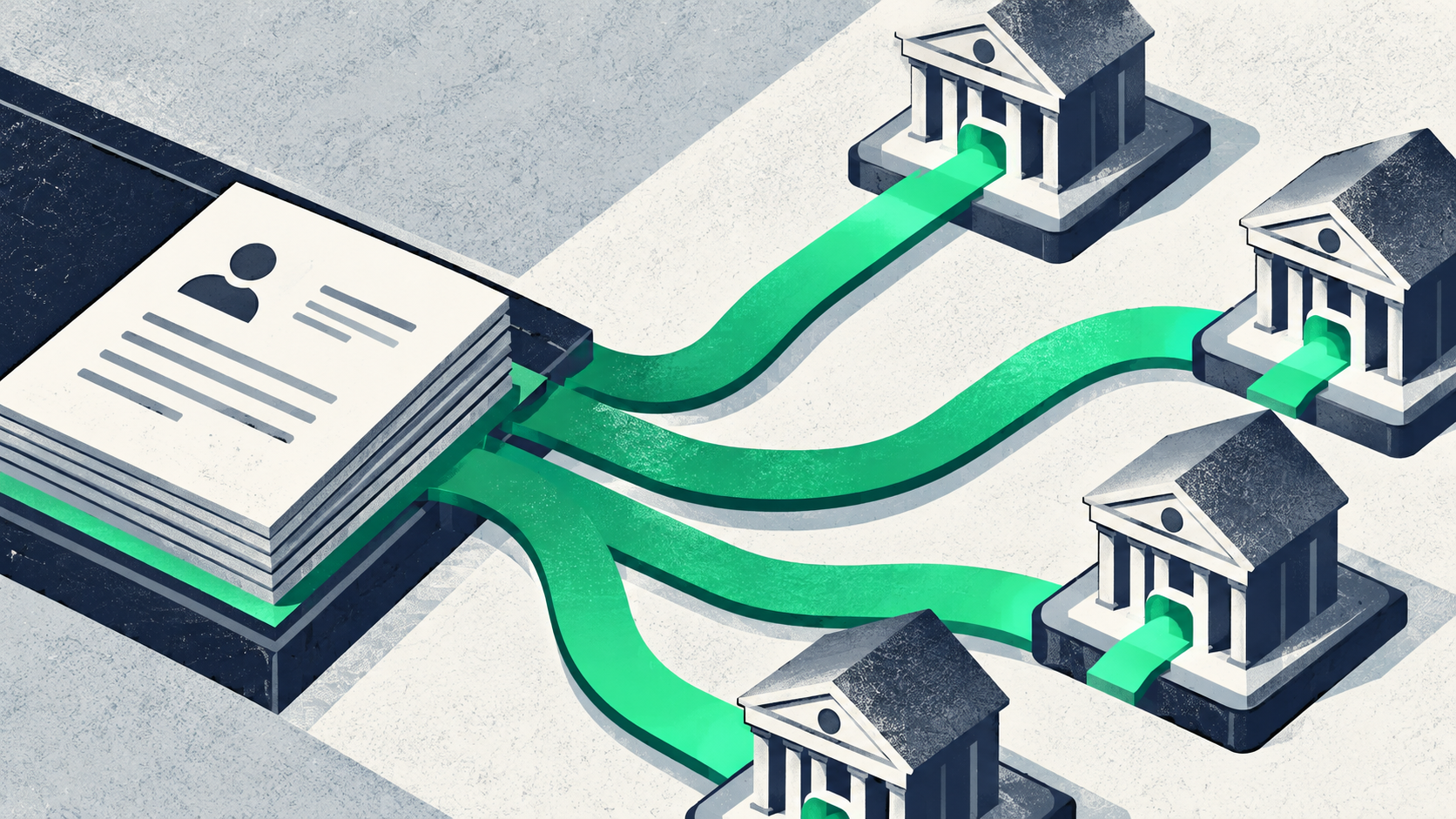
Here is the short answer to the question most teams ask. You pull all three bureaus with one integration by connecting to a single unified credit bureau API. That means one connection instead of three separate bureau builds.
There are two ways to get bureau data. You can integrate directly with each bureau, one at a time. Or you can use one aggregating API that reaches all three for you.
Skip three separate builds—use one API, one credential set, and one response format to reach every bureau.
Key point: the unified path trades three build projects for one. For the wider landscape of credit data sources, see our credit data API guide.
Why the Big Three Bureaus Matter for Lending
Equifax, Experian, and TransUnion are the three national credit bureaus. Lenders pull their reports to check a borrower's history, debts, and risk before making an offer.
Accurate bureau data carries real stakes. In 2024, complaints about credit and consumer reporting accounted for 85% of complaints the CFPB received, per the CFPB 2024 credit reporting complaints report. Most were about Equifax, Experian, and TransUnion—roughly 2.7 million complaints, up 182% over two years.
Coverage is the other reason all three matter. Not every creditor reports to every bureau, so one bureau alone can miss accounts. Pulling more than one gives you a fuller, more accurate picture.
The Problem With Integrating Each Bureau Directly
Building direct connections means three of everything. Direct integration means managing three separate bureau applications, credentialing processes, data formats, and compliance frameworks.
The time adds up fast. Standing all three up can stretch from weeks into months, and each bureau runs its own approval track.
Cost and Onboarding Reality
Credentialing is more than paperwork. Bureaus require security documentation and permissible-purpose vetting—and for some entity types they may require an on-site inspection before granting access.
Pricing then depends on your volume and your contract terms—it is not publicly listed. The Work Number, Equifax's income and employment verification service, is widely cited as one of the most expensive data products in the bureau ecosystem.
Technical Fragmentation
Each bureau ships its own authentication, formats, and specs. Legacy TransUnion endpoints may still expect XML and SOAP, while newer bureau APIs use REST and JSON.
That split forces separate parsers, auth flows, and logging for each connection. Every bureau becomes its own maintenance burden—more code to own, more places to break.
How a Single Unified Credit Bureau API Works
A unified credit bureau API reaches all three bureaus through one integration. The provider manages the bureau relationships and normalizes every response into one consistent format.
The result is simpler engineering. Skip duplicate parsers—connect once through one API and one response schema, then read a single clean result.
This is where speed shows up. Lendflow's credit bureau integrations let teams connect top data partners in minutes rather than wiring each bureau by hand for months.
Tri-Merge vs. Single-Bureau Pulls
A single-bureau pull returns data from one bureau. A tri-merge pull returns all three in one report. According to Equifax, a tri-merge credit report consolidates data from all three NCRAs—Equifax, Experian, and TransUnion—into one standardized document.
Tri-merge reports are standard in mortgage lending, where rules require a full view. Single-bureau pulls fit lighter checks where one bureau is enough.
Cost is trending up, though. The Mortgage Bankers Association estimates rising credit report costs, with tri-merge report costs set to increase in 2026 by another 40% to 50%.
Soft Pulls vs. Hard Pulls
A soft pull checks credit without affecting the borrower's score. It suits prequalification, where you show an offer before a formal application.
A hard pull happens at formal application and can lower the score slightly. A good unified API supports both, so you prequalify early and pull hard only when a borrower moves forward. Learn more about soft and hard credit pulls.
Compliance: What a Unified API Does and Doesn't Remove
A unified API removes engineering work. It does not remove your legal duty to access credit data properly.
You still need a permissible purpose. The FCRA permissible purpose requirement is clear. Any person that obtains and uses a consumer report must have a legally recognized "permissible purpose" to do so.
The penalties are real. According to the FTC, the FCRA civil penalty per violation for knowing violations was set at $4,983, effective January 17, 2025.
Key point: a strong provider helps with vetting and compliance workflows—but the legal obligation stays with you.
Turning Bureau Data Into Decisions
Connected decisioning drives measurable results. Pre-qualified offers hosted on Lendflow deliver an average of 42% faster speed to funding. More than $1.5B+ in offers were made on the platform as of March 2025.
Pulling data is only step one. The value shows up when that data drives a fast, automated decision.
This is where data orchestration matters. With Lendflow's Data Orchestration, lenders build a credit decline waterfall across bureaus and data sources. When one bureau returns thin data—the waterfall tries another source automatically, so no deal is left on the table.
See how teams turn signals into approvals with credit underwriting and decisioning.
How to Choose a Credit Bureau API Provider
Use this checklist when you compare providers:
- Three-bureau coverage: confirm one integration reaches Equifax, Experian, and TransUnion.
- Normalized data: confirm responses arrive in one consistent format you parse once.
- Soft and hard pulls: confirm support for both prequalification and formal application.
- Tri-merge support: confirm you can pull all three bureaus in one standardized report.
- Compliance help: confirm the provider assists with vetting and permissible-purpose workflows.
- Sandbox and docs: confirm clear documentation and a test environment before launch.
- Decisioning integration: confirm bureau data flows into your credit decisioning tools and waterfalls.
- Speed to implement: confirm you can connect partners in minutes, not months.
Tie every criterion back to speed. Embedded finance customers on Lendflow operate with 80% smaller teams while converting similar volume. For a deeper look, read about credit bureau data access.
Where the Credit Data Market Is Headed
Credit data is a large and growing market. The Business Research Company reports the global credit bureau market growing from about $137.31 billion in 2026 toward $210.43 billion by 2030, an 11.3% annual growth rate.
The direction is clear. Access is consolidating toward unified, API-first connections. A single credit bureau API is quickly becoming the modern default for teams that want speed without integration drag.
Frequently Asked Questions
Can I really pull all three bureaus with one API?
Yes—a unified credit bureau API connects to Equifax, Experian, and TransUnion through one integration and returns normalized data.
Do I still need to be credentialed with the bureaus?
Yes—you still need a permissible purpose and must pass vetting, though a good provider helps manage that process for you.
What is a tri-merge credit report?
It is a single report that combines all three bureaus' data into one standardized view.
How much does a credit bureau API cost?
Pricing is set by contract and varies by volume, and it is not publicly listed.
What's the difference between a soft pull and a hard pull?
A soft pull does not affect the borrower's score and suits prequalification. A hard pull happens at formal application and can lower the score slightly.
score slightly.