[.green-span]Plaid Underwriting: How to Combine Plaid and Credit Bureau Data for Smarter Decisions[.green-span]
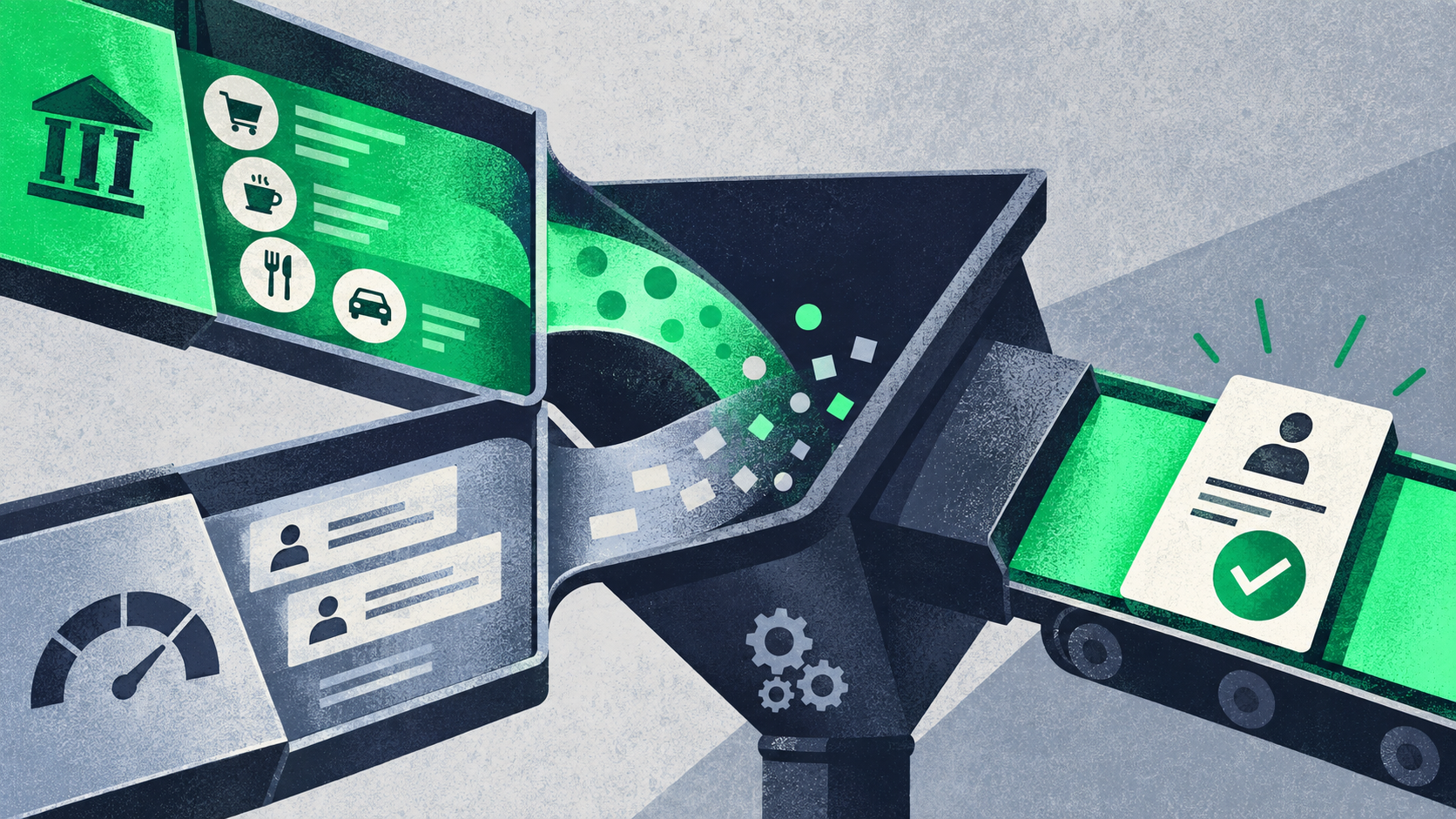
Plaid underwriting means using consumer-permissioned bank and cash-flow data, pulled through Plaid, to help decide a loan. You combine it with credit bureau data by treating the bureau file as the historical credit layer. Plaid data becomes the real-time ability-to-pay layer in the same decision.
Consumer-permissioned means the borrower gives clear consent to share their bank data. A credit bureau report, by contrast, is a backward-looking record of how someone borrowed and repaid before.
Cash-flow data shows money moving through a bank account right now. The goal is not to pick one source. It is to feed both into one decision as real-time borrower health signals.
Platforms like Lendflow make it possible to bring these sources together without replacing an existing underwriting process. Lenders can incorporate bank and cash-flow data alongside bureau, business credit, fraud, and other signals, then use those inputs within configurable underwriting workflows.
For a credit-risk or product leader, Plaid underwriting is an evaluation decision, not a rip-and-replace. You keep your existing bureau workflow and add a live cash-flow view beside it. That lets you test the lift before you change any core policy.
In short, Plaid underwriting is not a new credit score. It is a way to bring bank-verified cash flow into the decision you already make.
Credit Bureau Data vs. Cash Flow Data: What Each One Tells You
Each source answers a different question: one looks at credit history, while the other looks at current cash flow. Knowing what each measures helps you weight them correctly.
Credit bureau data covers payment history, tradelines, and credit utilization. A tradeline is any credit account on file, like a card or a loan.
Cash-flow data is a type of alternative credit data that shows income, deposits, spending, and account balances. It reflects a borrower's current finances, not just past behavior.
Cash-flow data reaches lenders through open banking data, which uses secure, permissioned account connections. Because the borrower approves it, the data arrives fresh and with consent attached.
What it showsCredit bureau dataCash flow dataTime viewBackward-looking recordReal-time viewCore signalsPayment history, tradelines, utilizationIncome, deposits, spending, balancesSourceCredit bureaus (Equifax, Experian, TransUnion)Consumer-permissioned bank accountsBest forEstablished credit filesThin-file and credit-invisible borrowers
Bureau files have blind spots for thin-file borrowers, or people with little or no credit history. Cash-flow data fills that gap by showing the money they actually earn and spend.
Neither view is complete on its own. A borrower can look risky on a bureau file yet show steady income and savings in their account. Lendflow's Data Orchestration capabilities are designed around this principle, allowing lenders to aggregate traditional and alternative data and turn those inputs into standardized information that can be used within the same underwriting process.
Why Combining Both Beats Either One Alone
~4% more approvals. The strongest machine learning models beat models that used simpler analytics.
Because the two data sets measure different things, together they paint a fuller risk picture. Independent research backs this up.
FinRegLab's 2025 study found the two strongest machine learning models increased credit approvals by about 4% over similar models that relied on simpler analytics. That 4% reflects adopting machine learning over simpler analytics, and the model combining cash-flow and bureau data performed strongest.
Adding cash flow also expands who qualifies. According to Plaid, 19 million additional US adults could be evaluated using alternative data instead of credit scores.
For thin-file borrowers, this can be the difference between an automatic decline and a more complete review. A fuller picture lets lenders identify applicants that a bureau-only model might miss while also surfacing risks that a strong bureau score alone may not reveal.
Why Lenders Are Combining Plaid and Bureau Data Now
Plaid and Datos Insights research found that 60% of consumer lenders feel somewhat or less confident making loan decisions solely on traditional credit data. The same research notes that 60 million Americans don't fit the traditional credit lens.
Traditional credit data leaves a large group of borrowers hard to score, which is why Plaid underwriting is spreading. That gap is pushing lenders toward combined data.
Plaid underwriting and other combined scores are increasingly accessible through both packaged scoring products and underwriting infrastructure. Products like Experian's Credit + Cashflow Score and Plaid's LendScore combine bureau and cash-flow signals, while platforms such as Lendflow give lenders the infrastructure to determine how different data sources are pulled, weighted, and incorporated into their own credit policies.
For embedded lenders and SMB platforms, the shift matters even more. Their applicants may show strong revenue but limited personal or business credit history. Cash flow provides another view of the applicant that a bureau file may leave out.
The takeaway is simple. The market has moved from asking whether to combine data to asking how to do it well.
How to Combine Plaid and Credit Bureau Data for Underwriting
Combining the two is an orchestration problem, not a single integration. You collect, pull, match, and sequence data, then decide in one place.
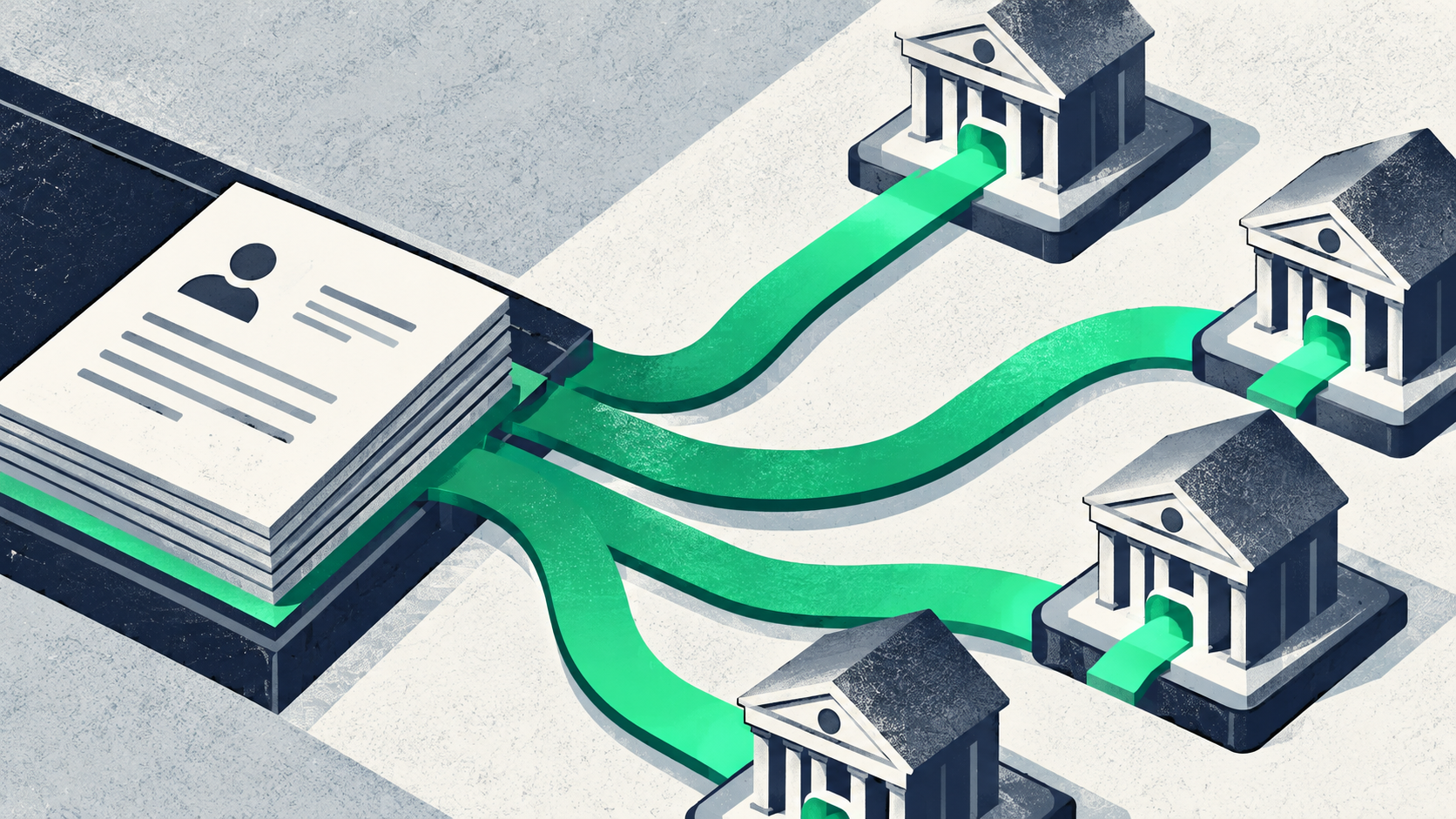
Instead of maintaining separate point-to-point processes, lenders can use Plaid, credit bureau integrations, and an orchestration and decisioning layer such as Lendflow Intelligence to bring those inputs into a unified underwriting workflow.
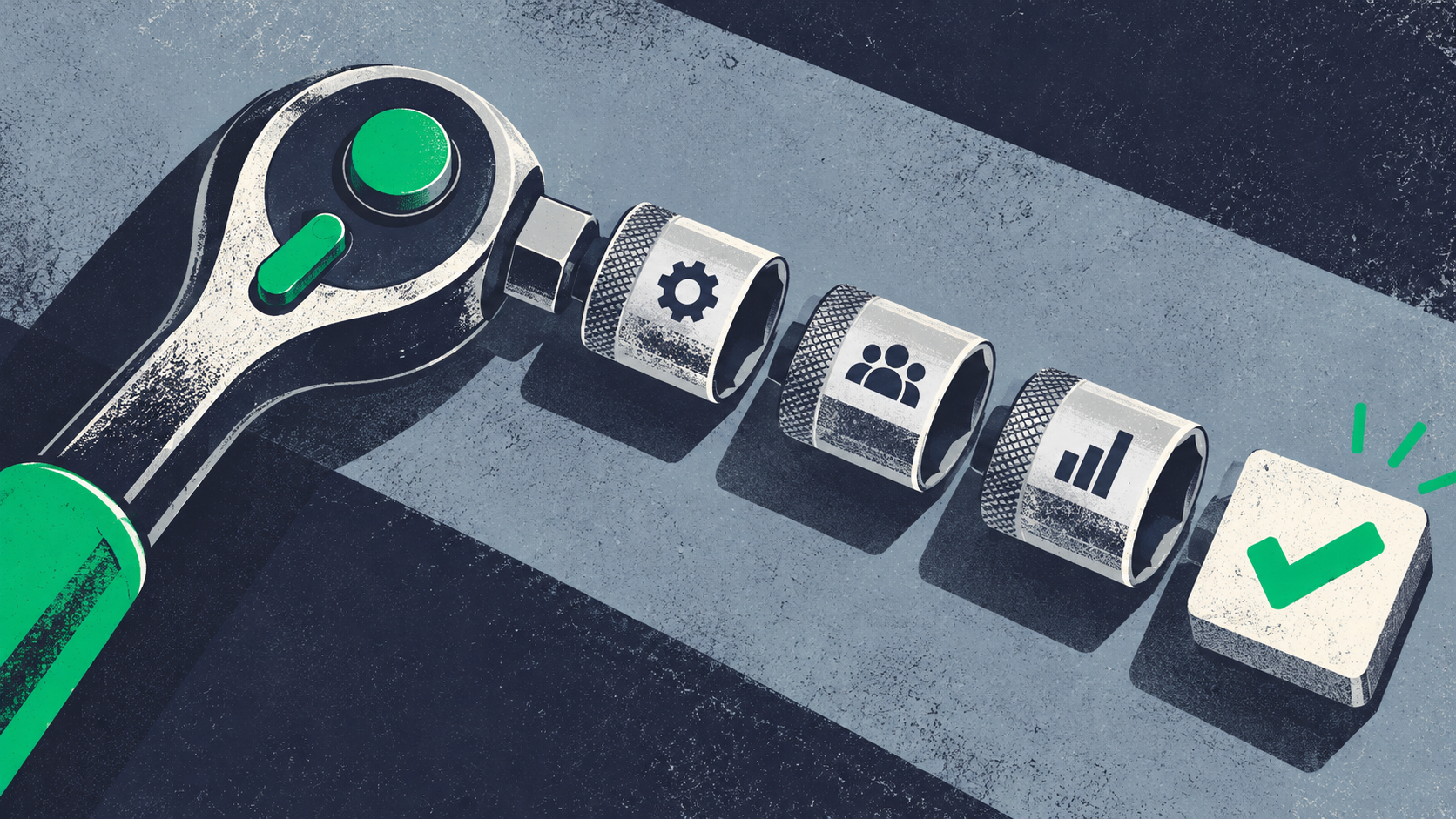
The four steps below work in that order for most lenders.
Step 1: Collect Consumer-Permissioned Bank Data
The borrower connects their bank through Plaid and consents to share data. The lender can then use bank-account information to evaluate cash-flow signals such as income, expenses, deposits, and balances.
Permissioning is central to this process because the borrower controls access to their financial information. Clean financial data aggregation for underwriting then helps organize those inputs for use in underwriting.
Within Lendflow, bank and cash-flow data can become part of the same data orchestration workflow used for the rest of an application. Rather than moving Plaid information into a separate manual process, lenders can incorporate the resulting data into their underwriting rules and scorecards alongside other applicant information.
For a first-time setup, start with a small set of categories that map to risk. Income stability, recurring expenses, and average balances make a practical baseline. You can add richer signals once the basics prove out.
Step 2: Pull Credit Bureau Data
Next, pull the bureau file, including credit scores, tradelines, inquiries, and other relevant credit information. Connecting through existing credit bureau integrations avoids maintaining separate custom builds for every source.
Use soft vs. hard credit pulls wisely. A soft pull can be used earlier in the qualification process, while a hard pull may come later as an applicant moves toward a firm offer.
This is another area where an orchestration layer can simplify the workflow. Lendflow enables lenders to bring bank data, cash-flow analysis, personal credit, business credit, fraud, and other data categories into configurable workflows rather than managing each source as an isolated process.
That means Plaid data does not need to sit in one system while bureau data sits in another. Both can become inputs into the same underwriting workflow.
Step 3: Match, Weight, and Score in One Decision Engine
A decision engine is software that applies your rules and models to make a call. Once the relevant data has been collected, both data sets need to be associated with the same applicant and evaluated according to the lender's credit policy.
Then weight bureau and cash-flow signals by product type. An MCA or SMB loan may weight cash flow more heavily, while other products may rely more heavily on bureau history.
Weighting is a business choice, not only a technical one. The important part is having an underwriting environment where those relationships can be configured and changed as the lender learns from performance.
Lendflow Intelligence provides this layer through configurable workflows, scorecards, attributes, and decisioning logic. A lender can use cash-flow metrics derived from bank data alongside bureau information and other applicant signals, then define how those attributes affect qualification or risk scoring.
For example, how Plaid built LendScore shows a model trained on 1.44 million tradelines, combining Plaid transaction data with credit bureau performance labels. It outputs a score from 1–99, where higher scores indicate lower risk.
Lenders do not necessarily need to replicate that model themselves. The broader principle is to make both data sources available to the same decisioning logic so they can complement one another.
Step 4: Sequence with a Waterfall to Avoid Leaving Deals Behind
A credit waterfall runs data sources or decision criteria in sequence. Instead of pulling every available data point for every applicant upfront, lenders can determine which information is needed at each stage.
For example, an initial credit check might qualify an applicant immediately. A borderline result could trigger additional cash-flow analysis before the lender makes a final decision.
This is where orchestration becomes especially useful. Lendflow supports conditional workflows that allow lenders to determine when different data sources should be pulled. Scorecards and waterfall logic can then determine what happens next based on the results.
That approach can help lenders control data costs while still giving near-miss applicants a more complete evaluation.
Learn how to build a credit waterfall so applications can move through progressively richer levels of underwriting rather than relying on a one-shot decision.
Combined Scores in the Market: LendScore, Experian, and More
Packaged combined scores show this approach is proven and buyable today. They give lenders a running start on Plaid underwriting without necessarily building models in-house.
- Plaid LendScore: Blends transaction data with bureau performance information into a 1–99 score.
- Experian Credit + Cashflow Score: Merges bureau and cash-flow data on a 300–850 range.
- FICO with cash-flow attributes: Adds bank-account signals to traditional credit analysis.
In early pre-production analysis, Experian says its Credit + Cashflow Score improves predictive accuracy by over 40% compared to conventional credit models.
You do not have to build a score from scratch to start. A lender could use a packaged score as one input while continuing to apply its own underwriting policies around it.
That distinction is important. A combined score provides an additional risk signal, while an orchestration and decisioning platform like Lendflow determines how that signal works alongside cash flow, bureau data, fraud checks, documents, and the lender's own criteria.
Staying Compliant: FCRA, ECOA, and Consumer Permissioning
Compliance is not optional when you use new data.
- FCRA: The Fair Credit Reporting Act governs how consumer report data is collected, used, and disputed.
- ECOA: The Equal Credit Opportunity Act prohibits discrimination in credit decisions.
- Adverse-action reasons: When applicable, lenders need to provide specific reasons for adverse credit decisions.
2019 federal interagency guidance notes that consumers can expressly permission access to cash-flow data, increasing transparency and consumer control.
Combining multiple sources also makes decision traceability important. Lenders need to understand which attributes influenced an outcome rather than treating the combined data as a black box.
Lendflow's decisioning infrastructure is designed to give lenders control over the rules, scorecards, and workflows used to evaluate an application. Keeping these inputs within a structured decisioning process makes it easier to understand how data contributes to a decision and maintain consistent policies across applications.
How Lendflow Brings Bureau and Cash Flow Data Into One Decision
Lendflow provides an orchestration and decisioning layer for bringing borrower data into one underwriting workflow.
Through Lendflow Intelligence, lenders can aggregate information from banking, cash-flow, personal and business credit, fraud, verification, accounting, payroll, ecommerce, and other sources. Instead of building and maintaining separate underwriting processes around each provider, those inputs can be incorporated into configurable workflows.
Once the data is available, lenders can use attributes, scorecards, conditional rules, and decisioning logic to determine how each signal should influence the application. Cash-flow information can complement bureau history, while additional data can be triggered when an applicant requires deeper evaluation.
Lenders can also structure the process across multiple underwriting stages. Early checks can remain lightweight, while additional financial data or documentation can be pulled as the applicant progresses.
The result is not simply access to more data. It is a way to control when that data is collected, how it is interpreted, and what happens next.
For lenders adopting Plaid underwriting, that means Plaid does not need to become another standalone underwriting tool. Its data can become one part of a broader decisioning workflow alongside bureau information and the lender's existing credit criteria.
See the credit underwriting and decisioning platform to learn more.
Ready to combine bureau and cash-flow data in one decision? Book a demo or talk to our team.
Frequently Asked Questions
Is Plaid data better than credit bureau data for underwriting?
Neither is inherently better for every borrower because the two measure different things. Bureau data provides a historical view of credit behavior, while Plaid data can provide insight into current cash flow. Combining the two can give lenders a more complete borrower picture.
Do I have to replace my credit scores to use cash-flow data?
No. Cash-flow data can complement existing bureau scores rather than replace them. Lenders can introduce it as another input within their existing underwriting process.
How can lenders use Plaid data alongside their existing underwriting rules?
Plaid data can be incorporated into an orchestration and decisioning platform such as Lendflow, where cash-flow attributes can be evaluated alongside bureau information, fraud signals, documents, and other applicant data. Lenders can then determine how those signals affect scorecards, qualification rules, or subsequent underwriting steps.
Is combining Plaid and bureau data FCRA-compliant?
Using permissioned cash-flow data does not eliminate a lender's compliance obligations. Lenders still need to consider applicable FCRA, ECOA, adverse-action, consent, and other regulatory requirements based on how the data is used.
Which loans benefit most from combining both data sources?
The approach can be especially valuable when current financial activity provides information that is not fully captured by a traditional credit file, including thin-file borrowers and cash-flow-driven SMB lending products.
How long does it take to set this up?
Implementation depends on the lender's existing systems, data providers, underwriting policies, and desired workflow. Using pre-built integrations and an orchestration platform can reduce the amount of custom integration work compared with building each connection independently.