[.green-span]How SBA Lenders Can Grow Deal Flow Without Adding Operational Overhead[.green-span]

The traditional response is often to add staff as volume increases. But lenders can take another approach: build a lending operation that can process more opportunities without increasing manual work at the same rate.
By automating repetitive tasks, improving how applications are qualified, and creating more efficient workflows from intake through funding, SBA lenders can build a more scalable approach to growth.
Why SBA deal flow can be difficult to scale
SBA lending is inherently process-intensive. Borrowers may need to provide financial statements, tax returns, bank statements, ownership information, and other documentation before a lender has everything required to make a decision.
As application volume increases, operational teams can quickly become responsible for:
- Reviewing and organizing incoming applications
- Collecting missing borrower information
- Requesting and validating documents
- Enriching application data
- Evaluating eligibility and credit criteria
- Communicating status updates
- Following up with borrowers
- Routing qualified opportunities through the appropriate workflow
When these processes rely heavily on manual work, increasing the number of applications entering the funnel can create bottlenecks rather than additional funded volume.
The goal, therefore, should not simply be generating more leads. SBA lenders need to increase qualified deal flow while building the infrastructure to efficiently process it.
1. Qualify opportunities earlier in the funnel
One of the simplest ways to improve operational efficiency is to identify whether an applicant is a potential fit as early as possible.
Instead of having operations or underwriting teams manually review every application, lenders can use automated eligibility rules and decisioning workflows to evaluate basic criteria at intake. Applications can be enriched with third-party data and evaluated against lender-specific policies before they require significant human involvement.
Early qualification can help lenders prioritize stronger opportunities while quickly identifying applications that require additional information or do not meet program criteria.
Lendflow Intelligence supports this approach by bringing data orchestration, configurable attributes, scorecards, and multi-stage underwriting into a single decisioning environment. Lenders can build workflows that progressively evaluate applicants as additional information becomes available.
2. Automate document-heavy workflows
Document collection is another area where SBA lending operations can become difficult to scale.
The challenge is not only collecting documents. Teams also need to determine which documents are missing, organize what has been received, review information within those files, and repeatedly follow up with applicants.
Automation can reduce many of these manual steps. For example, lenders can automatically assign document requirements based on the application, analyze submitted files, validate information, and trigger follow-up when something is missing.
With Lendflow Automate and Doc Analyzer, lenders can incorporate document processing and borrower communication directly into their workflows. Dynamic Documents can also standardize requirements such as multiple months of bank statements, reducing the setup required for each new deal.
The result is a process where employees spend less time administering documents and more time reviewing the applications that actually require their expertise.
3. Build borrower follow-up into the workflow
A qualified applicant does not necessarily become a completed application.
Borrowers may abandon an application because they are unsure what to do next, forget to upload a requested document, or fail to respond to an email. At scale, manually chasing every incomplete application creates significant operational work.
Automated communication can help SBA lenders maintain engagement throughout the application process. Email, SMS, voice, and chat-based outreach can be triggered by application events, such as an incomplete form or missing document.
AI agents can take this further by helping borrowers navigate application requirements and answering common questions while maintaining human oversight where appropriate.
Lendflow Automate brings these communication channels into the lending workflow so outreach can respond to what is happening with an individual application rather than operating as a separate process.
4. Standardize underwriting processes
Growth becomes harder when each application requires a different manual process.
Standardizing underwriting workflows helps lenders create repeatable paths for common application scenarios. Rather than relying on employees to determine every next step, lenders can configure policies that automatically determine which data should be collected, which rules should be evaluated, and when an application should move to another stage.
Multi-stage underwriting can be particularly useful because SBA lenders do not always need every piece of information upfront. An applicant can first be evaluated against basic eligibility requirements before moving into more detailed underwriting.
This helps reserve higher-cost data pulls and manual reviews for opportunities that have already passed earlier qualification stages.
5. Connect acquisition and operations
Increasing deal flow is only valuable when lenders have the infrastructure to process those opportunities.
For lenders working with referral partners, marketplaces, brokers, or embedded distribution channels, fragmented intake processes can create additional complexity. Applications arriving in different formats may need to be manually entered, normalized, and routed before underwriting even begins.
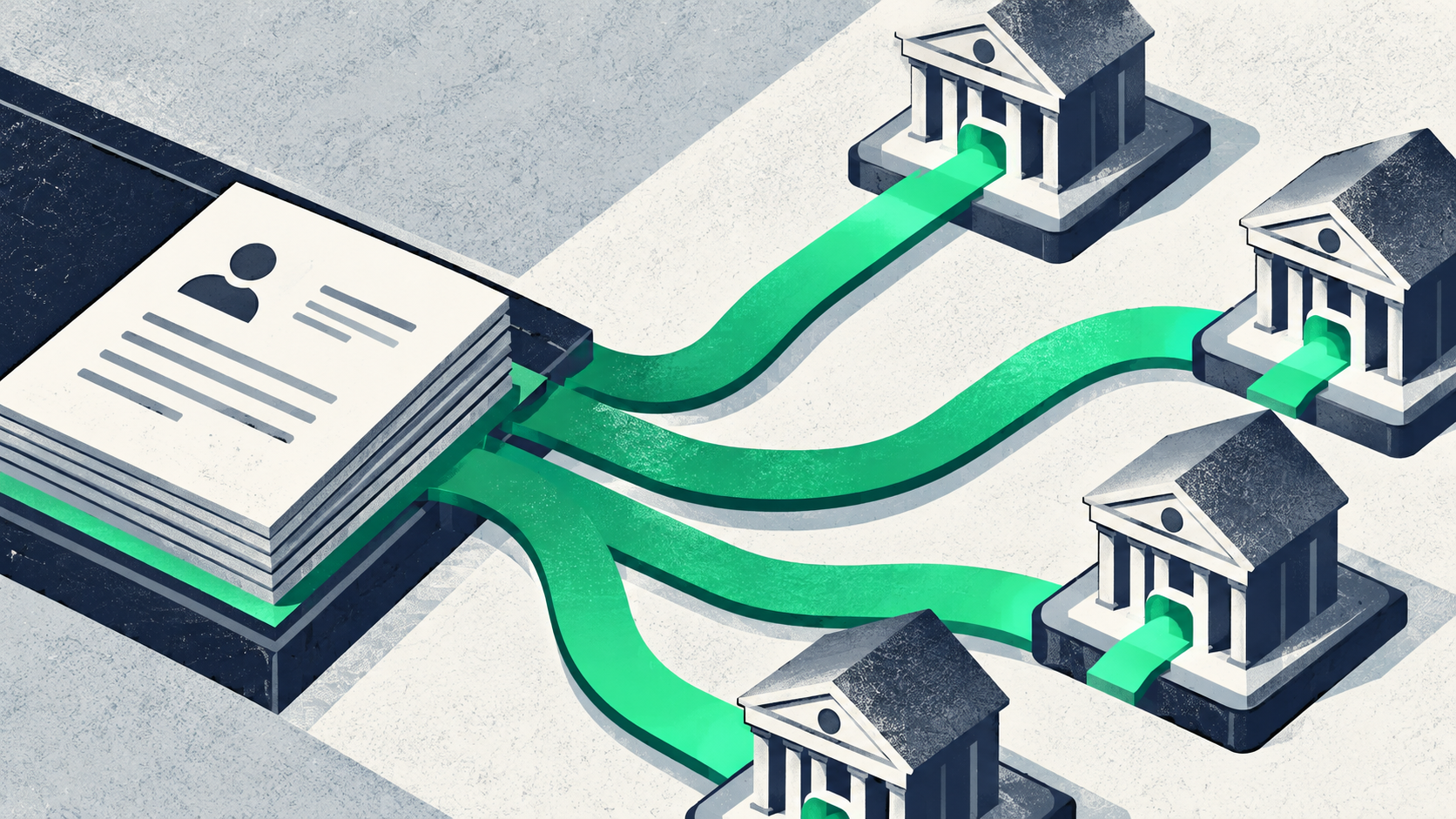
A unified lending infrastructure can connect distribution with the workflows that happen after an application arrives.
Lendflow Connect can support embedded and partner-driven distribution, while Intelligence handles data and decisioning and Automate supports operational workflows and borrower communication. Together, these capabilities can create a more connected path from application intake through underwriting and funding.
Growing volume without growing complexity
For SBA lenders, sustainable growth is not simply about putting more applications at the top of the funnel. It is about increasing the number of qualified opportunities the organization can effectively move toward funding.
Automation does not need to eliminate human involvement from SBA lending. Instead, it can remove repetitive work around data collection, document processing, qualification, communication, and workflow management so teams can focus their attention where judgment and expertise matter most.
By connecting intake, decisioning, underwriting, documents, and borrower engagement in a more automated workflow, SBA lenders can build infrastructure that supports higher deal volume without operational complexity increasing at the same pace.
Lendflow provides the infrastructure to help SBA lenders automate and connect these processes across the lending lifecycle. To learn how Lendflow can help your team build a more scalable SBA lending operation, schedule a meeting with our team.