


[.green-span]CRS Credit API vs Lendflow: Credit Data Feed or Lending Platform?[.green-span]
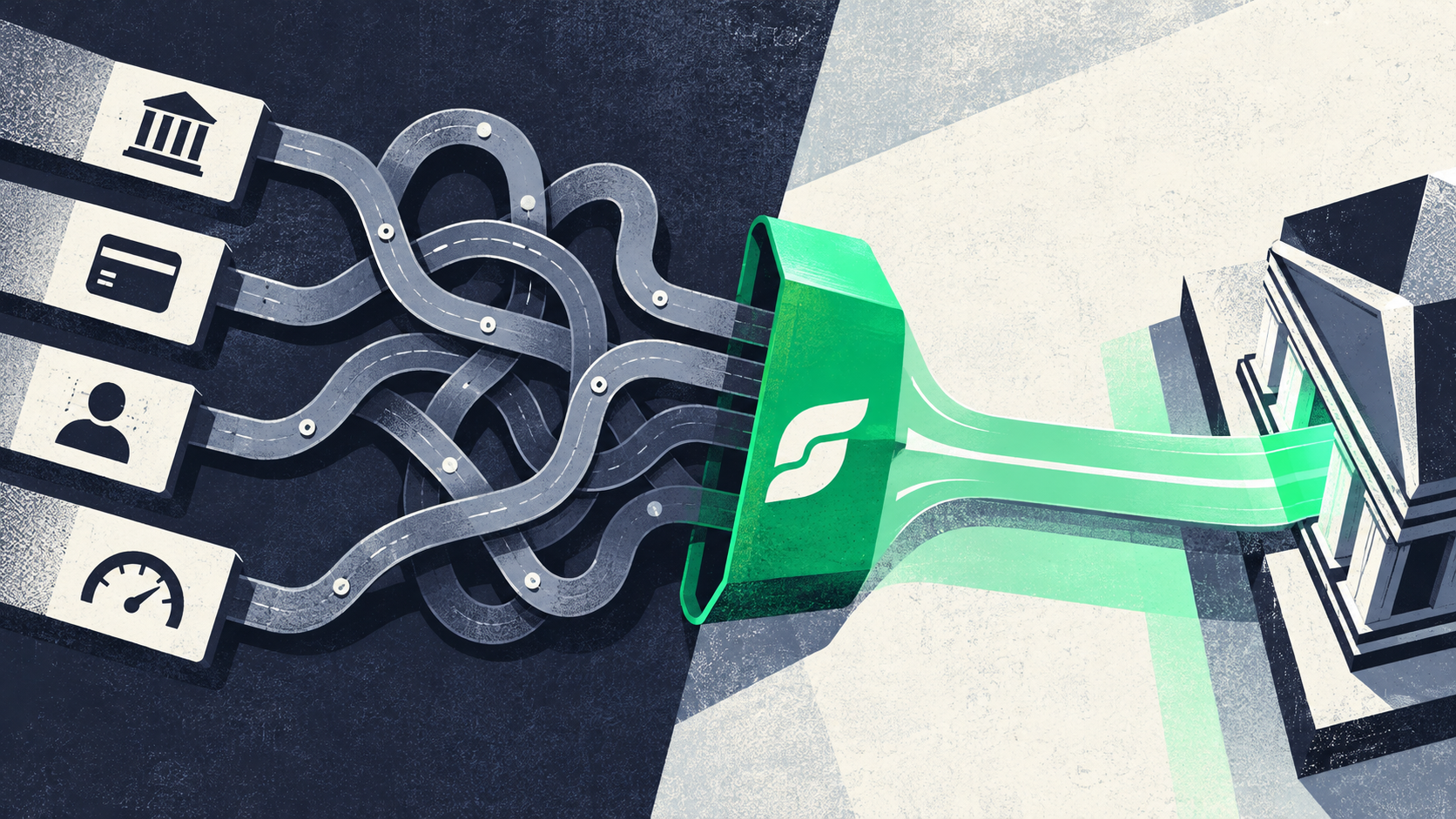
Every lending product needs credit data, but data alone does not approve a loan or fund a business. Teams comparing CRS Credit API vs Lendflow are really choosing between a credit data feed and a full lending stack that acts on that data.
The stakes are large. Per SBA Office of Advocacy data, "There are 36,207,130 small businesses in the United States." Any platform that serves even a small share of them needs a reliable way to check credit and present offers.
In this guide, you will learn what each credit API does, how their data sources compare, and how long each takes to launch. You will also get a side-by-side table, a decision framework, and answers to common questions.
The Short Answer: Different Layers of the Lending Stack
CRS Credit API is a credit data API that delivers multi-bureau credit reports through one connection. Lendflow is an embedded lending and data orchestration platform that turns credit data into decisions and lender offers. Choose CRS when you need raw reports, and choose Lendflow when you need the full path from application to funding.
A credit report API is a connection that lets your software request a credit report and receive the results in a format it can read. To learn what a credit data API does in more depth, start with the basics of requests, responses, and data fields.
Data orchestration goes one step further. It means pulling data from many sources, applying rules, and passing the result to the next step automatically.
What Is CRS Credit API?
The CRS Credit API website promises "Under 5 days From signup to first pull" and says CRS delivers data "to more than 2,000 companies." The homepage also advertises "1 API Access to all 3 bureaus & 200+ data feeds" and sandbox access "on day one." It groups CRS data products into these areas:
- Consumer credit: Hard and soft pulls, scores, identity, and fraud signals returned in one call.
- Business credit: Business credit data, ownership intelligence, and risk scores for business reviews.
- Compliance checks: Know your customer (KYC), know your business (KYB), and fraud tools.
- Public records: Public record searches plus monitoring products for ongoing risk reviews.
In practice, CRS sells API access to bureau data, so customers skip building direct bureau connections themselves. A sandbox is a test space where developers can build and try requests before going live.
CRS splits its developer tools into three APIs: Credit Data, Credit Monitoring, and Data Furnishing. The CRS credit monitoring page says users can track credit scores over time with Equifax alone or all three bureaus. The CRS data furnishing page says CRS validates and formats lender data, then delivers it to all three bureaus.
What Is Lendflow?
The Lendflow homepage reports $1.5B+ in offers made on its platform over 12 months, as of March 2025. Lendflow also reports 42% faster speed to funding for pre-qualified offers and 80% smaller teams for embedded finance customers converting similar volumes. The homepage lists support for term loans, purchase of receivables, invoice factoring, merchant cash advances (MCAs), equipment financing, SBA loans, and lines of credit.
Embedded lending means offering financing inside a software product, so a business owner can apply without leaving a tool they already use. Lendflow's role is to turn credit data into decisions and route each deal to a lender in its network.
The platform has three products that work together:
- Lendflow Connect: The embedded lending layer that links brands and their borrowers to a lender network.
- Lendflow Intelligence: The decisioning layer that turns credit and business data into lending decisions.
- Lendflow Automate: The automation layer that uses AI agents for routine lending tasks.
Lendflow Connect embedded lending lists 75+ active specialty and bank lenders and one endpoint for data, decisioning, and payouts. Brands can contract with those lenders directly, through Lendflow, or in a hybrid model.
The Lendflow Intelligence decisioning layer reports 85% faster time-to-decision, moving credit answers from days to minutes.
Lendflow Automate uses AI agents to classify industries by NAICS or SIC code and pull data from PDFs, IDs, and bank files. Its agents also score risk with full explainability and send automated phone reminders and confirmations.
Credit Bureau Coverage and Data Sources
Both platforms draw on major bureau data, but they aim it at different jobs. The CFPB consumer reporting companies list says, "There are three big nationwide providers of consumer reports: Equifax, TransUnion, and Experian."
A credit bureau is a company that collects credit history and sells reports to approved users. Specialty consumer reporting companies also exist, and they focus on narrower data such as insurance claims or tenant history.
CRS Credit Report Sources
The CRS product catalog lists data products from Equifax, Experian, TransUnion, LexisNexis, PitchPoint, and CIC. Only the first three appear on the CFPB list of nationwide providers, so the others add specialty data rather than a fourth bureau.
Lendflow Consumer and Business Credit Sources
Lendflow's developer docs index lists Experian, Equifax, and TransUnion personal credit, plus Experian Business Match. It also lists Equifax business credit reports (SBFE and CFN), Dun & Bradstreet, CLEAR business liens, Ocrolus and Inscribe for documents, and Persona for identity.
Business credit matters because a small business has its own credit file, separate from the owner. Lendflow's guide to business credit bureau integrations covers Dun & Bradstreet Paydex scores and Experian Intelliscore Plus.
Soft Pulls vs Hard Pulls
A soft pull is a credit check that does not affect a person's score, such as a review by a current lender. Lenders usually run a hard pull when someone applies for new credit. Per CFPB guidance on hard inquiries, "This type of credit inquiry is known as a "hard inquiry" or "hard pull" and will impact your credit score."
The CRS soft pull credit API page promises "One schema for soft and hard" pulls, so teams can prequalify and underwrite through one integration. The same page lists FICO or VantageScore scores as an option.
The CFPB guidance is written for consumer loans. SMB teams should confirm with counsel which pull type fits each step of their own workflow.
CRS Credit API vs Lendflow: Key Features Side by Side
The clearest difference is scope. CRS focuses on the data layer, while Lendflow adds decisioning, lender matching, and payouts on top of the data.
The table below compares the two across the features buyers ask about most. Each cell summarizes the vendor pages and third-party profiles cited in this article.
| Feature | CRS Credit API | Lendflow |
|---|---|---|
| Core purpose | Deliver regulated credit data | Turn data into decisions and lender offers |
| Credit data | Equifax, Experian, TransUnion, plus 200+ data feeds (CRS-stated) | Experian, Equifax, TransUnion personal credit; Equifax and D&B business data |
| Decisioning | Scores returned to your system | Decision models in Lendflow Intelligence |
| Lender network | Data only; the lending program is yours | 75+ active specialty and bank lenders |
| Borrower experience | Built by your team | White-label widget |
| Response formats | JSON, XML, HTML5, PDF (third-party profile) | Documented in the OpenAPI spec |
| Authentication | Bearer tokens (third-party profile) | Documented in the OpenAPI spec |
| Monitoring | Credit Monitoring API | Confirm with Lendflow |
| Data furnishing | Data Furnishing API | Confirm with Lendflow |
| Launch time | Under 5 days to first pull (CRS-stated) | Widget under 2 weeks for most brands; full API 30 to 45 days |
A unified credit bureau API solves the problem of connecting to each bureau by hand. Lendflow then carries that data through to a decision and a lender offer.
Developer Experience and Integration Speed
Speed to first data and speed to first funded deal are different goals. The right measure depends on what your team plans to build after the data arrives.
Building on the CRS API
The CRS Redocly developer portal hosts the API documentation. CRS links separate Redocly portals for credit monitoring and data furnishing from its website footer.
A software development kit (SDK) is prebuilt code that saves developers from writing every request from scratch. The third-party API Evangelist profile lists "SDK examples in Ruby, Python, JavaScript, Java, Node.js, Go, PHP, .NET, and cURL." The profile also notes "Bearer token authentication over HTTPS" and "JSON, XML, HTML5, and PDF response formats."
A bearer token is a secure key sent with each request to prove the caller has access. Teams with their own decision engine then map CRS responses into their rules.
Launching on Lendflow
The Lendflow Connect page says most brands launch a white-label widget in under two weeks. Full API integrations typically ship in 30 to 45 days, according to the same page.
- Embedded widget: A white-label application flow that brands place inside their own product.
- Unified API: One endpoint for data, decisioning, and payouts that supports deeper builds.
- Developer docs: The Lendflow developer docs cover each data integration and publish an OpenAPI spec.
The Lendflow Intelligence page says most clients launch Intelligence in 2 to 4 weeks, covering integration, model configuration, and testing. The page also promises "Fast integration in days, not months."
Use Cases: Which Platform Fits Your Workflow?
Credit data is only the first step in most SMB lending journeys. Per the Fed Small Business Credit Survey, "Forty-two percent of applicants received the full amount of financing they sought, 36% received some or most, and 22% received none."
That survey covers employer firms with 1 to 499 employees and uses a convenience sample, so it does not represent every small business. Even so, it shows that many applicants walk away with less than they need, which makes routing and second looks valuable.
Where CRS Credit API Fits
CRS fits teams that already own their decision rules and need clean data. Based on the CRS product pages cited above, common use cases include:
- Underwriting data: Pull bureau reports and scores into an in-house credit model.
- Prequalification: Run soft pulls before a hard pull, using the same CRS schema.
- KYC and KYB checks: Verify identities and business owners before opening accounts.
- Portfolio monitoring: Track changes in borrower credit scores after a loan is funded.
Where Lendflow Fits
Lendflow fits teams that want to offer financing without building a lending operation. Based on the Lendflow product pages and guides cited in this article, its strongest use cases include:
- Embedded SMB financing: Offer loans inside a software product through a widget or the unified API.
- Second-look routing: Send declined applicants to other lenders so fewer deals are lost.
- Automated decisioning: Apply rules to credit and business data to reach faster credit answers.
A decline waterfall is a set of rules that passes a declined deal to the next best lender automatically. To see how credit waterfalls work, look at how each rule checks fit before moving down the list.
Lenders that want to modernize the full process can explore Lendflow's credit underwriting and decisioning solution.
Compliance, Security, and Data Governance
SOC 2 Type II is an independent audit of how a company protects data over time. The CRS about page says "CRS is SOC 2 Type II certified." The Lendflow Connect SOC 2 statement says "Lendflow is SOC 2 Type II compliant and undergoes regular audits."
Permissible purpose is a legal reason, defined in the Fair Credit Reporting Act (FCRA), for pulling a consumer report. Per the CFPB permissible purpose opinion, "FCRA section 604(f) strictly prohibits a person who uses or obtains a consumer report from doing so without a permissible purpose."
A credit reporting agency (CRA) is a company that works with the bureaus to manage access to regulated credit data. The CRS homepage describes CRS as a certified CRA that is "Audited, bureau-recognized, and accountable under the FCRA." CRS also runs its own fast vetting process, which its CRS compliance page calls "The Industry's Fastest Vetting Process."
Lenders also carry duties that no vendor can take on for them. The CFPB small business lending rule requires covered lenders to collect and report small business application data, with compliance due January 1, 2028.
The CFPB issued that final rule on May 1, 2026, and court challenges are ongoing, so dates could change. Talk with your legal team before you treat any vendor as your compliance plan.
Pricing, Deployment, and Sandbox Access
CRS does not publish a public pricing page. Its CRS company overview mentions "transparent, predictable pricing" but lists no rates, so quotes come from the CRS team.
The Lendflow pricing page lists its pricing models: pay-as-you-go, price-per-agent with volume discounts, and credit bundles. Exact rates come from the Lendflow sales team.
For deployment, a SourceForge listing describes CRS as cloud-only with online support and 12 integrations. Lendflow deploys through the widget and API paths covered in the developer section above.
Before you compare quotes, ask each vendor the same questions:
- Volume pricing: Ask how fees change as pull volume or funded deals grow.
- Testing costs: Ask whether sandbox use or test pulls carry a fee.
- Total cost: Ask for data, decisioning, and lender access costs in writing.
A low data price can hide the cost of building everything else. Compare the full cost of reaching a funded deal along with the cost per pull.
How to Choose: A Decision Framework
Picking the wrong layer can mean rebuilding later. Use these five steps to choose between a credit API and a lending platform before you sign.
- Define the job: Decide whether you need credit data for your own model or a complete financing offer.
- Map your data needs: List the consumer, business, identity, and document data each decision requires.
- Decide build vs orchestrate: Estimate the engineering time to build decision rules, lender links, and borrower screens yourself.
- Check compliance: Confirm permissible purpose, consent flows, and your own Section 1071 obligations with counsel.
- Estimate time to launch: Compare time to first pull with time to first funded deal.
Step three matters most for teams without an in-house credit team. Decision rules and lender connections must exist before any deal can fund, whichever data source you choose.
| Your situation | Better fit | Why |
|---|---|---|
| You have an in-house credit model and only need data | CRS Credit API | Multi-bureau reports through one endpoint |
| You need soft and hard pulls in one schema | CRS Credit API | Prequalify and underwrite through one integration |
| You need to furnish account data to bureaus | CRS Credit API | Offers a Data Furnishing API |
| You want to embed SMB financing in your software | Lendflow | Most brands launch a widget in under two weeks |
| You want more lender options for each applicant | Lendflow | Network of 75+ active lenders |
| You want to automate underwriting without adding staff | Lendflow | Lendflow Intelligence reports 85% faster time-to-decision |
FAQs
What Is CRS Credit API Used For?
CRS Credit API is used to pull hard and soft credit reports, scores, business credit data, and fraud signals through one connection. CRS also offers credit monitoring and data furnishing APIs.
Does CRS Credit API Support Soft and Hard Pulls?
Yes, CRS says its API uses one schema for soft and hard pulls, so teams can prequalify and underwrite through the same integration. Your permissible purpose and workflow step determine which pull type fits.
Is There a Free Credit Score API?
CRS does not publish a public pricing page, though it says it offers sandbox access on day one. Lendflow publishes pricing models such as pay-as-you-go and credit bundles, with exact rates from its sales team.
Can Lendflow and CRS Credit API Work Together?
Lendflow's published docs do not list CRS as an integration, so confirm any combined setup with both teams. Lendflow's docs already list Experian, Equifax, TransUnion, and Dun & Bradstreet integrations.
How Long Does It Take to Integrate Each?
CRS says customers reach a first pull in under 5 days. Lendflow says most brands launch a widget in under two weeks, full APIs in 30 to 45 days, and Intelligence in 2 to 4 weeks.
Conclusion: Pick the Layer That Matches Your Goal
The CRS Credit API vs Lendflow decision comes down to how much of the lending journey you want to own. CRS gives you fast, multi-bureau credit data, and your team builds everything that happens next.
Lendflow gives you data orchestration, decisioning, and a network of 75+ lenders in one platform. Lendflow reports $1.5B+ in offers made on its platform over 12 months as of March 2025, plus 42% faster speed to funding. It suits teams that want to launch financing fast and stay lean.


