[.green-span]Who Provides One API for Connecting to Multiple Credit Bureaus[.green-span]

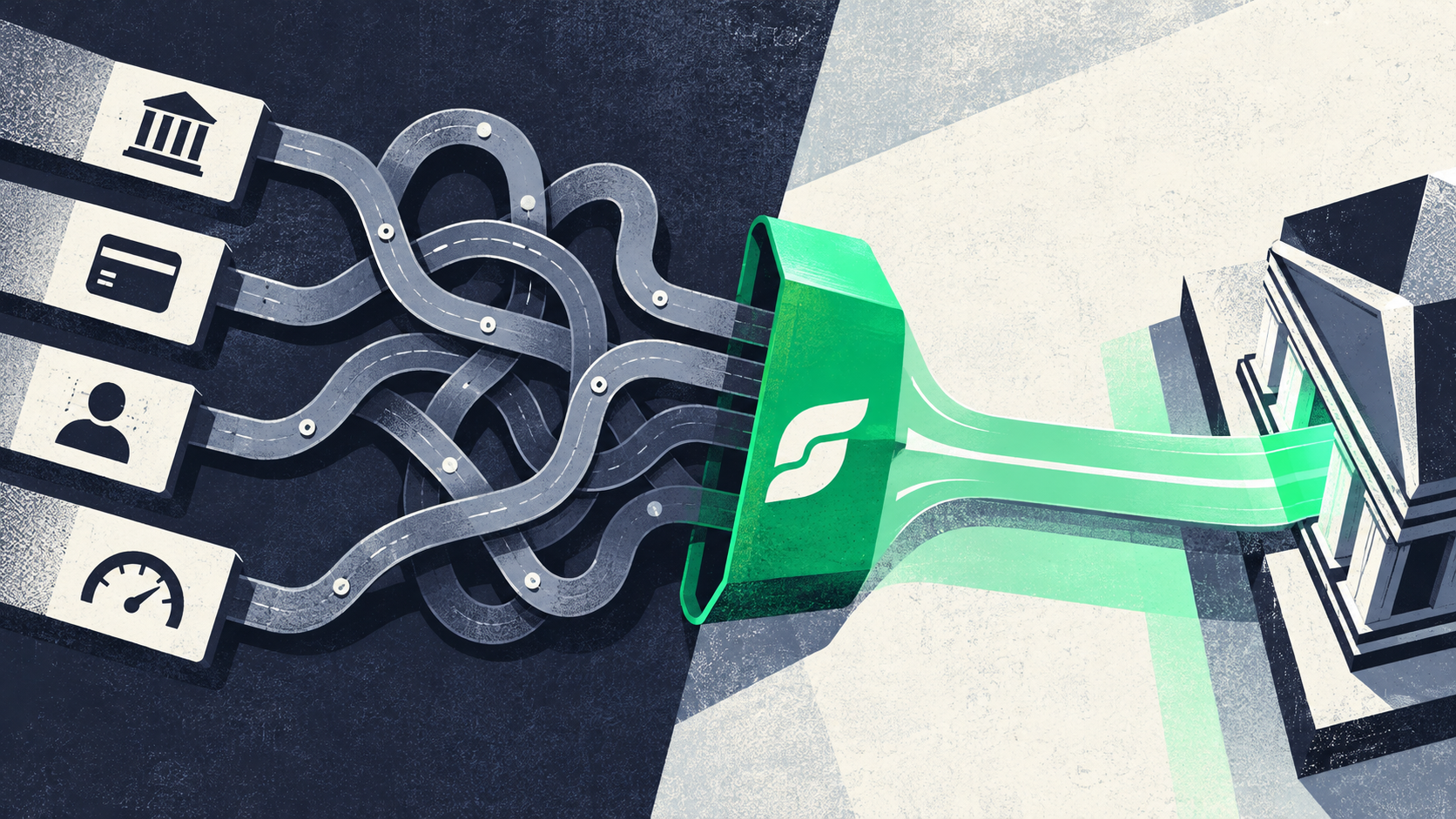
Credit data aggregators and data orchestration platforms such as Lendflow provide one API for connecting to multiple credit bureaus. That includes Experian, Equifax, TransUnion, and business bureaus like Dun & Bradstreet, while the bureaus themselves only offer access to their own data.
Lendflow takes this a step further than pulling reports. With the Lendflow Connect embedded lending platform, teams connect with top integration partners in minutes through Data Orchestration. The same integration then turns bureau data into lending decisions and automated workflows.
This guide explains what a multi-bureau credit API is, which provider types offer one, and what data you can reach. It also walks through the five stages of integration and a checklist for choosing the right partner.
What a Multi-Bureau Credit API Is
An API, or application programming interface, is a set of rules that lets two software systems share data. A credit API lets your app request credit data and receive it in a format your systems can read. For a deeper primer, see how a credit bureau API works.
A multi-bureau credit API sends one request and returns a normalized response from several bureaus. Normalized means every report arrives in the same layout, so your team writes one set of rules instead of a separate set for each bureau.
Consumer and Business Bureaus
Consumer bureaus track how individuals borrow and repay money. The CFPB credit bureau data report stated in 2012 that "Equifax, Experian, and TransUnion each have more than 200 million files on consumers." Those figures describe 2011 data, so treat them as a foundational snapshot rather than a current count.
Business bureaus, such as Dun & Bradstreet, track companies instead of people. Small business lenders often need both views, which is why one API that reaches consumer and business sources saves so much effort.
Why One Bureau Is Not Enough
Bureau files often differ because lenders and other data furnishers choose where they report. Experian explains why credit reports differ: furnishers do not have to share data. Those that do can report to one, two, or all three bureaus. A single pull can therefore miss accounts that only appear at another bureau.
Errors are another reason to compare sources. The FTC credit report accuracy study reported in 2013 that "five percent of consumers had errors on one of their three major credit reports." Those errors could lead to higher costs. That foundational study used 2012 data from 1,001 participants who reviewed their own reports.
Types of Providers That Offer One Credit API
Credit APIs come from three main provider types, and each fits a different stage of growth. The table below shows how they compare on coverage, setup, and decisioning. For a vendor-level breakdown, you can compare credit bureau API providers in our detailed guide.
A credit bureau aggregator mainly delivers reports from several bureaus through one connection. A data orchestration platform like Lendflow also decides which source to call, in what order, and what should happen after the data comes back.
Data You Can Access Through One Integration
A single integration can reach far more than consumer credit reports. Depending on the provider, one API may connect you to the following data types.
- Consumer credit reports: Tradelines, payment history, inquiries, and scores from Experian, Equifax, and TransUnion.
- Business credit reports: Company payment history and risk scores from business bureaus such as Dun & Bradstreet.
- Public records: Liens, judgments, and bankruptcies tied to a person or a business.
- UCC filings: Records that show which lenders have a claim on a business's assets.
- KYB data: Business registration, ownership, and identity checks that confirm a company is real.
- Alternative data: Bank transactions, cash flow, and other signals that sit outside the bureau file.
Lendflow pairs bureau data with ecosystem data enrichment, so lenders see a fuller picture of each borrower. That added context helps teams make decisions with current information instead of waiting on disconnected steps.
Benefits of Using One API for Multiple Credit Bureaus
Pre-qualified offers hosted on Lendflow drive an average of 42% faster speed to funding. Lendflow's embedded finance customers also operate with 80% smaller teams while converting similar funding volumes, because one connected flow replaces scattered integrations.
Demand for fast digital credit keeps growing. The Federal Reserve's Small Business Credit Survey (March 2026) tracked online fintech lender applicants. Their share rose from 17% in the 2020 survey to 29% in 2025. The survey covers employer firms with 1 to 499 employees and uses a convenience sample, not a random one.
- Faster launch: One integration replaces separate builds for each bureau, so credit products reach the market sooner.
- Fewer contracts: One provider relationship reduces the number of bureau agreements your team has to manage.
- Normalized data: Reports arrive in one format, which keeps underwriting rules and reporting simple.
- Cost control: A waterfall calls the next source only when the first one cannot support a decision.
- Lean teams: Automation handles pulls, routing, and follow-ups, so headcount does not grow with volume.
Lendflow's Data Orchestration builds credit decline waterfalls across bureaus and data sources. When one source declines an applicant or returns a thin file, the next source runs automatically, so no deal leaves money on the table. Learn how to build a credit decline waterfall for your own lending flow.
Common Use Cases
- Small business underwriting: Lenders review business bureau data alongside owner credit, where permitted, in one flow.
- KYB onboarding: Platforms confirm a company's identity and ownership before they extend credit.
- Prequalification: Brands show borrowers likely offers early, which keeps applicants moving toward funding.
- Portfolio monitoring: Lenders recheck credit on existing accounts to spot rising risk before it becomes a loss.
Bureau data is only the starting point, so the real value comes from what happens next. Lendflow feeds that data into automated credit underwriting and decisioning, which moves applications from review to decision without manual handoffs. Teams that onboard business borrowers can also learn more about KYB verification for lenders.
How to Integrate a Multi-Bureau Credit API in Five Stages
Most multi-bureau integrations follow the same five stages, whichever provider you choose. Lendflow is built to launch widgets in under two weeks and a full API integration in 30 to 45 days.
- Plan: List the bureaus and data types you need, and confirm your permissible purpose for every consumer pull.
- Design: Set your waterfall order, your decision rules, and the action to take when a source returns no file.
- Build: Connect to the provider's sandbox, map the normalized fields, and set up borrower consent screens.
- Test: Run sample applications through every path, including approvals, declines, thin files, and errors.
- Deploy and monitor: Go live, then track hit rates, pull costs, and decision speed so you can tune the flow.
Permissible purpose deserves special care in the planning stage. Under the federal FCRA (15 U.S.C. § 1681b), "any consumer reporting agency may furnish a consumer report under the following circumstances and no other." Review the FCRA permissible purpose rules with your counsel, since this article is not legal advice.
The listed circumstances include a credit transaction involving the consumer and the consumer's own written instructions. Using an aggregator or orchestration platform does not remove these duties, so build consent and purpose tracking into your flow from day one.
How to Choose the Right Credit API Provider
The right provider depends on your bureau needs, compliance duties, and growth plans. Use this checklist to compare options before you sign a contract.
- Bureau coverage: Does the provider reach Experian, Equifax, TransUnion, and the business bureaus you need?
- Compliance and security: Does it hold SOC 2 Type II and support consent and permissible purpose tracking?
- Pricing model: Do you pay per report, through a contract, or both, and how do waterfalls change cost?
- Sandbox access: Can your engineers test with sample data before you commit?
- Decisioning: Can the platform turn data into decisions, or will you build that layer yourself?
- Speed to launch: How quickly can you go live with widgets, landing pages, or a full API?
Lendflow Connect is SOC 2 Type II compliant and links brands to 75+ specialty and bank lenders through a single integration. In the 12 months before March 2025, more than $1.5B in offers were made on the Lendflow platform.
Conclusion
Credit data aggregators and data orchestration platforms are the providers that offer one API for multiple credit bureaus. Aggregators mainly deliver reports, while orchestration platforms like Lendflow also route data through waterfalls, decisions, and automated workflows.
Using more than one bureau matters because furnishers report selectively and reports can contain errors. A single integration gives you that wider view without separate contracts, builds, and data formats for each source.
The key takeaway is to choose a partner that matches your bureau coverage, compliance, and speed needs. With Lendflow, teams connect top integration partners in minutes and reach 42% faster speed to funding on pre-qualified offers.
Frequently Asked Questions
Which Companies Offer One API for Multiple Credit Bureaus?
Credit data aggregators and data orchestration platforms such as Lendflow offer one API that connects to Experian, Equifax, TransUnion, and business bureaus. The bureaus themselves only provide access to their own data.
What Is a Credit Bureau Aggregator?
A credit bureau aggregator is a provider that delivers reports from several bureaus through one contract and one integration. Most aggregators focus on report delivery, while orchestration platforms add waterfalls, decisioning, and workflows.
Can I Pull Business and Consumer Credit Through the Same API?
Yes, many aggregators and orchestration platforms return consumer and business bureau data through one integration. Consumer pulls still require a permissible purpose under the FCRA.
Do I Need a Permissible Purpose to Pull Credit Through an Aggregator?
Yes, for consumer reports the FCRA allows a report only for listed purposes, and using an aggregator does not change that. Confirm your specific requirements with legal counsel, since this answer is not legal advice.
How Long Does a Multi-Bureau API Integration Take?
With Lendflow, widgets can launch in under two weeks and a full API integration can launch in 30 to 45 days. Timelines with other providers vary based on scope, testing, and compliance review.