[.green-span] Credit Underwriting Software That Accelerates Loan Decisions[.green-span]

What Is Credit Underwriting Software
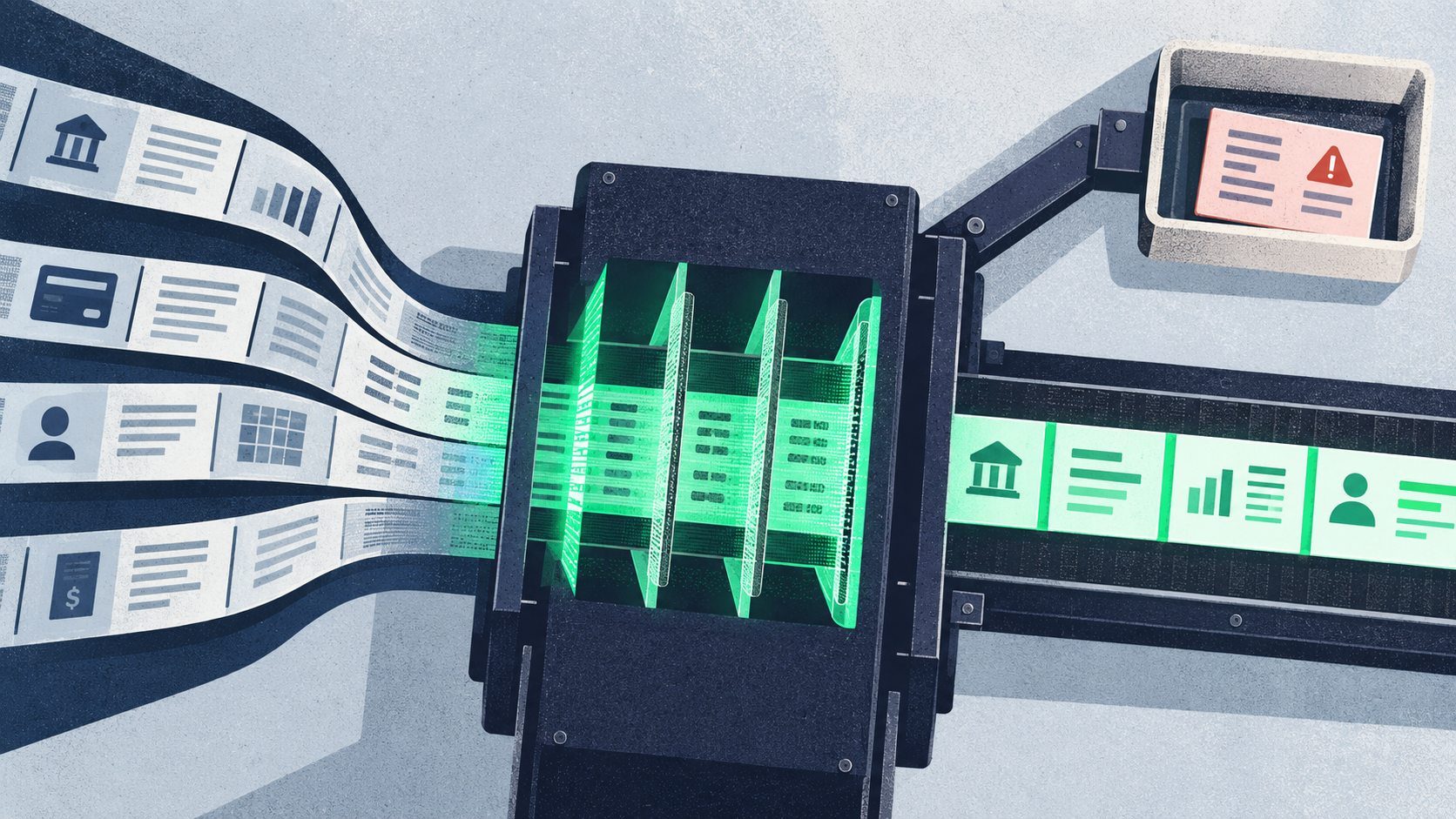
Credit underwriting software automates borrower evaluation by pulling data from multiple sources, applying decision rules, and assessing creditworthiness in real time. Rather than manually reviewing spreadsheets and waiting on document collection, lenders use these platforms to run borrower information through configurable risk models. The output is typically an approval, decline, or conditional offer—delivered in minutes instead of days.
The core function replaces slow, manual analysis with rules-based decisioning. The software connects to credit bureaus, bank accounts, and business data sources, then applies your lending policies automatically. What used to require back-and-forth across teams now happens in a single workflow.
- Decision output: Approve, decline, or refer for manual review
- Offer terms: Tailored to the borrower's risk profile
- Timeline: Minutes rather than days or weeks
How Automated Credit Decisioning Accelerates Loan Decisions
Speed-to-decision is the primary benefit. Traditional underwriting involves collecting documents, entering data by hand, and waiting for analysts to review each file. Automated decisioning eliminates bottlenecks by pulling credit bureau data, bank statements, and business records simultaneously.
Decision rules fire automatically, so clear-cut applications skip the queue for human review entirely. Where traditional underwriting can stretch across days or weeks, automated systems often return decisions in minutes.
This matters for conversion. Borrowers who wait too long tend to drop off or find funding elsewhereThis matters for conversion. 68% of online loan applications are abandoned, often due to friction and slow processes. Faster decisions keep applicants engaged and improve close rates. Lendflow customers, for example, see 42% faster speed to funding on average.
Key Features of Modern Credit Underwriting Software
The following capabilities define what separates modern platforms from legacy tools. Each feature addresses a specific friction point in the underwriting process.
Configurable Decision Models and Policy Rules
Lenders can set custom credit policies—minimum credit scores, debt-to-income thresholds, industry exclusions—without engineering support. No-code rule builders let teams adjust decision logic as risk appetite changes. This keeps underwriting aligned with business strategy without waiting on development cycles.
Document Analysis and Data Extraction
Document analyzers pull structured data from PDFs, tax returns, and bank statements automatically. This replaces manual data entry and reduces processing time significantly. Once extracted, the data flows directly into decisioning workflows, which means fewer errors and faster turnaround.
Explainable Risk and Trust Scoring
Trust scores summarize borrower risk in a single, interpretable metric. Explainability matters because adverse action requirements and fair lending laws demand clear decline reasons. Transparent scoring also supports internal review and audit readiness.
Decline Waterfalls and Second-Look Routing
Not every applicant fits your credit box, According to the Federal Reserve, only 41% of small businesses received the full financing they sought—but that doesn't mean the deal is lost. Decline waterfalls route declined applications to alternative lenders or products. This approach helps maximize approval rates without increasing risk exposure.
Real-Time Credit Signals and Monitoring
Ongoing credit monitoring flags changes in borrower risk after origination. Real-time signals support credit line management and help lenders manage portfolio exposure over time. This is especially useful for revolving products or lines of credit.
How Automated Credit Decisioning Systems Use AI
AI agents are specialized automation modules that handle distinct tasks within the decisioning workflow. Rather than a single monolithic model, modern platforms deploy multiple agents, each focused on a specific function.
Industry Classification Agents
Industry classification agents automatically assign NAICS and SIC codes to business applicants. NAICS, or North American Industry Classification System, is the standard for categorizing businesses by sector. Accurate classification supports risk segmentation and policy application by vertical.
Document and Bank Statement Analyzers
AI extracts data from unstructured documents—tax returns, bank files, IDs—and converts it into structured JSON for downstream systems. This enables faster, cleaner underwriting without manual re-keying. The result is fewer bottlenecks and more consistent data quality.
Trust Scoring Agents
Trust scoring agents generate composite risk scores using multiple data points and present results as a single, explainable metric. Transparency here supports both compliance and internal governance, which becomes increasingly important as regulatory scrutiny grows.
Voice and Chat Communication Agents
Automated communication agents handle borrower outreach through phone or chat. They manage reminders, document requests, and status updates. This reduces operational workload for lending teams while keeping borrowers informed throughout the process.
Data Orchestration and Alternative Data for Smarter Loan Decisioning
Data orchestration means connecting multiple data sources through a single integration layer. Instead of building separate connections to bureaus, banks, and accounting tools, lenders use one platform to access everything. This simplifies the technical lift and reduces integration timelines.
Alternative data includes real-time bank transactions, cash flow, and business performance metrics. This type of data expands lending to thin-file borrowers who may not qualify using bureau data alone. For SMB lending, traditional credit scores often underrepresent business health, so alternative data fills the gap.—roughly 32 million American adults are considered unscoreable—so alternative data fills the gap.
Platforms like Lendflow connect 75+ data and lender integrations in one place. This breadth of connectivity gives lenders more flexibility in decisioning and placement.
Credit Decision Tools Across the Lending Lifecycle
Underwriting software supports more than origination. The best platforms span the full loan lifecycle, from application through servicing.
Application and Borrower Acquisition
Embedded widgets, landing pages, and APIs capture applications directly within a brand's existing experience. White-label options let brands maintain their own borrower-facing design while leveraging the underlying infrastructure. This keeps the borrower journey seamless.
Decisioning and Offer Generation
Automated underwriting generates pre-qualified offers with terms tailored to borrower risk. This is the core function of credit decision tools—turning data into actionable offers. The faster this happens, the more likely borrowers are to convert.
Funding and Servicing Handoff
Software supports handoff to funding systems, including document finalization and e-sign workflows. This closes the loop from application through disbursement without manual intervention. Teams can move deals forward without switching between disconnected tools.
Ongoing Credit Monitoring
Post-funding monitoring tracks risk signals after the loan is booked. Alerts can trigger reviews or early intervention. This supports portfolio management and ongoing risk control, especially for products with longer terms.
Compliance, Explainability, and Risk Controls in Credit Risk Tools
Lenders operate under fair lending laws, adverse action requirements, and audit expectations. Credit underwriting software addresses compliance by making decisions explainable and auditable.
- Fair lending compliance: Models are designed to meet ECOA and fair lending requirements, with clear documentation of decision factors.
- Adverse action: Software generates decline reasons that can be shared with applicants as required by law.
- Audit trails: Every decision, data pull, and rule change is logged for examiner review.
- Data security: SOC 2 Type II compliance protects borrower information throughout the process.
Outcomes Lenders Expect From Instant Lending Decisioning
Business outcomes matter more than feature lists. Here's what lenders typically see after implementing automated decisioning:
- Faster speed to funding: Pre-qualified offers move borrowers from application to cash faster. Lendflow customers see 42% faster speed to funding on average.
- Higher conversion rates: Instant decisions reduce applicant drop-off and keep deals moving.
- Leaner operations: Automation lets teams handle volume without adding headcount. Lendflow's embedded finance customers operate with 80% smaller teams while converting similar funding volumes.
- New revenue streams: Embedded lending creates monetization opportunities for brands offering financing within their products.
Deployment Speed and the Best APIs for Instant Credit Decisioning in Lending Workflow
Fast deployment is a differentiator. The best platforms offer multiple entry points depending on how quickly you want to launch and how much customization you require.
Skip long build cycles—use plug-and-play tools to embed capital products quickly. Lendflow supports all four deployment options, which means teams can start with widgets and expand to full API integration as their needs grow.
How to Choose the Best Credit Underwriting Data Service
Selecting a vendor comes down to a few key criteria. Here's what to evaluate during the selection process.
Breadth of Lender and Data Integrations
More lenders and data sources improve matching and approval rates. Broader connectivity gives lenders flexibility in decisioning and placement. Look for platforms with 50+ integrations as a baseline.
Modular Multi-Lender Decisioning and Underwriting Support
Modular architecture lets lenders use only the components they need—decisioning, data, or automation. Multi-lender decisioning means routing across multiple funding sources. This supports scalability and lender-specific workflows without requiring a full platform overhaul.
Configurability and Time to Launch
Fast, no-code configuration reduces implementation friction. Evaluate how quickly rules, offers, and workflows can be launched. Ask vendors for typical onboarding timelines and whether model configuration is included.
Proof Points and Customer Outcomes
Look for published results, customer quotes, and awards. Vendor credibility is stronger when supported by measurable outcomes. Lendflow, for example, has facilitated $1.5B+ in offers and earned recognition as Best Overall Embedded Finance Platform at the Tearsheet Big Bank Theory Awards 2025.
Connect Capital and Grow With Lendflow
Lendflow brings AI-driven capabilities to embedded lending through open architecture, configurable decisioning, and a network of 75+ lenders and data integrations. The platform supports term loans, purchase of receivables, invoice factoring, MCAs, equipment financing, SBA loans, and lines of credit.
Recognition includes LendTech of the Year finalist (US Fintech Awards 2025), Best Overall Embedded Finance Platform (Tearsheet Big Bank Theory Awards 2025), and Financial Technology Trailblazer (Tech Trailblazer Awards 2025).
Book a demo to see how Lendflow can help you connect capital and grow.
Frequently Asked Questions About Credit Underwriting Software
What is the difference between credit underwriting software and a loan origination system?
Credit underwriting software focuses on risk decisioning and approval logic. A loan origination system, or LOS, manages the full application workflow from intake to funding. Many platforms combine both, though underwriting software can also plug into existing LOS infrastructure.
How long does it take to implement an automated credit decisioning system?
Implementation timelines vary by integration depth. Embedded widgets can launch in under two weeks, while full API integrations typically take 30–45 days. Model configuration and testing are usually built into onboarding.
Can credit underwriting software support automated mortgage underwriting?
Yes, many platforms support mortgage products alongside business lending, though some specialize in SMB or consumer credit. Evaluate whether the vendor's data sources and decision models align with mortgage-specific requirements.
How do credit risk tools automate underwriting without removing human review?
Most systems automate clear-cut decisions and flag edge cases for manual review. This hybrid approach accelerates throughput while preserving oversight for complex or high-risk applications.
Who offers the best credit underwriting data for SMB lenders?
The best data service depends on product mix and borrower profile. Look for platforms with broad bureau, bank, and alternative data integrations. Vendors with 50+ data and lender connections offer the most flexibility for SMB decisioning.