[.green-span]What Is Automated Credit Decisioning and Why Lenders Are Adopting It[.green-span]
.png)
What Is Automated Credit Decisioning
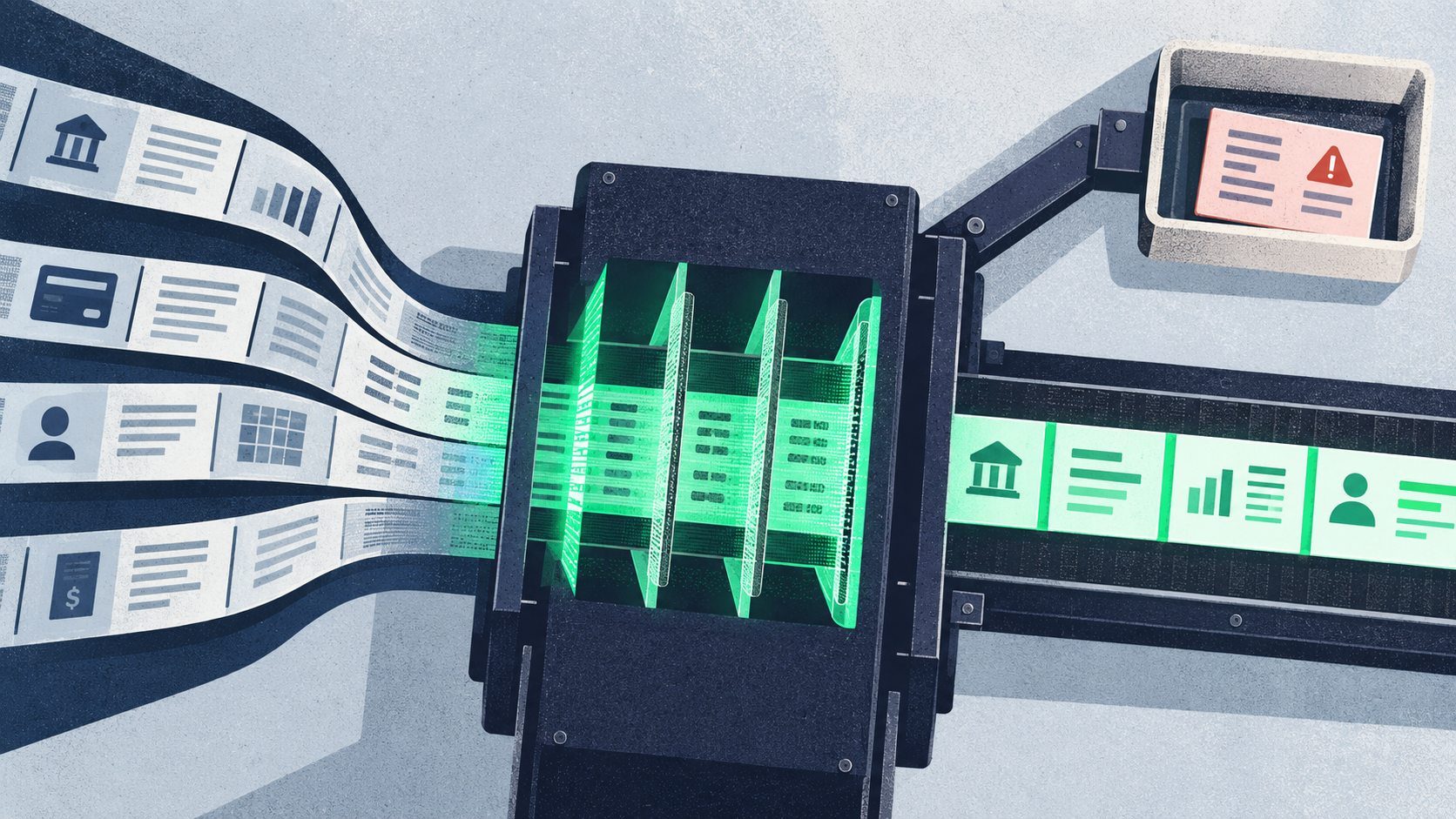
Automated credit decisioning uses AI, data analytics, and configurable rules engines to assess creditworthiness and make lending decisions without manual intervention. Rather than an underwriter reviewing each application by hand, the system pulls data from multiple sources, applies scoring models, and returns an approve, decline, or refer decision—often in seconds.
A decision engine is the software that executes lending rules automatically. Creditworthiness refers to how likely a borrower is to repay based on their financial history and current situation. When decision engines combine with real-time data feeds, lenders can process high application volumes while maintaining consistent risk standards across every decision.
How Automated Credit Decisioning Works
The process moves from application intake to decision output in a predictable sequence. Each step builds on the previous one, and the entire cycle can complete in under a minute.
What makes automated decisioning different from legacy systems is how data flows. In older setups, information sits in disconnected silos and someone manually transfers it between systems. With automation, when a bank statement uploads, the system extracts relevant figures and feeds them directly into the scoring model. No manual data entry, no waiting for someone to get around to it.
Manual vs Automated Credit Decisioning
Traditional manual underwriting relies on analysts reviewing documents, pulling credit reports, and making judgment calls. This approach works for complex edge cases, though it introduces variability and bottlenecks that compound as application volume grows.
The difference becomes obvious during high-volume periods. A manual team processing 100 applications per day eventually hits a ceiling. An automated system handles 1,000 applications the same way it handles 100—without overtime or additional hiring. The economics shift from linear (more volume equals more staff) to scalable (more volume with the same infrastructure).
Why Lenders Are Adopting Automated Credit Decisioning
Borrower expectations have shifted considerably over the past decade. When someone can get a rideshare in three minutes or a pizza delivery update every 30 seconds, waiting five days for a credit decision feels outdated. Lenders who move faster tend to win more deals simply because they respond while the borrower is still engaged.
Several factors are driving adoption:
Competitive pressure plays a role too. Fintech lenders built their operations on automated decisioning from day one. Traditional lenders are now catching up or watching market share shift to faster competitors.without production-grade AI models face a 15–20% cost disadvantage in consumer lending—or watch market share shift to faster competitors.
Key Components of an Automated Credit Decisioning System
A complete system combines several layers that work together. Understanding each component helps when evaluating vendors or planning internal capabilities.
Data Aggregation and Orchestration
The system connects to credit bureaus, bank data providers, and business record sources through a single integration layer. Rather than managing dozens of separate API connections, lenders pull everything through one orchestration platform that normalizes the data into a consistent format.
Fragmented data leads to incomplete risk pictures. When bank transaction data, credit history, and business financials flow into the same decisioning engine, the resulting decisions reflect the borrower's actual situation more accurately than any single data source could provide.
Credit Scoring Models and Live Risk Signals
AI and machine learning models analyze payment behavior, revenue patterns, and financial indicators to predict risk.
The key distinction here is live risk signals—current data rather than stale snapshots from weeks or months ago.
A borrower's situation can change quickly. A business that looked healthy last quarter might be struggling now. Models that update as new data arrives catch deteriorating credit conditions before funding, not after the money has already gone out the door.
Decision Engines and Configurable Rules
The rules engine is where lenders set approval thresholds, policy criteria, and exception handling. Well-designed platforms allow credit teams to adjust rules without engineering support—no code changes, no deployment cycles, no waiting on IT.
This configurability matters because credit policies evolve constantly. When market conditions shift or risk appetite changes, the system can adapt in hours rather than months. A lender might tighten criteria during economic uncertainty or loosen them when pursuing growth, all without rebuilding the underlying technology.
AI Agents for Documents and Borrower Communications
Document extraction pulls structured data from PDFs, bank statements, and tax returns automatically. Meanwhile, communication agents handle follow-ups, reminders, and status updates without manual intervention.
AI agents reduce the touchpoints where deals typically stall. When a document is missing, an automatic request goes out immediately instead of the application sitting in a queue until someone notices. Borrowers get faster responses, and operations teams spend less time on routine follow-up tasks.
Workflow Automation and Decline Waterfalls
When an application doesn't fit one lender's criteria, decline waterfalls route it to alternative products or lenders automatically. A borrower declined for a term loan might qualify for a line of credit or a revenue-based product instead.
The workflow layer orchestrates the entire journey from initial application through funding without manual handoffs between systems. Deals that would have fallen through the cracks in a manual process get a second or third look automatically.
Benefits of Automated Credit Decisioning for Lenders and Brands
The outcomes are measurable across several dimensions. Lenders using modern decisioning platforms report improvements in speed, conversion, cost structure, and risk management.—with banks fully integrating AI across the credit lifecycle seeing 20–30% drops in credit losses.
Faster Time to Decision and Funding
Decisions that took days now happen in minutes. Pre-qualified offers hosted on Lendflow drive an average of 42% faster speed to funding compared to traditional processes.
Faster funding cycles improve borrower experience and close rates. When capital arrives quickly, borrowers remember who delivered—and they come back for future financing.
Higher Application Conversion
More applicants complete the process when decisions are instant. Slow manual reviews cause drop-offs because borrowers abandon applications or find faster alternatives while waiting.
The friction in a lending process directly affects conversion. Every additional day of waiting, every manual document request, every unclear status update gives the borrower a reason to look elsewhere.
Lower Operational Costs and Leaner Teams
Automation reduces manual review hours dramatically. Embedded finance customers using Lendflow operate with 80% smaller teams while converting similar funding volumes.
Teams can handle higher volume without proportional headcount growth. The math changes from "hire more analysts to process more applications" to "configure better rules and let the system scale."
Smarter Risk Management With Complete Data
Pulling from multiple data sources gives a fuller picture of borrower risk than single-source manual checks. Alternative data like utility payments, transaction patterns, and industry benchmarks fills gaps that traditional credit scores miss.
A thin-file borrower with limited credit history might look risky based on bureau data alone. Add in 12 months of consistent bank deposits and on-time vendor payments, and the picture changes considerably.
Consistent and Explainable Credit Decisions
Every decision follows the same rules. Audit trails document why each application was approved, declined, or referred, supporting fair lending requirements and regulatory compliance.
Consistency matters for both compliance and business reasons. When two similar applicants get different outcomes because different analysts reviewed them, that creates legal exposure and borrower frustration.
Loan Products You Can Automate With Credit Decisioning Software
Automated decisioning applies across financing types, though the models and data sources vary by product.
Term Loans
Standard business loans with fixed repayment schedules fit naturally into automated workflows. The decisioning model evaluates cash flow, credit history, and time in business to determine approval and terms.
Lines of Credit
Revolving credit products require ongoing monitoring, not just initial approval. Automated systems can reassess risk continuously as utilization changes and new financial data becomes available.
MCAs and Purchase of Receivables
Revenue-based financing uses different risk models than traditional credit. Automated systems analyze daily sales patterns and receivables velocity rather than relying primarily on credit scores.
Invoice Factoring
Financing against outstanding invoices requires validating receivables data. Automation verifies invoice authenticity and debtor creditworthiness before advancing funds.
Equipment Financing
Asset-backed loans integrate collateral valuation into decisioning. The system considers both borrower credit and equipment resale value when determining approval and advance rates.
SBA Loans
Government-backed loans have specific compliance requirements and eligibility criteria. Automated systems enforce documentation standards consistently and flag applications that don't meet program requirements.
What to Look for in a Credit Decisioning Solution
Evaluating platforms requires looking beyond feature lists to implementation realities and day-to-day usability.
Real-Time Data and Live Credit Signals
The platform pulls current data, not cached or outdated reports. Stale data leads to decisions based on yesterday's reality, which creates risk when borrower situations change quickly.
Configurable Models and Decision Rules
No-code or low-code rule builders allow credit teams to adjust policies without engineering support. Credit policies change frequently, and waiting on development cycles creates dangerous delays.
Prebuilt CRM and Banking Integrations
Ready-made connectors to existing systems reduce implementation time significantly. Custom integrations add weeks or months to launch timelines and require ongoing maintenance.
Explainability and Compliance Controls
The system provides clear reasons for each decision. Regulators and auditors expect documentation showing why applications were approved or declined, not opaque algorithmic outputs.
Speed to Launch and Scalability
Implementation timeline and volume capacity both matter. Some solutions launch widgets in under two weeks, while full API integrations typically take 30–45 days depending on existing system architecture.
How to Implement an Automated Credit Decisioning System
Implementation follows a predictable path. Skipping steps tends to create problems that surface later in production.
1. Map Your Current Lending Workflow
Document the existing process and identify manual bottlenecks. Define which decisions benefit from automation and which edge cases still require human judgment.
2. Connect Data Sources and Integration Partners
Integrate credit bureaus, bank data providers, and internal systems. Skip custom builds where possible—use prebuilt connectors to accelerate deployment and reduce maintenance burden.
3. Configure Decision Models and Rules
Set approval thresholds, risk tiers, decline reasons, and exception routing based on your credit policy. Test configurations against historical data before going live to validate that the rules produce expected outcomes.
4. Test, Launch, and Iterate With Real Applications
Run parallel testing to compare automated decisions against manual benchmarks. Once the system performs as expected, go live and refine based on actual performance data.
Connect Capital and Grow With Lendflow Intelligence
Lendflow Intelligence serves as the decisioning layer within the Lendflow ecosystem. Connect handles data aggregation, Intelligence makes decisions, and Automate executes workflows. The platform supports term loans, MCAs, factoring, equipment financing, SBA loans, and lines of credit.
Implementation typically takes 2–4 weeks, with model configuration and testing built into onboarding. Over $1.5B in offers have been made on the platform as of March 2025.
Book a demo to see how Lendflow can help you scale smarter.
Frequently Asked Questions About Automated Credit Decisioning
What is auto credit decisioning?
Auto credit decisioning is another term for automated credit decisioning—using technology to evaluate creditworthiness and issue lending decisions without manual underwriter review. The terms are interchangeable in practice.
How long does it take to deploy an automated credit decisioning platform?
Deployment timelines vary by complexity and integration requirements. Widget-based solutions often launch in under two weeks, while full API integrations typically take 30–45 days depending on existing system architecture.
Can automated credit decisioning systems provide explainable decisions for compliance?
Leading platforms generate audit trails and decision explanations documenting why each application was approved, declined, or referred. This documentation supports fair lending requirements and regulatory examinations.