[.green-span]Best Credit Decisioning Software for Smarter Loan Decisions in 2026[.green-span]

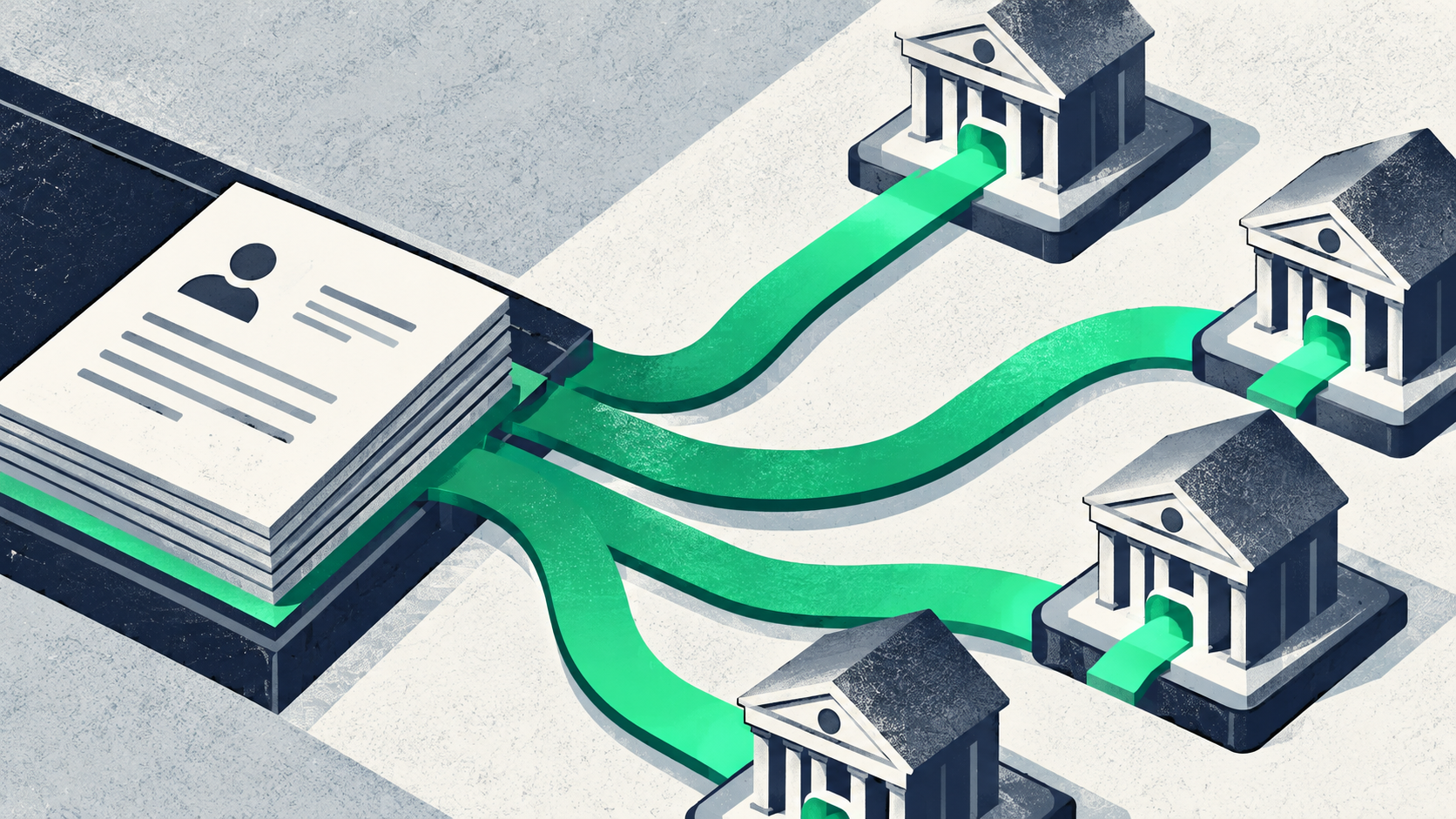
Credit decisioning software automates how lenders evaluate loan applications and reach approve or decline decisions. Instead of an underwriter manually reviewing documents and pulling credit reports, the software handles data collection, applies rules-based logic, and returns a decision in seconds. The platform connects to credit bureaus, bank account aggregators, and identity verification services to gather the information it uses to make that call.
Five core functions define what credit decisioning software does:
The compliance piece matters more than it might seem at first. Regulators want to see why you approved or declined someone, and credit decisioning software creates that paper trail automatically.
How automated credit decisioning works
The process starts when a borrower submits an application through a widget, API, or borrower portal. From there, the system pulls data from multiple sources at once. Credit bureau data, bank transaction history, and identity verification all flow into the platform simultaneously.
Once the data arrives, the decision engine applies rules and risk models. Think of it like a series of if-then statements: if revenue exceeds a certain threshold and time in business exceeds another, then approve for a specific amount. The system outputs one of three results: auto-approve, auto-decline, or route to manual review.
That last option is important. Not every application fits neatly into approve or decline. Borderline cases get flagged for human attention, which keeps speed high on clear-cut deals while preserving accuracy on complex ones. Every decision, whether automated or manual, gets logged with the data and rules applied.
Why manual credit decisioning no longer works for lenders
Borrowers expect instant decisionsBorrowers expect instant decisions. The Federal Reserve's 2025 Small Business Credit Survey shows the share of small businesses applying to online lenders has grown from 17% to 29% in five years. When a competitor can approve someone in minutes and you take three days, the deal walks out the door.
Manual processes create compounding problems as volume grows:
The inconsistency issue is particularly frustrating. Two underwriters looking at the same application might reach different conclusions based on their individual judgment. Credit decisioning software applies the same rules every time, which removes that variability.A study in Management Science found algorithmic underwriting produces 6.8% lower default rates than human underwriting, with the gap widening for riskier, more complex loans. Credit decisioning software applies the same rules every time, which removes that variability.
Key features of a modern credit decision engine
Real-time data aggregation and orchestration
Modern platforms pull data from multiple sources simultaneously rather than one at a time. Credit bureaus, bank account aggregators, and business verification services all feed into the system through a single connection. Data orchestration refers to the ability to route and combine information from many integrations without managing each vendor relationship separately.
When data aggregation is built into the decisioning platform, you avoid the fragmented systems and data silos that slow down underwriting. Connect once, access everything.
Configurable decision models and rules
Lenders can build custom credit decisioning models without writing code. Rule-based logic uses if-then conditions that business users can adjust as market conditions change. If you want to tighten approval criteria during an economic downturn, you can modify thresholds without waiting on IT.
The ability to iterate quickly matters. Lending is not static, and decisioning rules that worked six months ago might not fit today's risk environment.
Explainable risk scoring and audit trails
Explainable AI means scoring that shows why a decision was made, not just what the decision was. Regulators and compliance teams want to see the reasoning behind approvals and declines.
Audit trails log every data point and rule applied for each application. When examiners ask why you declined a borrower, you have documentation ready. This transparency also helps with fair lending compliance, since you can demonstrate that decisions follow consistent criteria.
Decline waterfalls and second-look routing
A decline waterfall automatically routes declined applications to alternative lenders or products. If someone doesn't qualify for a term loan, they might be a fit for invoice factoring or a different lender's risk appetite.
Second-look gives borderline applicants another chance through different criteria or lender partners. This approach captures revenue that would otherwise be lost when an applicant doesn't fit one product but qualifies for another.
Document analysis and data extraction
AI-powered tools extract structured data from PDFs, tax returns, bank statements, and IDs. Instead of someone manually entering numbers from a tax return into a spreadsheet, the software reads the document and pulls the relevant fields automatically.
This eliminates manual data entry and speeds document review significantly. The time savings compound when you're processing hundreds or thousands of applications.
CRM, banking, and loan origination integrations
Credit decision tools connect to existing systems like Salesforce, loan origination platforms, and core banking software. API-first architecture and pre-built connectors reduce implementation time from months to weeks.
Integration depth varies by vendor. Some platforms offer dozens of ready-made connectors while others require custom development work.
Best credit decisioning software vendors for lenders and embedded brands
The following platforms serve banks, fintechs, and brands embedding lending into their products.
Lendflow
Lendflow is an embedded lending platform with AI-driven decisioning built into an integrated ecosystem. Lendflow Intelligence handles decisioning, Lendflow Connect manages data orchestration across 75+ lender partners, and Lendflow Automate executes workflows. In the last 12 months, $1.5B+ in offers were made on the platform.
Implementation is fast. Widgets deploy in under two weeks, and full API integrations complete in 30–45 days. The platform supports term loans, MCAs, invoice factoring, SBA loans, equipment financing, and lines of credit. Lendflow won Best Overall Embedded Finance Platform at the Tearsheet Big Bank Theory Awards 2025.
FICO Decision Management Suite
FICO is the industry-standard credit scoring company, now offering decision management software. The platform provides configurable rules, simulation capabilities, and wide adoption among traditional financial institutions.
Zest AI
Zest AI focuses on fair lending and model explainability. The platform emphasizes reducing bias and expanding credit access through AI-powered decisioning.
Provenir
Provenir is a risk decisioning platform with AI and data orchestration capabilities. It focuses on speed-to-decision and global data integrations for lenders operating across markets.
TurnKey Lender
TurnKey Lender provides an end-to-end lending platform with built-in credit decisioning. It suits lenders wanting an all-in-one loan origination and decisioning solution rather than a standalone decisioning tool.
HES LoanBox
HES LoanBox is a configurable lending software platform with credit decisioning modules. It offers flexibility for different lending products and business models.
ACTICO
ACTICO automates credit origination, risk scoring, and pricing strategies. No-code rule configuration and simulation tools let business users manage decisioning logic directly.
Credit decisioning software comparison
Benefits of automated credit decisioning for banks and fintechs
Faster time to decision
Automated credit decisions cut approval time from days to minutes. Lendflow customers see 42% faster speed to funding on average. Speed improves borrower experience and reduces drop-off during application, since fewer people abandon the process when they get an answer quickly.
Higher approval and conversion rates
Better data and smarter rules help lenders approve more qualified borrowers who might have been declined under less sophisticated criteria. Decline waterfalls capture revenue that would otherwise be lost when an applicant doesn't fit one product but qualifies for another.
Lower operational costs
Automation reduces manual document review, data entry, and underwriter workload. Teams can handle higher volumes without adding headcount. Lendflow's embedded finance customers operate with 80% smaller teams while converting similar funding volumes.
Stronger compliance and auditability
Automated platforms create consistent, documented decision trails. Every decision is logged with the data and rules applied, which simplifies regulatory audits and fair lending reviews.
Scalable volume without added headcount
Loan decisioning software handles volume spikes without requiring proportional team growth. Seasonal demand, marketing campaigns, and partner launches all become manageable without scrambling to hire.
How to choose the right credit decisioning platform
1. Evaluate data coverage and integration depth
Check how many data sources the platform connects to and whether it supports the integrations you actually use. Platforms with data orchestration built in reduce integration complexity significantly.
2. Test real-time decision speed
Request demos that show actual decision latency. Real-time means sub-second decisions during application, not batch processing overnight.
3. Confirm explainability and policy controls
Ask how the platform explains decisions and whether your compliance team can audit the logic. Check whether business users can modify rules without IT involvement.
4. Check implementation time and time to value
Ask for typical deployment timelines and what's required from your team. Compare vendors offering plug-and-play tools versus those requiring long build cycles.
5. Match coverage to your financing products
Ensure the platform supports your specific loan types. Some platforms specialize in consumer lending and may not fit SMB or commercial use cases like MCAs, invoice factoring, or equipment financing.
How AI and real-time data improve loan decisioning
AI-powered credit decisioning engines go beyond static rules. Machine learning modelsA McKinsey survey found only 27% of banks are piloting gen AI for credit decisioning, meaning early adopters gain a significant edge. Machine learning models improve accuracy over time by learning from loan performance outcomes. A model that sees which approved borrowers defaulted and which performed well can adjust its predictions accordingly.
Real-time bank data provides current cash flow visibility rather than stale credit reports from weeks ago. Continuous risk monitoring adapts as new data flows in, which means you're making decisions based on what's happening now rather than what happened last month.
Agentic AI takes this further. Specialized AI agents handle tasks like document analysis, industry classification, and borrower communication automatically. Each agent focuses on one job and does it well.
Embedding credit decisioning into web apps and lending workflows
Brands and platforms embed credit decisioning using widgets, APIs, and white-label interfaces. SaaS platforms offer financing to customers, marketplaces connect SMBs to capital, and vertical software adds lending as a feature.
Embedding methods include:
The best solutions for embedding credit decisioning support fast deployment and branded borrower experiences that feel native to the product. Skip long build cycles—use plug-and-play tools to embed capital products quickly.
Frequently asked questions about credit decisioning software
How is credit decisioning software different from a loan origination system?
Credit decisioning software focuses specifically on the approve/decline decision using data and rules. A loan origination system manages the full application lifecycle from intake to funding. Many lenders use decisioning software as a component within their origination workflow rather than as a replacement for it.
Can credit decisioning software be embedded into SaaS or marketplace products?
Yes. Many modern platforms offer widgets, APIs, and white-label interfaces that brands integrate into existing products. SaaS companies and marketplaces can offer financing without building lending infrastructure from scratch.
Does credit decisioning software support MCAs, SBA loans, and invoice factoring?
Support varies by vendor. Some platforms specialize in consumer lending while others cover SMB financing products. Confirm product coverage before selecting a vendor, since a platform built for credit cards may not handle the complexity of invoice factoring.
What types of lenders benefit most from credit decisioning software?
Banks, fintech lenders, alternative finance providers, and brands embedding financing all benefit. Marketplace lenders handling high application volumes and multiple lending partners see particularly strong ROI from decisioning automation, since the complexity of routing deals to different lenders is handled automatically.