[.green-span]Modern AI Lending Automation: Strategy and Implementation[.green-span]

What Is AI Lending Automation
AI lending automation refers to the use of artificial intelligence, machine learning, and workflow orchestration to handle lending tasks that traditionally required manual effort. Think document review, credit decisions, borrower follow-ups, and application routing. Instead of a team member reading through bank statements or chasing down missing paperwork, AI handles it automatically.
This goes beyond simply putting paper forms online. Basic digitization moves the process to a screen, but AI lending automation actually processes the information, makes decisions based on rules you configure, and triggers the next step without waiting for someone to click a button.
The core components typically include:
- Machine learning models: Analyze borrower data to generate credit decisions and risk scores
- Document extraction tools: Pull structured data from PDFs, tax returns, bank statements, and IDs
- Workflow automation: Route applications, trigger actions based on status changes, and manage handoffs between systems
- AI-powered communications: Handle borrower follow-ups via chatbot, voice AI, or automated reminders
When all four components work together, the lending process moves from application to funding with minimal manual intervention.
How AI Lending Automation Works
The lending lifecycle has five main stages: data intake, processing, decisioning, communication, and funding. AI transforms each stage from a manual task into an automated handoff, so deals move forward without getting stuck in someone's inbox.
Intelligent Workflow Orchestration
Workflow orchestration connects your systems through APIs and pre-built connectors, then routes applications based on rules you define. When a borrower submits an application, the system can automatically request documents, assign the deal to an appropriate lender, and update status across every connected tool.
The alternative is fragmented systems where data lives in silos. Someone has to manually copy information from one platform to another, which slows everything down and introduces errors. Orchestration keeps everything synchronized without that manual work.
Document Processing and Data Extraction
AI reads unstructured documents like tax returns, bank statements, and government IDs, then extracts the relevant data points into a structured format. Revenue figures, addresses, account balances, and business details all get pulled automatically.
Without this capability, an analyst would manually key in each data point, which takes time and creates opportunities for mistakes. Automated extraction handles the same work in seconds.
Automated Underwriting and Credit Decisioning
Loan underwriting AI pulls together credit bureau data, bank transaction history, and business performance metrics into a unified risk assessment.
The system applies your underwriting rules consistently across every application, so decisions happen in minutes rather than days.
Configurable decision models let you adjust the criteria based on your risk appetite and product requirements. The AI follows the rules you set, which means every deal gets the same analysis regardless of when it was submitted or who reviewed it.
AI-Powered Borrower Communications
Chatbots, voice AI, and automated reminders handle the back-and-forth that typically consumes operations teams. Borrowers get instant answers to status questions, document upload nudges, and funding confirmations without anyone picking up the phone.
This frees up your team to focus on exceptions and complex cases rather than routine inquiries.
Core Use Cases for AI-Powered Lending
AI lending delivers the most value in four specific areas where manual processes create bottlenecks.
Loan Application Processing and Verification
AI handles intake by validating applicant data, classifying industries using NAICS/SIC codes, and flagging incomplete applications before they reach underwriting. Fewer errors at the intake stage means fewer delays later in the process.
Credit Scoring and Risk Assessment
Lending AI generates risk scores using alternative data sources, real-time credit signals, and configurable decision models. Unlike older scoring systems that operate as black boxes, modern platforms provide transparency into why a particular score was assigned. This matters for compliance and for explaining decisions to borrowers.
Fraud Detection and Compliance Monitoring
AI identifies suspicious patterns, verifies identity through KYC checks, and maintains audit trails for regulatory review. Automated monitoring catches anomalies that manual review often misses, particularly when dealing with high application volumes.
Automated Collections and Payment Management
AI-powered systems manage payment reminders, follow-ups, and collection workflows without manual outreach. Borrowers stay engaged through automated touchpoints, while operations teams focus on accounts that actually require human attention.
Benefits of an Automated Digital Lending Solution
Teams using AI lending automation typically see improvements across speed, cost, accuracy, and scale. Here's how the comparison breaks down:
Faster Loan Approvals and Speed to Funding
AI compresses time-to-decision and time-to-funding by eliminating manual handoffs and review bottlenecks. Pre-qualified offers hosted on platforms like Lendflow drive an average of 42% faster speed to funding compared to traditional workflows.
Reduced Operational Costs with Smaller Teams
Automation handles document review, communication, and decision support, which allows teams to scale volume without growing headcount. Embedded finance customers on Lendflow's platform operate with 80% smaller teams while converting similar funding volumes.McKinsey reports that agentic AI could lower bank operational costs by 20% or more.
Embedded finance customers on Lendflow's platform operate with 80% smaller teams while converting similar funding volumes.
Higher Accuracy and Consistent Decisions
Machine learning reduces human error and applies consistent underwriting rules across all applications. Every deal gets the same rigorous analysis, which removes the variability that comes with different reviewers handling different applications.
Volume Scalability Without Adding Headcount
AI lending platforms handle volume spikes during peak periods without operational strain. When application volume increases, the system processes more deals without requiring additional staff.
Common Challenges When Adopting Lending AI
AI lending automation comes with real obstacles. Understanding them upfront helps teams plan for successful implementation.
Data Privacy and Security Requirements
SOC 2 compliance, data encryption, and borrower consent management are baseline requirements for any platform handling sensitive financial data. Security infrastructure and clear data governance policies protect both the lender and the borrower.
Algorithmic Bias and Fairness Concerns
Explainable AI and ongoing model monitoring help ensure fair lending outcomes. Regulators increasingly expect lenders to demonstrate that automated decisions do not discriminate against protected classes, which means transparency into how decisions are made is essential.
Integration with Legacy Lending Systems
Modern platforms use APIs and pre-built connectors to work with existing CRM and banking systems. Skip long rebuild cycles—look for solutions that integrate with your current tech stack rather than requiring you to replace everything.
Regulatory Compliance and Explainability
Transparent, auditable AI decisions help lenders meet regulatory requirements. When examiners ask why a loan was approved or declined, clear documentation of the decision logic provides the answer.
How to Choose the Best AI Lending Platform
Not all AI lending platforms offer the same capabilities. Here's what to evaluate when comparing options:
- Lender network breadth: Access to multiple specialty and bank lenders through a single integration
- Product flexibility: Support for term loans, MCAs, SBA loans, lines of credit, equipment financing, and more
- Implementation speed: Widgets in days, full API in weeks
- Configurability: Custom consent flows, UI, and decision rules
Multi-Lender Network and Product Coverage
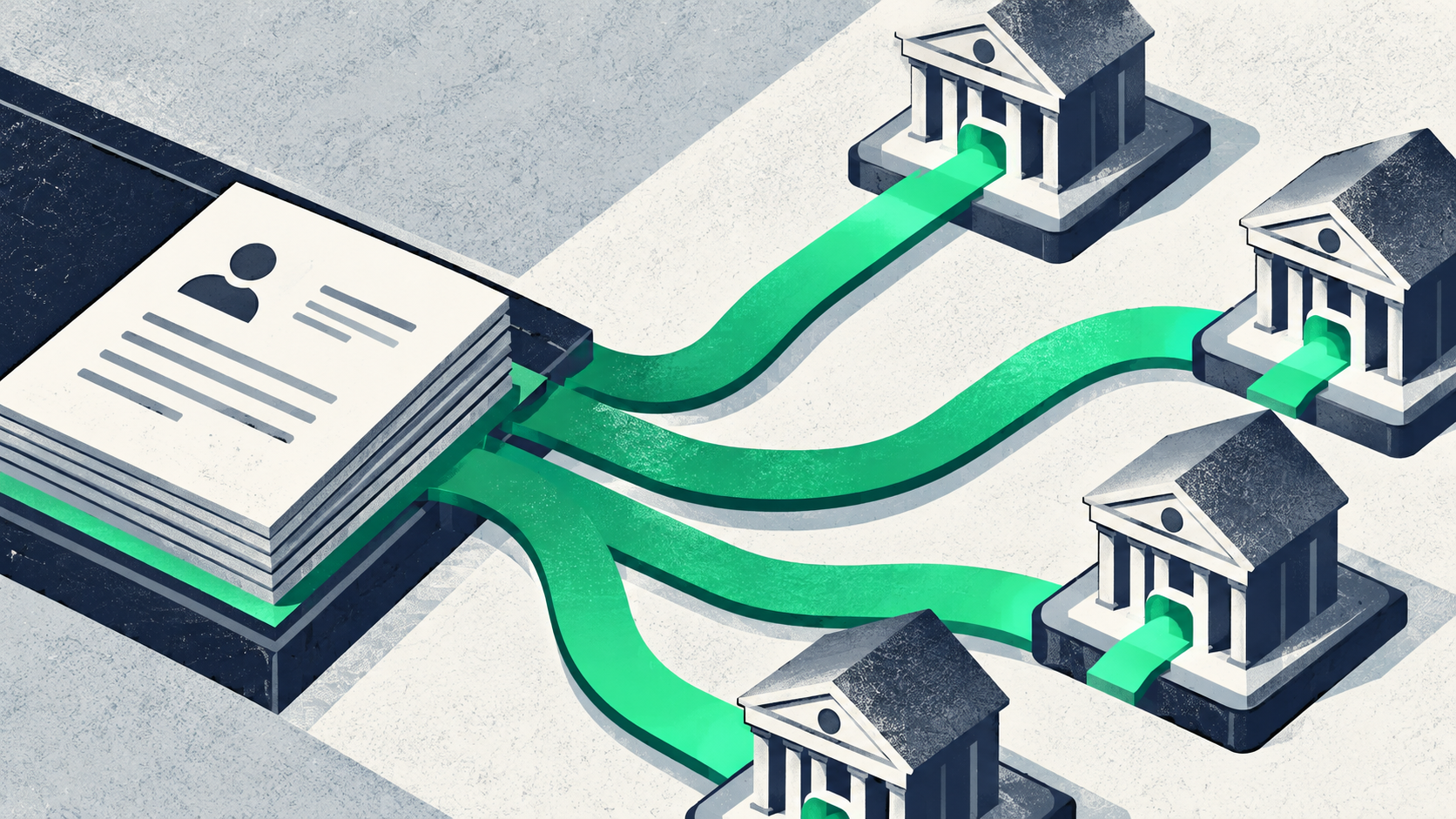
Access to multiple lenders and financing products through one platform expands your options. Single-lender solutions limit where deals can go, while multi-lender networks route each application to the best-fit funding source. Lendflow connects to 75+ specialty and bank lenders through a single integration.
Embedded Finance and White-Label Options
Brands use white-label widgetsThe global embedded finance market is expected to reach $7.2 trillion by 2030. Brands use white-label widgets and embedded applications to offer financing without borrowers leaving their product experience. The customer relationship stays intact while the brand adds a new revenue stream.
Modular AI Agent Architecture
Specialized AI agents for document analysis, industry classification, risk scoring, and communications can be configured independently. This modularity lets you automate specific bottlenecks without overhauling your entire workflow.
Speed to Launch and Integration Flexibility
Plug-and-play tools like widgets, landing pages, and APIs enable fast implementation. Embedded widgets can launch in under two weeks, while full API integrations typically take 30–45 days depending on configuration complexity.
Implementation Strategy for Lending Automation
A clear roadmap helps teams move from evaluation to production without unnecessary delays.
1. Assess Current Workflows and Identify Pain Points
Start by mapping existing processes and pinpointing manual bottlenecks. Document handling, communication delays, and decision latency are common areas where automation has the greatest impact.
2. Define Success Metrics and ROI Targets
Set measurable goals before selecting a platform. Time-to-decision, conversion lift, cost savings, and team size relative to volume are typical metrics that guide both platform selection and post-launch optimization.
3. Select an Integration Approach and Timeline
Options range from embedded widgets (fastest) to unified APIs (most flexible) to direct connectors for existing systems. Match the approach to your technical resources and timeline.
4. Configure AI Agents and Decision Rules
Set up document extraction rules, risk scoring parameters, workflow triggers, and communication sequences. Most platforms offer configuration tools that do not require heavy engineering resources.
5. Test, Optimize, and Scale
Test in controlled environments, monitor performance against your success metrics, and expand automation as confidence grows. Incremental rollout reduces risk while building organizational familiarity with the new workflow.
Build Smarter Lending Operations with AI
AI lending automation transformsWith 83% of lenders increasing AI budgets in 2026, AI lending automation is transforming manual lending into intelligent, scalable operations. The teams seeing the best results combine data orchestration, specialized AI agents, and embedded lending tools into a unified workflow that compresses time-to-funding while keeping teams lean.
Lendflow's platform brings these capabilities together through Connect for data aggregation, Intelligence for decisioning, and Automate for workflow execution. With $1.5B+ in offers made on the platform and recognition as Best Overall Embedded Finance Platform at the Tearsheet Big Bank Theory Awards 2025, the infrastructure is built for teams ready to connect capital and grow.
FAQs About AI Lending Automation
What types of loans can be automated with AI lending solutions?
AI lending automation supports a wide range of financing products including term loans, lines of credit, MCAs, invoice factoring, equipment financing, and SBA loans. Any product with structured application and underwriting workflows can benefit from automation.
How long does it typically take to implement an AI lending platform?
Implementation timelines vary by approach. Embedded widgets can launch in under two weeks, while full API integrations typically take 30–45 days depending on configuration complexity.
Can AI loan underwriting connect with multiple lenders simultaneously?
Yes. Modern AI lending platforms route applications across networks of lenders using smart waterfall rules, ensuring each deal reaches the best-fit funding source without manual distribution.
What happens when machine learning tools cannot reach a confident lending decision?
When AI cannot make a high-confidence decision, applications are flagged for human review or routed to secondary lenders through decline waterfalls. This ensures no deal is left without an outcome.
Is AI lending automation suitable for smaller lenders and fintech startups?
AI lending solutions help teams of all sizes scale without growing headcount. Smaller lenders often see the greatest efficiency gains by automating document handling and borrower communications early in their growth.