[.green-span]APIs for enriching business and borrower data: who provides them and how to choose[.green-span]
Lenders need clean, verified data before they approve a loan. This guide maps the APIs for enriching business and borrower data, names the main providers, and shows how to combine them.
What is a business and borrower data enrichment API?
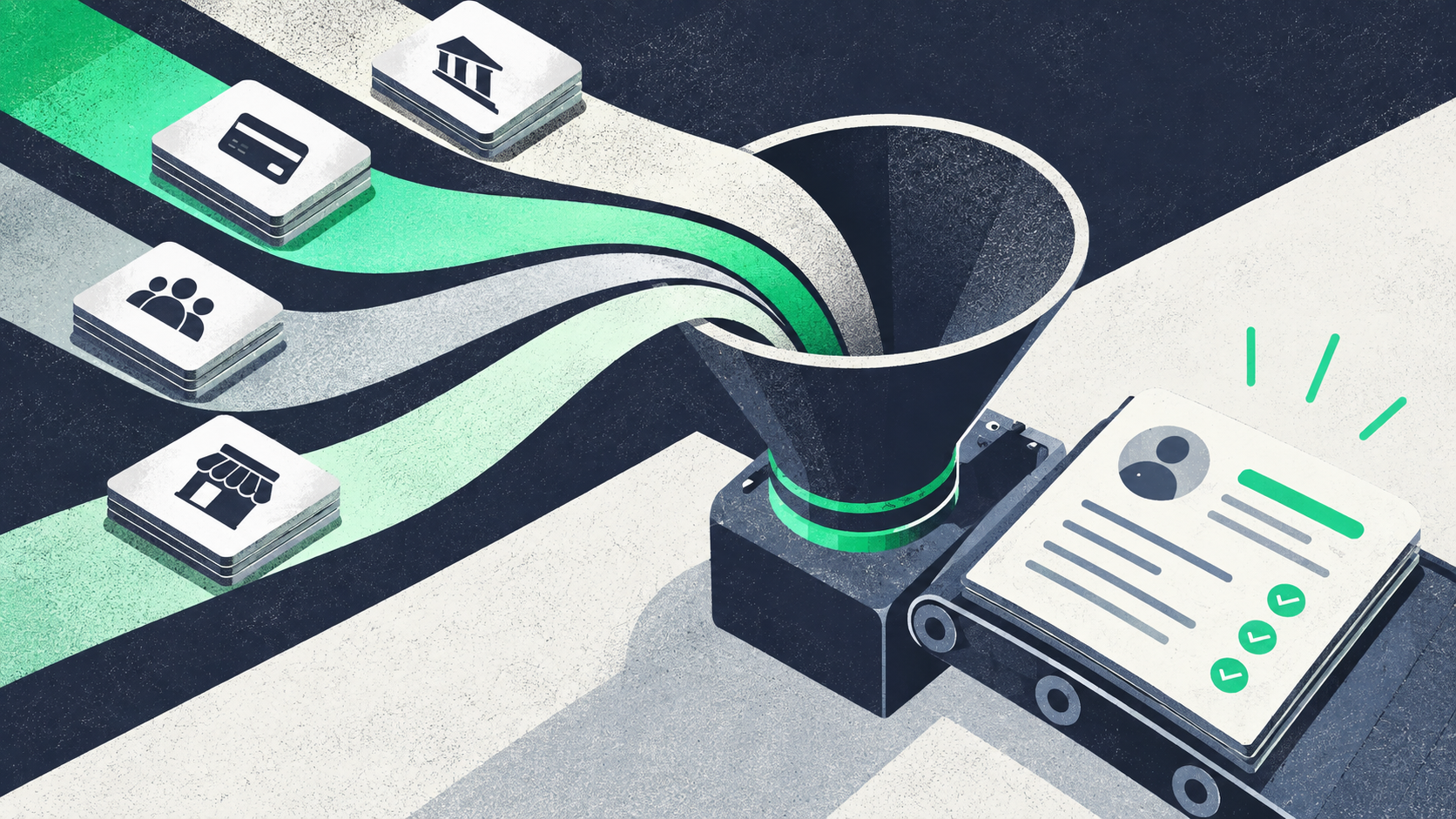
A data enrichment API takes one identifier and returns structured, verified data about a business or borrower. You send a name, EIN, email, or bank connection, and the data enrichment API sends back clean fields for a credit decision.
That is different from a raw bureau pull. A bureau returns a single report. Enrichment blends and verifies many sources into one usable profile.
Lending teams use a data enrichment API for four core jobs:
- KYB: verify a business is real and legally registered.
- Income: confirm what a borrower earns and spends.
- Credit: score applicant risk and set terms.
- Fraud: flag stolen or synthetic identities.
Treat enrichment as one input to a decision, not the decision itself. For a deeper walkthrough, see our credit data API guide.
Why bureau data alone is not enough for modern underwriting
Credit bureaus were built for borrowers with long credit histories. Thin-file consumers, gig workers, immigrants, and young businesses often fall through the cracks.
Many creditworthy people are simply not visible to the bureaus. The Opportunity Finance Network reports that cash-flow underwriting expands access for the 45 to 60 million American adults with little or no credit.
A data enrichment API adds fresh, orthogonal signals that bureaus miss. Real-time data lets you approve good applicants a bureau would reject. Learn why data-powered credit underwriting beats bureau-only models.
The main categories of APIs for enriching business and borrower data
Before you shortlist vendors, learn the categories. Each one answers a different underwriting question.
The table below maps each category to what it returns and who provides it.
Business identity and KYB APIs
Know Your Business (KYB) APIs verify that a company is real and legally registered. They confirm registration, beneficial ownership, EIN match, and any liens or bankruptcy filings.
Middesk and Enigma are common choices, and Enigma adds SMB revenue intelligence. KYB usually sits first in the funnel, before you spend on credit pulls.
Borrower income and cash-flow APIs
These APIs turn a bank connection into clean income and spending signals. Plaid handles transaction enrichment and income, Argyle and Pinwheel connect payroll, and Yapily covers EU open-banking transactions.
Cash-flow signals expand access to thin-file borrowers. A 2019 interagency alternative data statement noted that some firms automate cash-flow data to better judge a borrower's ability to repay. FinRegLab's cash-flow data research findings drew on six nonbank lenders, including Accion, Brigit, Kabbage, LendUp, Oportun, and Petal.
Business and consumer credit APIs
These APIs pull bureau reports and scores through one connection. Providers include D&B, Experian Intelliscore, Equifax, and FICO SBSS, plus aggregators.
For small businesses, combine business credit with the owner's personal credit. When there is a no-hit or thin file, fall back to cash-flow data.
The Federal Reserve lists examples of alternative data credit access, such as monthly net cash flow for a small business. You can get compliant credit bureau data access through one API.
Fraud, identity, and thin-file APIs
These APIs score identity and fraud risk at intake. Socure flags synthetic or stolen identities, and Nova Credit translates international credit files for newcomers.
Fraud signals run orthogonally to credit. A borrower can have strong credit and still be an impostor, so these checks complete the picture regulators encourage.
How to evaluate a data enrichment API
Judge providers on four criteria, not on brand name:
- Signal freshness: how recent and real-time the data is.
- Coverage: match rates on your actual applicant pool.
- Compliance posture: FCRA, GLBA, and CCPA readiness.
- Integration cost: engineering time and price to connect.
Coverage matters most on your own population, not vendor averages. Stress-test each data enrichment API on your real declined applications before you commit.
Compliance: are alternative data APIs FCRA compliant?
It depends on the provider and how you use the data. FCRA applies when data informs a credit decision, and it requires a permissible purpose.
Not every alternative-data vendor is a consumer reporting agency (CRA). You also carry GLBA and CCPA obligations for handling personal data. Confirm a provider's CRA status before you use its data in an adverse-action decision.
How to combine enrichment APIs (and where orchestration helps)
No single API covers every applicant. Most lending stacks blend two to four sources to reach strong match rates.
The scenarios below show why:
Orchestration ties these sources together so no deal is left behind. Lendflow Connect gives you a unified data aggregation API that links to a 75+ lender network through one integration. Lendflow Intelligence turns traditional and alternative data into decisions across the full financing lifecycle.
Decline waterfalls re-route applicants a first lender rejects. Lendflow platform results show $1.5B+ in offers made as of March 2025 and 42% faster speed to funding. Lendflow Intelligence results include an 85% faster time-to-decision and a 60% application conversion lift.
This orchestration runs on real-time credit data so each data enrichment API feeds decisions with current signals.
Conclusion: build a lean, compliant enrichment stack
The right enrichment stack starts with the decision, not the vendor. Match each provider category to the underwriting question it answers, then stress-test coverage on your own declined applicants.
Confirm FCRA, GLBA, and CCPA readiness before any data informs a credit decision. Then orchestrate your sources instead of bolting on one more integration, so no good applicant slips through a gap.
That approach keeps teams lean while match rates and speed to funding improve. Want to see how orchestration turns fragmented data into decisions? Learn More about Lendflow DataGraph.
Frequently asked questions
What is a data enrichment API and how does it work?
A data enrichment API takes one identifier, such as a name, EIN, or bank connection, and returns clean, verified fields about a business or borrower. Lending teams use it to power KYB, income, credit, and fraud checks inside one decision flow.
Which providers offer loan APIs for income verification and cash-flow underwriting?
Plaid, Argyle, Pinwheel, and Yapily turn a bank or payroll connection into income and cash-flow signals you can use in an underwriting decision.
What API can I use to get company details, firmographics, and business credit data?
Middesk and Enigma return business identity and firmographics, while D&B, Experian, Equifax, and FICO SBSS supply commercial credit scores. Pull both through one integration to build a complete company profile.
Are alternative data enrichment APIs FCRA compliant for use in credit decisions?
It depends on the provider and how you use the data, since FCRA applies whenever data informs a credit decision. Confirm a vendor's consumer reporting agency status before using its data in any adverse-action decision.
Do I need both business and personal credit data for small business underwriting?
For most small businesses yes, because owners and companies share risk and thin business files are common. Combine business credit with the owner's personal credit, and fall back to cash-flow data on a no-hit.
Can I use multiple enrichment APIs together to improve match rates?
Yes, and most lending stacks combine two to four sources to lift coverage across different applicant types. An orchestration layer runs them in a waterfall, so a gap in one source is filled by the next without manual work.