[.green-span]Who Provides Credit Data and Data Integrations for Lenders[.green-span]
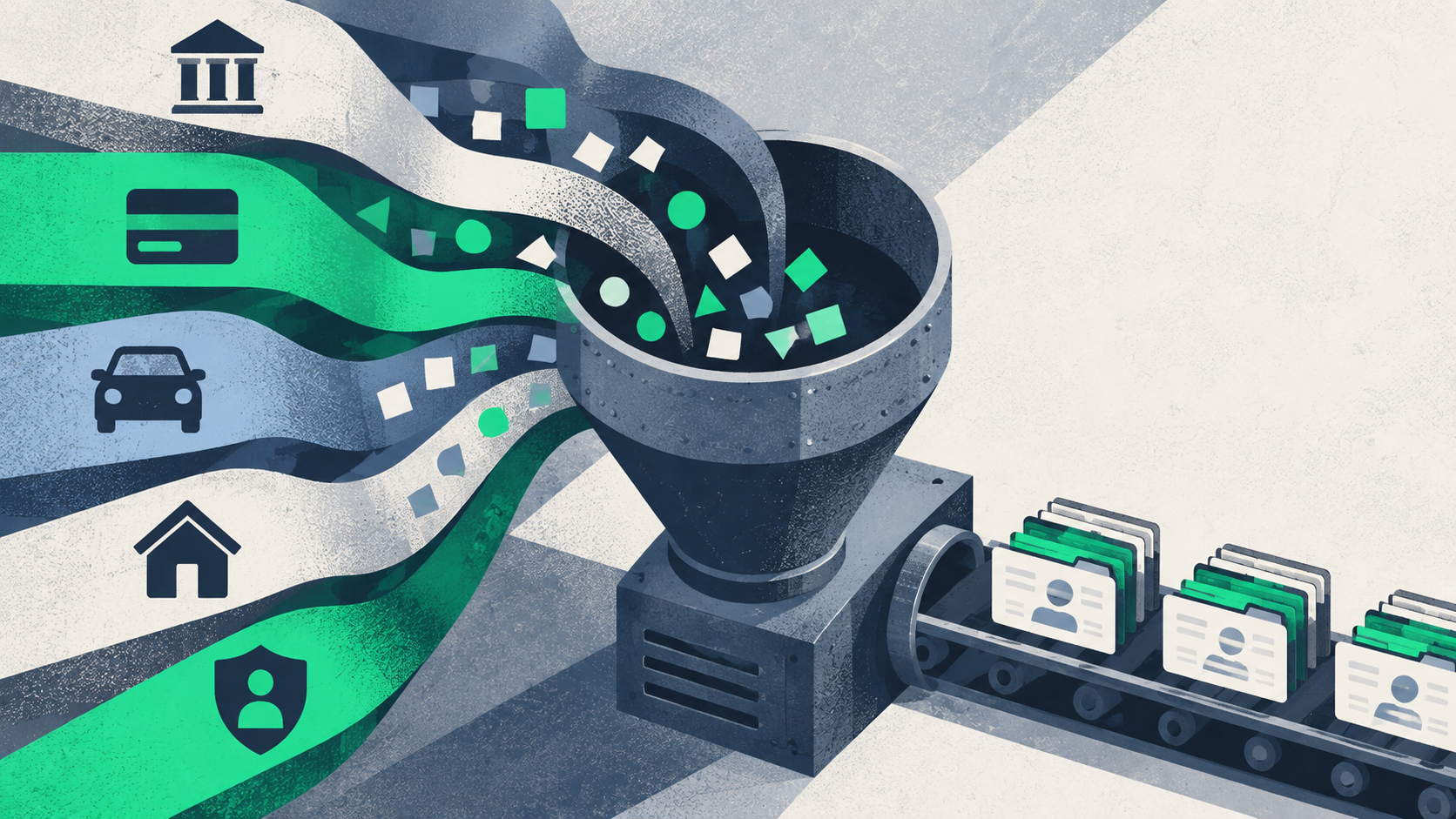
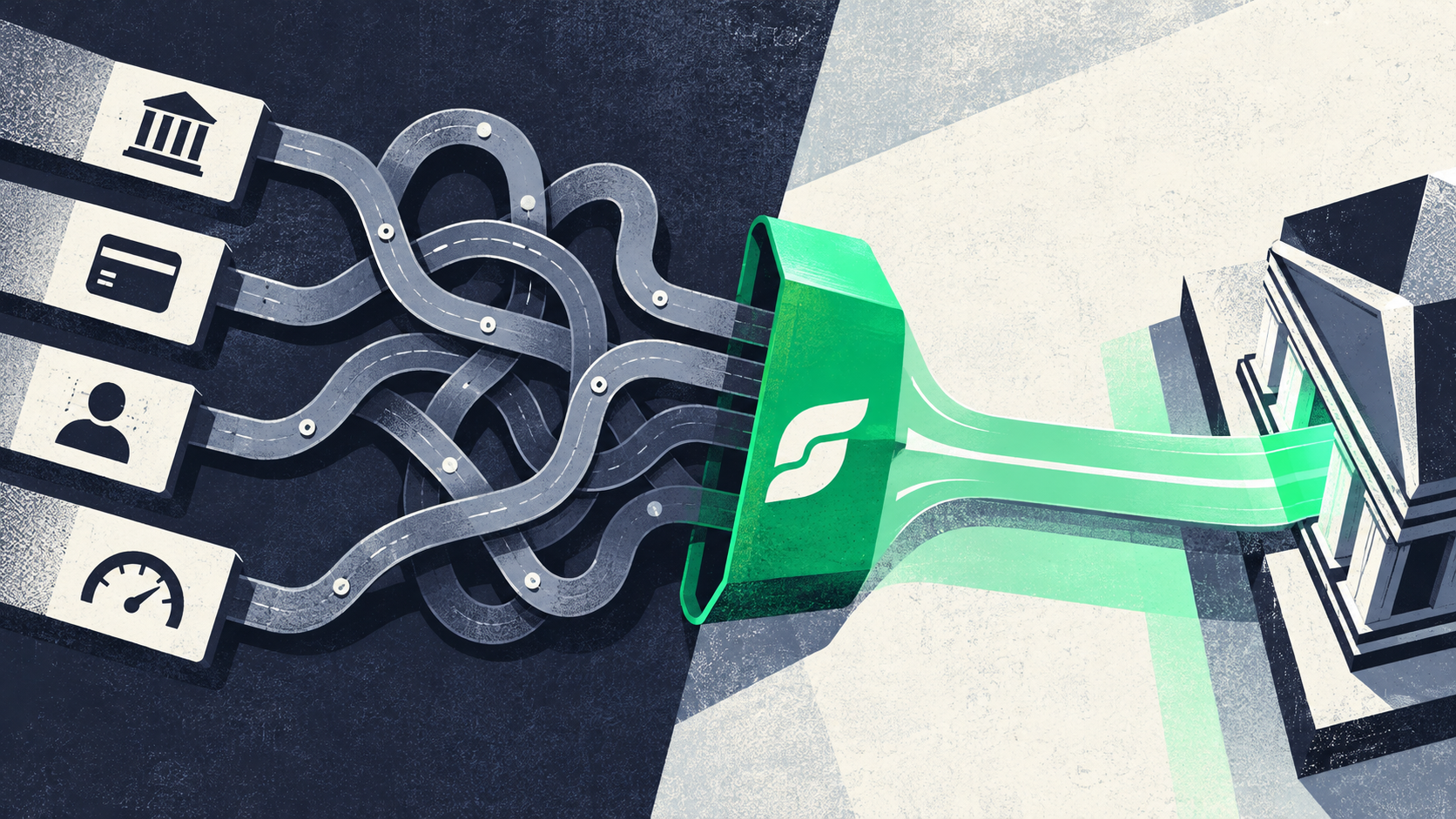
If you are asking who provides credit data and data integrations for lenders, the short answer is that no single company does it all. Lenders pull from credit bureaus, bank data sources, identity checks, and business records. Then they need a way to connect those sources into one decision.
Demand for small business credit shows why this matters. The Fed's 2025 Small Business Credit Survey found that 42% of applicants got the full amount they sought. Another 36% received some or most, and 22% received none.
The survey uses a convenience sample, which means firms chose to respond. Its results describe the firms surveyed rather than every small business, so treat them as a signal of demand rather than a national rate.
This guide explains the main types of credit data providers for lenders and what each one supplies. You will also learn how lenders connect several providers, how to choose the right mix, and which rules shape how credit data can be used.
Who Provides Credit Data for Lenders
Credit data for lenders comes from consumer credit bureaus (Equifax, Experian, and TransUnion) and business credit bureaus (such as Dun & Bradstreet). Lenders also use alternative and bank data providers, identity and KYB verification providers, and business data sources. Orchestration platforms then connect all of these sources into one lending workflow.
Most lenders use several of these at once, because each source answers a different question about the borrower. The sections below explain what each provider type offers and where it fits in a lending decision.
Consumer and Business Credit Bureaus
A credit bureau is a company that collects and sells reports on how people and businesses have handled debt. A consumer credit report usually lists tradelines, which are individual credit accounts like cards or loans. It also lists inquiries, which are records of who has checked the person's credit.
Many lenders also buy a credit score, which is a single number that sums up the report. Together, these pieces show how a borrower has handled credit in the past.
Business credit bureaus matter more for small business lending, since a company's payment history can look very different from its owner's personal history. For that reason, a small business lender may check both the business file and the owner's personal file. To see how these connections are set up, read our credit bureau integrations explained article.
Lenders usually connect to bureaus through an API, which is a software connection that lets two systems trade data automatically. Some lenders use batch data feeds instead, which send records on a schedule. Our guide to credit data APIs covers how consumer and business credit APIs differ.
Alternative and Cash Flow Data Providers
Bureau files do not cover everyone, and that gap is where alternative data comes in. The CFPB's updated credit invisibles estimate reports that the estimated share of credit invisibles in December 2020 was 2.7 percent, or 7.0 million consumers.
A "credit invisible" is an adult with no credit record at all. This CFPB estimate uses 2020 data and replaced an older, much higher figure in June 2025. Many articles still repeat that outdated number, so check the date on any statistic you see.
Many more people have a credit record that is too thin or too old to score under a widely used scoring model. Federal Reserve research on alternative data estimates that roughly 32 million American adults are "unscoreable" for a credit score.
That total adds the 7 million credit invisible adults to about 25 million adults with a "thin file." Both groups come from the same CFPB estimate, which uses 2020 data. In other words, about one in eight adults is hard to judge using a bureau score alone.
Fed staff describe alternative data as information not usually found in nationwide credit bureau files or on a credit application. Cash flow data is one common type, and it shows money moving in and out of a bank account over time.
Regulators see this deposit account data as one of the more promising forms of alternative data. The Fed's discussion, however, focuses on consumer and small-dollar credit, so small business lenders should test it against their own results.
Alternative data also carries real risks that lenders should weigh before they rely on it:
- Data quality: Records from non-traditional sources can be incomplete or inconsistent from one provider to the next.
- Limited track record: The Fed notes that many models using this data have not yet been tested through a full economic cycle.
- Added cost: Each new source adds fees, contracts, and integration work that a lender must budget for.
Some platforms also add context from beyond a single lender's own book of loans. Lendflow's ecosystem data enrichment for lenders draws on financing activity across lenders, products, and partner networks to add context to each application.
Identity, KYB, and Business Verification Providers
Before a lender can trust any credit data, it has to confirm who the applicant really is. The FFIEC customer identification program guidance says a bank must form "a reasonable belief that it knows the true identity of each customer." A customer identification program, or CIP, requires at least a name, address, identification number, and date of birth for individuals.
Banks may check these details against information from a credit bureau, a public database, or another source. The FFIEC also makes clear that a bank stays responsible for compliance even when it uses an outside provider for these checks.
Small business lending adds another layer called KYB, which stands for "know your business." KYB confirms that a company is real, registered, and run by the people who claim to own it.
No single source catches everything, so many lenders compare results from several verification providers. Lendflow's multi-source KYB Trust Score combines these signals into one explainable risk score.
Lenders also need to know what industry a business operates in, because risk and eligibility rules often change by industry. Industries are usually labeled with NAICS codes, which are standard industry categories used in the United States. Lendflow's AI business industry classification tool assigns these codes automatically so that underwriters do not have to look them up by hand.
How Lenders Integrate Multiple Data Providers
Once a lender picks its providers, the next challenge is getting all of that data into one place quickly. Data orchestration for lending is the process of calling each provider in the right order, combining the results, and passing them into a decision.
Speed matters more as borrowers move online. The same Fed survey found that more applicants are turning to online fintech lenders. Their share rose from 17% of applicants in the 2020 survey to 29% in the 2025 survey.
Point-to-Point APIs Versus an Orchestration Layer
There are two common ways to connect data providers, and each one shapes how fast a lender can grow:
- Point-to-point APIs: The lender builds and maintains a separate connection to each provider, which gives control but adds engineering work.
- Orchestration layer: One platform connects to many providers, so the lender manages a single integration and adds sources through configuration.
Lendflow takes the orchestration approach. With Lendflow's Data Orchestration, lenders can connect with top integration partners in minutes and build decline waterfalls.
A decline waterfall is a set of rules that sends a declined application to the next best lender or product. That way, a good deal is not lost after one "no," and the borrower still has a path to funding.
Six Steps to Connect Your Data Providers
Whichever approach you choose, the setup process follows a similar path. Here are six steps that most lending teams work through:
- Map your data needs: List the questions each product must answer, such as identity, credit history, cash flow, and industry.
- Secure bureau access: Complete each bureau's approval process and confirm the permitted reasons your team can use for pulling reports.
- Connect your sources: Link each provider through APIs, data feeds, or an orchestration platform that handles the connections for you.
- Normalize the data: Convert results into one common format so that fields from different providers line up correctly.
- Automate the decision: Feed the combined data into decision rules or models that approve, decline, or route each application.
- Build your waterfall: Set rules that pass declined or partial deals to other lenders or products that may fit better.
Steps four and five are where many teams lose time to manual review. An automated credit underwriting platform can pull credit data, apply your rules, and return a decision without someone copying data between screens.
Lendflow's data decisioning engine, Lendflow Intelligence, delivers 85% faster time-to-decision and 35% operational cost savings. Those gains come from cutting manual review and data preparation across the credit pipeline.
Pre-qualified offers hosted on Lendflow also drive an average of 42% faster speed to funding. In the 12 months before March 2025, more than $1.5B in offers were made on the platform.
How to Choose the Right Data Provider Mix
The right mix depends on who you lend to and what products you offer. A lender that makes quick, small advances needs different data than a lender that finances large equipment purchases.
The table below shows common starting points by borrower type and product. Treat it as a planning tool rather than a fixed rule, since your risk policy and partners will shape the final mix.
Factors to Weigh When Comparing Providers
Once you know which data types you need, compare providers on a few practical factors:
- Coverage: Check how well the provider covers your actual borrowers, including new businesses and thin-file owners.
- Cost: Compare per-pull fees, minimum commitments, and the engineering time each connection requires.
- Speed: Measure how quickly each provider returns results, since slow responses can stall an instant decision.
- Compliance: Confirm how the provider handles consent, data security, and your permitted uses of the data.
Common Pitfalls to Avoid
Many lenders run into the same problems when they build their data stack. Watch for these mistakes early:
- Relying on one source: A single bureau or score can miss borrowers that other data would approve or flag.
- Ignoring data formats: Mismatched fields from different providers can cause errors that slow every decision.
- Skipping a waterfall: Without a backup path, a declined applicant leaves even when another product could have fit.
Compliance Rules That Shape Credit Data Use
Rules about credit data change often, so every lender should check the current status before it acts. The information in this section is not legal advice, and it reflects public sources as of October 2026.
Section 1033 and Open Banking
Section 1033 of the Dodd-Frank Act covers a consumer's right to share their own financial data with other companies. This idea is often called open banking. The CFPB finalized a rule under Section 1033 in October 2024, but its requirements have not taken effect.
According to the CFPB personal financial data rights rule page, the compliance dates were stayed by a federal court on October 29, 2025. Earlier, in August 2025, the CFPB had already begun the process of reconsidering the rule. An industry report from the Consumer Bankers Association says the CFPB sent a revised version for White House review in August 2026.
As of October 2026, the rule is not an enforceable obligation, and its final form is still unknown. Lenders that use bank data should check the CFPB page for updates before they change their processes.
Section 1071 and Small Business Lending Data
Section 1071 requires certain lenders to collect and report data on credit applications from small businesses. The CFPB small business lending rule was revised by a final rule on May 1, 2026. Its compliance date is now "extended to January 1, 2028."
The Federal Register final rule defines a small business as one with $1 million or less in gross annual revenue. It covers lenders with at least 1,000 covered originations in each of two years, and it excludes merchant cash advances, agricultural lending, and loans of $1,000 or less.
As of October 2026, legal challenges to the earlier 2023 version of the rule are still ongoing in three jurisdictions. Because these details can shift, talk with your legal team about whether the rule applies to your business.
Key Takeaways on Credit Data and Integrations
Credit data and data integrations for lenders come from many places. These include consumer and business bureaus, cash flow data providers, and identity and KYB checks. Each source covers a different part of the borrower's story, and none of them is complete by itself.
The key takeaway is that lenders need many data sources but only one integration layer. An orchestration platform lets teams connect providers, automate decisions, and route declined deals without rebuilding their systems each time they add a new source.
FAQs About Credit Data Providers for Lenders
What Are the Major Credit Bureaus That Provide Data for Lenders?
The three nationwide consumer credit bureaus are Equifax, Experian, and TransUnion. Business credit bureaus, such as Dun & Bradstreet, focus on company credit files.
What Alternative Data Can Lenders Use for Thin-File Borrowers?
Lenders often use cash flow data from bank accounts for borrowers with short credit histories. Regulators view this data as one of the more promising types of alternative data.
How Do Lenders Integrate Multiple Data Providers?
Lenders either build a separate API connection to each provider or use an orchestration platform that connects many providers through a single integration.
How Should a Lender Choose Between Credit Data Providers?
A lender should start with the borrowers and products it serves, and then compare providers on coverage, cost, speed, and compliance.
What Compliance Rules Apply to Third-Party Credit Data?
As of October 2026, Section 1033 on consumer data sharing is stayed, and Section 1071 has a January 1, 2028 compliance date. This is not legal advice, so confirm current requirements with your legal team.