[.green-span]Who Provides a Single API for Multiple Sources of Credit Data[.green-span]
Every lending decision starts with data, and most teams need more than one source to see the full picture of a borrower. If you are asking who provides a single API for accessing multiple sources of credit data, the short answer is four types of companies. Each one covers a different amount of ground, which shapes how much integration work your team takes on.
This guide explains what a single credit data API is, which data sources it should cover, and how orchestration and waterfall routing control costs. You will also find an evaluation checklist, compliance basics, integration steps, and answers to common questions from teams that are new to multi-source credit data.
What Is a Single API for Multiple Credit Data Sources?
Four provider types offer a single API for accessing multiple sources of credit data: credit bureaus, multi-bureau resellers, data aggregators, and orchestration platforms like Lendflow. Each one connects you to a different mix of data, so the right choice depends on how much of the borrower picture your decisions require.
An API, or application programming interface, is a connection that lets your software request data from another system and get an answer back in seconds. A credit data source is any system that tracks how a person or business borrows and pays, such as a bureau file or bank account.
- Credit bureaus: In general, a bureau connection returns data from that one bureau.
- Multi-bureau resellers: Resellers are built to combine reports from more than one bureau in one connection and a common format.
- Data aggregators: A 2016 CFPB data aggregator definition describes them as companies that collect financial records on behalf of consumers. They typically return cash-flow data such as deposits and balances.
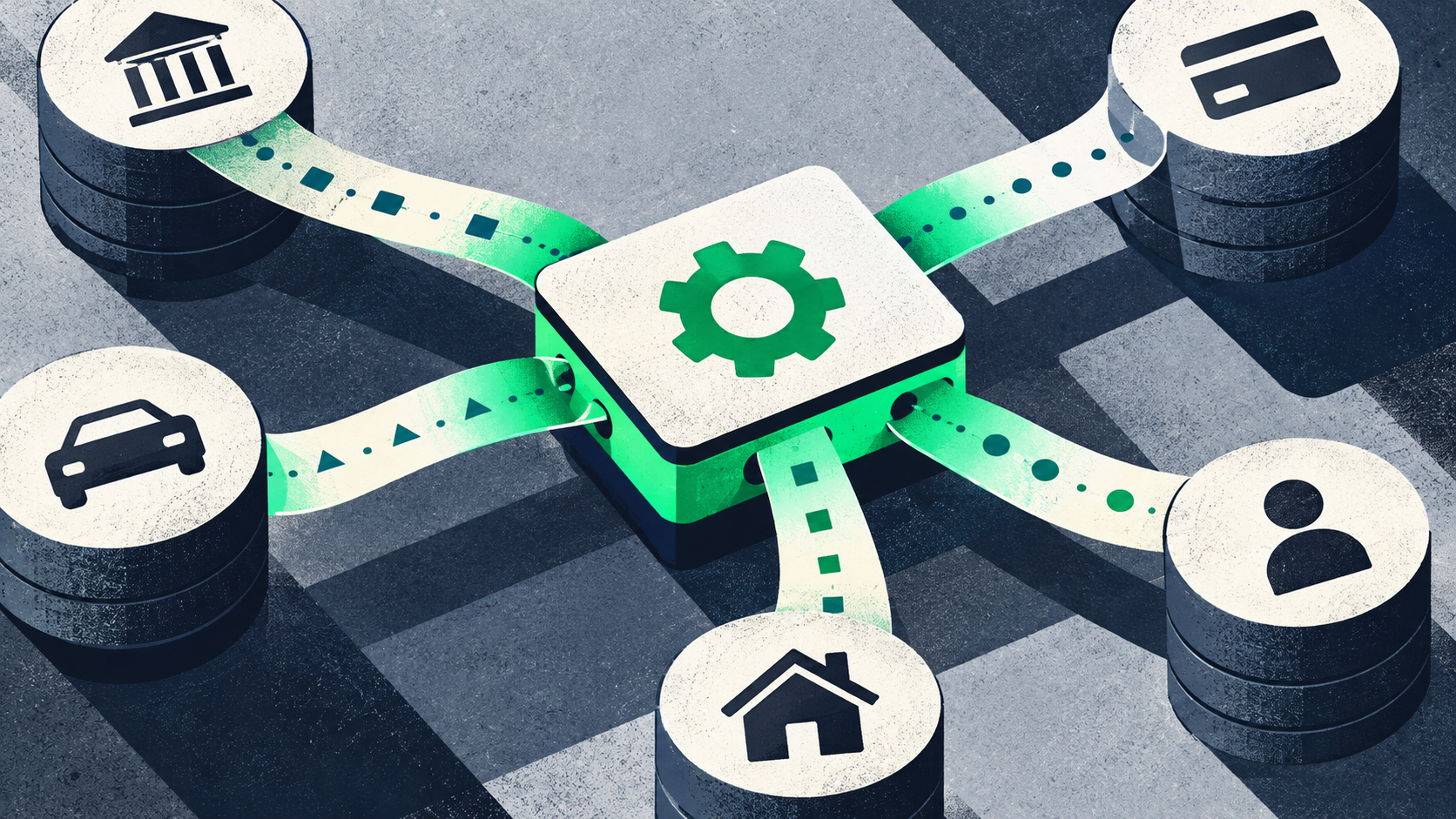
- Orchestration platforms: Platforms like Lendflow combine bureau, business, and alternative data with decisioning tools behind one endpoint.
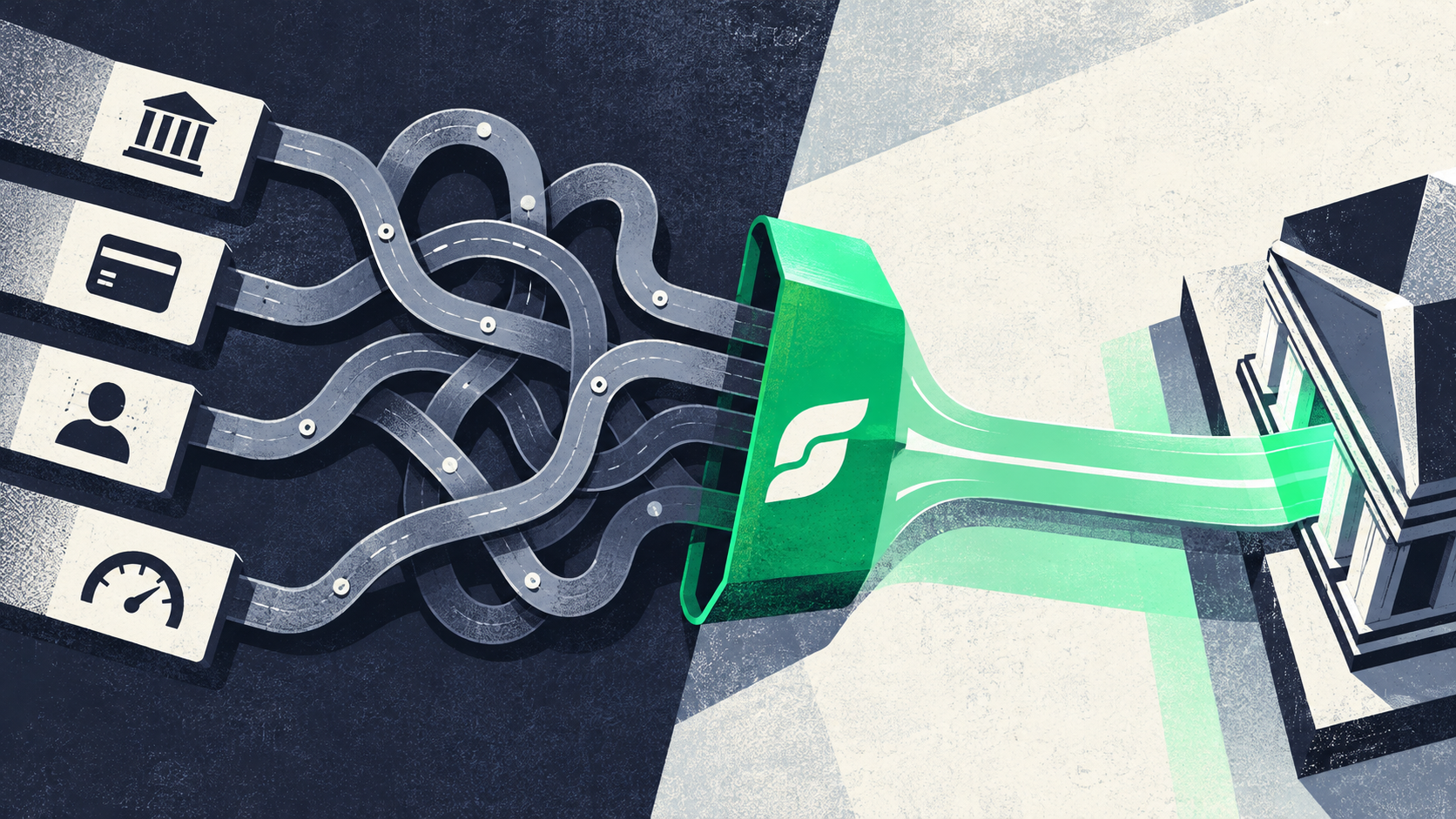
The first three categories give you one connection to one type of data, which solves part of the problem. Orchestration platforms go further, because a real-time credit data API can call many sources, clean up the results, and pass them into your decision rules.
Why One Integration Beats Many Bureau Connections
Lendflow reports that its embedded finance customers operate with 80% smaller teams while converting similar funding volumes. Cutting repeat integration work is a big part of how those teams stay lean. Every separate data connection adds its own contract, data format, and compliance review, which slows down product and engineering teams.
Credit data is also spread across a huge number of companies that report into the bureaus. The CFPB 2012 credit bureau report found that Equifax, Experian, and TransUnion each held more than 200 million consumer files. The report added, "In a typical month, they receive updates from approximately 10,000 information 'furnishers'." That figure comes from a 2012 study, but it still shows how much raw data sits behind every bureau pull.
When each new source requires its own build, the hidden costs pile up quickly across these four areas:
- Contracts: Each bureau or vendor requires its own agreement, pricing terms, and renewal cycle.
- Data formats: Each source returns fields in its own structure, so engineers must map and normalize every response.
- Compliance reviews: Each new data partner adds security checks and legal reviews before you can go live.
- Maintenance: Each connection needs monitoring, updates, and fixes whenever a vendor changes its API.
A single integration removes most of that repeat work, because your team builds and maintains one connection instead of many. That frees engineers to focus on the borrower experience and lets operations teams spend less time reconciling reports that do not match.
The Credit Data Sources a Unified API Should Cover
A unified credit data API is only as useful as the sources behind it. Most lenders need three groups of data: bureau data for credit history, cash-flow data for current income, and business identity data for small business applicants.
Business data is easy to overlook in credit API discussions, yet it is essential for any platform that lends to small and medium-sized businesses (SMBs). The sections below explain what each group adds and where each one falls short on its own.
Consumer and Business Bureau Data
The CFPB list of reporting companies names Equifax, TransUnion, and Experian as the three nationwide consumer reporting companies, which typically track loans, credit cards, and payment history. Business credit bureaus usually track similar information for companies, such as how a business pays its suppliers and whether it has public records like liens.
Lenders can request bureau data through a soft pull or a hard pull. According to the CFPB credit inquiry explainer, soft inquiries do not affect credit scores, while hard inquiries can. Lenders typically use soft pulls for prequalification and hard pulls for a formal application.
Bureau data has limits for people with thin files, which means little or no credit history. The CFPB's corrected credit invisibles estimate states, "The estimated share of credit invisibles in December 2020 was 2.7 percent (7.0 million consumers)." The same 2020 data showed about 9.8% of adults had credit records that could not be scored, so bureau data alone misses many borrowers.
Cash-Flow and Open Banking Data
Cash-flow data comes from a borrower's bank account and is shared with their permission through an open banking API. It shows deposits, balances, and spending patterns, which can reveal a borrower's ability to repay even when the credit file is thin.
This kind of data sharing is already common across the United States. The CFPB open banking final rule notes, "The CFPB estimates that, as of 2022, at least 100 million consumers had authorized a third party to access their account data."
Cash-flow data adds the most value when lenders combine it with bureau data. The FinRegLab cash-flow underwriting study found "the two strongest machine learning models increased credit approvals by about 4% over similar models that relied on simpler analytics." Those models used cash-flow and bureau data together, and FinRegLab noted that data limits made it hard to measure the effect on thin-file consumers.
Business Identity and KYB Data
Know Your Business, or KYB, data confirms that a company is real and that the people applying are allowed to act on its behalf. KYB checks commonly draw on business registration records, tax ID matches, and fraud signals such as mismatched addresses or newly formed entities.
KYB sources usually vary in coverage, so lenders often check more than one. Lendflow's KYB trust score waterfall page describes Trust Score as "A KYB Waterfall You Can Trust" that returns a confidence rating for each business. Lendflow says it can help "administer trust across a waterfall to help lower costs, decrease fraud, and improve outcomes."
How Credit Data Orchestration Works
Lendflow reports that the Lendflow ecosystem delivers 85% faster time-to-decision, a 60% lift in application conversion, and 35% operational cost savings. Orchestration is a core part of that ecosystem, because it turns many separate data calls into one automated flow that ends in a decision.
With credit data orchestration, your platform sends one request, and the orchestration layer decides which sources to call and in what order. Lendflow Intelligence acts as the unified credit data engine that sits between data collection in Lendflow Connect and workflow execution in Lendflow Automate.
- Request: Your platform sends one API call with the applicant's details and consent.
- Sequence: The orchestration layer calls each data source in the order your rules define.
- Normalize: Results from every source are converted into one consistent format.
- Decide: Clean data flows into decision rules or models that return an approval, decline, or referral.
Waterfall Routing for Data Sources and Lenders
A data waterfall is a set of rules that checks a primary source first and moves to the next source only when data is missing. This approach can help control costs, because extra pulls happen only when an application needs them.
A platform might start with a soft bureau pull, add bank data for thin files, and run KYB checks only for business applicants. The order should reflect each product's data needs, and teams can adjust it as results come in.
Lenders use the same idea after a decision is made. As Lendflow's credit waterfall routing logic explains, a declined application can route automatically to the next lender in sequence until one approves it. That way, fewer qualified deals are lost after a single decline.
How to Evaluate a Multi-Source Credit Data API Provider
The right provider depends on your borrowers, products, and team size, so compare every option against the same criteria. Use the checklist below to score each credit reporting API or orchestration platform on what matters most for your platform.
Decisioning is where many teams see the biggest gains, because data only creates value once it drives an action. Look for providers that pair data access with automated underwriting and decisioning, so you do not need a separate vendor for the final step.
Security deserves the same attention as data coverage, since every new source handles sensitive borrower information. Lendflow states it is SOC 2 Type II compliant and undergoes regular audits to protect customer data.
Compliance Basics for Multi-Source Credit Data
Pulling data from many sources does not reduce your legal duties, so plan for compliance from the first day of the project. Under the FTC Fair Credit Reporting Act, "Information in a consumer report cannot be provided to anyone who does not have a purpose specified in the Act." This requirement is known as permissible purpose, and credit decisions are among the purposes the Act covers.
The FTC adverse action guidance states, "If you take adverse action against a consumer based on information in a consumer report, you must tell the consumer." This duty applies to consumer reports, so ask counsel how notice rules differ for business credit applications. Your API provider should make it easy to see which report informed each decision, so your team can send the right notices.
Data aggregators raise a harder question for many teams. Ask counsel whether any data provider you use is treated as a consumer reporting agency, and have them review every provider in your stack before launch.
The CFPB finalized its Section 1033 open banking rule in 2024, but its status has shifted since then. According to the E.D. Ky. injunction order, on October 29, 2025, a federal court enjoined the CFPB from enforcing the rule until it completes its reconsideration. Check the rule's current status before relying on it in your plans.
Fees are also back on the table. In its CFPB reconsideration notice, the Bureau asked for comment on whether the 2024 rule's ban on data access fees is the right approach and whether providers should be able to recover costs. Treat any plan that assumes free bank data access as unsettled until that review ends.
Steps to Integrate a Single Credit Data API
Lendflow Connect launches widgets in under two weeks and a full API integration in 30 to 45 days. Most teams reach launch by following the same six steps, whichever provider they choose.
- Audit your data needs: List the borrowers you serve, the products you offer, and the data each decision requires.
- Test in a sandbox: Use the provider's test environment to send sample requests and check response formats.
- Get compliance sign-off: Have counsel review consent flows, permissible purpose, and adverse action processes before going live.
- Configure routing and waterfalls: Set the source order, fallback rules, and cost limits for each product.
- Wire webhooks to your LOS or CRM: Push status updates and results into the systems your team already uses.
- Launch and monitor: Start with a small group of applicants, then track approval rates, costs, and data gaps.
Monitoring should continue after launch, because your borrower mix and data costs will change over time. A regular review of your waterfall rules confirms that each source still earns its place in the sequence.
A few common pitfalls can slow down even a well-planned integration, so watch for these as you build:
- Skipping the data audit: Without an audit, it is easy to pay for sources your decisions rarely use.
- Treating compliance as a final step: Late legal reviews can delay launch and force rework on consent flows.
- Ignoring business data: SMB applications need company checks as well as the owner's personal credit.
Putting Unified Credit Data to Work in Embedded Lending
Lendflow reports $1.5B+ in offers made on Lendflow's lending platform in the last 12 months (as of March 2025). Lendflow also reports that pre-qualified offers hosted on Lendflow drive an average of 42% faster speed to funding.
Small businesses still have trouble getting the full funding they need. The Fed Small Business Credit Survey reports, "Forty-two percent of applicants received the full amount of financing they sought, 36% received some or most, and 22% received none." The survey covers employer firms and uses a convenience sample, but it still shows a clear funding gap.
Embedded lending lets software platforms offer financing inside the tools SMBs already use every day. With Lendflow's embedded lending APIs, platforms connect once to a network of 75+ lenders, and unified data helps match each business with fitting offers.
Platforms can also choose how much of the experience they want to own. Lendflow Connect supports referral, co-brand, and full white-label models. It also covers term loans, lines of credit, invoice factoring, equipment financing, and SBA loans.
Conclusion
Credit bureaus, multi-bureau resellers, data aggregators, and orchestration platforms all provide a single API for credit data, but they cover very different ground. Bureaus and resellers deliver credit history, aggregators add cash flow, and orchestration platforms like Lendflow combine those sources with business data, routing, and decisioning.
The key takeaway is to choose a provider that matches the full picture your lending decisions need. Then use waterfall routing to control what you pay for that picture, and build compliance into every step from the start.
Frequently Asked Questions
What Is Alternative Credit Scoring?
Alternative credit scoring uses data outside the traditional credit file, such as bank account cash flow, to assess whether a borrower can repay. It works best alongside bureau data, especially for applicants with thin or unscored credit files.
Is Open Banking API Access Free?
The CFPB's 2024 open banking rule included a ban on data access fees, but the CFPB has reopened that question and a court enjoined enforcement in October 2025. Check the rule's current status, since pricing for now depends on each data provider's contract terms.
Can a Platform Use Multiple Credit Data Providers at the Same Time?
Yes, and an orchestration layer makes this practical by calling each provider in a set order through one integration. Waterfall rules decide when to call each source, so you only pay for extra data when the first source falls short.
Does a Platform Need a Lending License to Offer Embedded Credit Through an API?
It depends on your business model and the states where you operate, so confirm the requirements with legal counsel. One common approach is to refer applicants through a network like Lendflow Connect, which links brands to 75+ lenders through one integration.
What Credit Data Signals Do Lenders Use for Underwriting?
Lenders commonly review bureau credit history, payment behavior, bank account cash flow, business identity checks, and fraud signals. The right mix depends on the product, so many lenders combine several sources through a single API.
To see how Lendflow brings bureau, business, and alternative data together behind one integration, explore our data enrichment solution.