[.green-span]Top Providers for Multi-Lender Underwriting Orchestration in 2026[.green-span]

The challenge is that not every underwriting platform provides true multi-lender orchestration. Some specialize in credit decisioning. Others focus on data or workflow automation. A smaller group combines underwriting infrastructure with the ability to route applications across an actual lender network.
Below, we'll compare the top providers for multi-lender underwriting orchestration, where each platform fits, and what to look for when choosing one.
What Is Multi-Lender Underwriting Orchestration?
Multi-lender underwriting orchestration is the process of coordinating borrower evaluation and application routing across multiple lenders through a centralized technology layer.
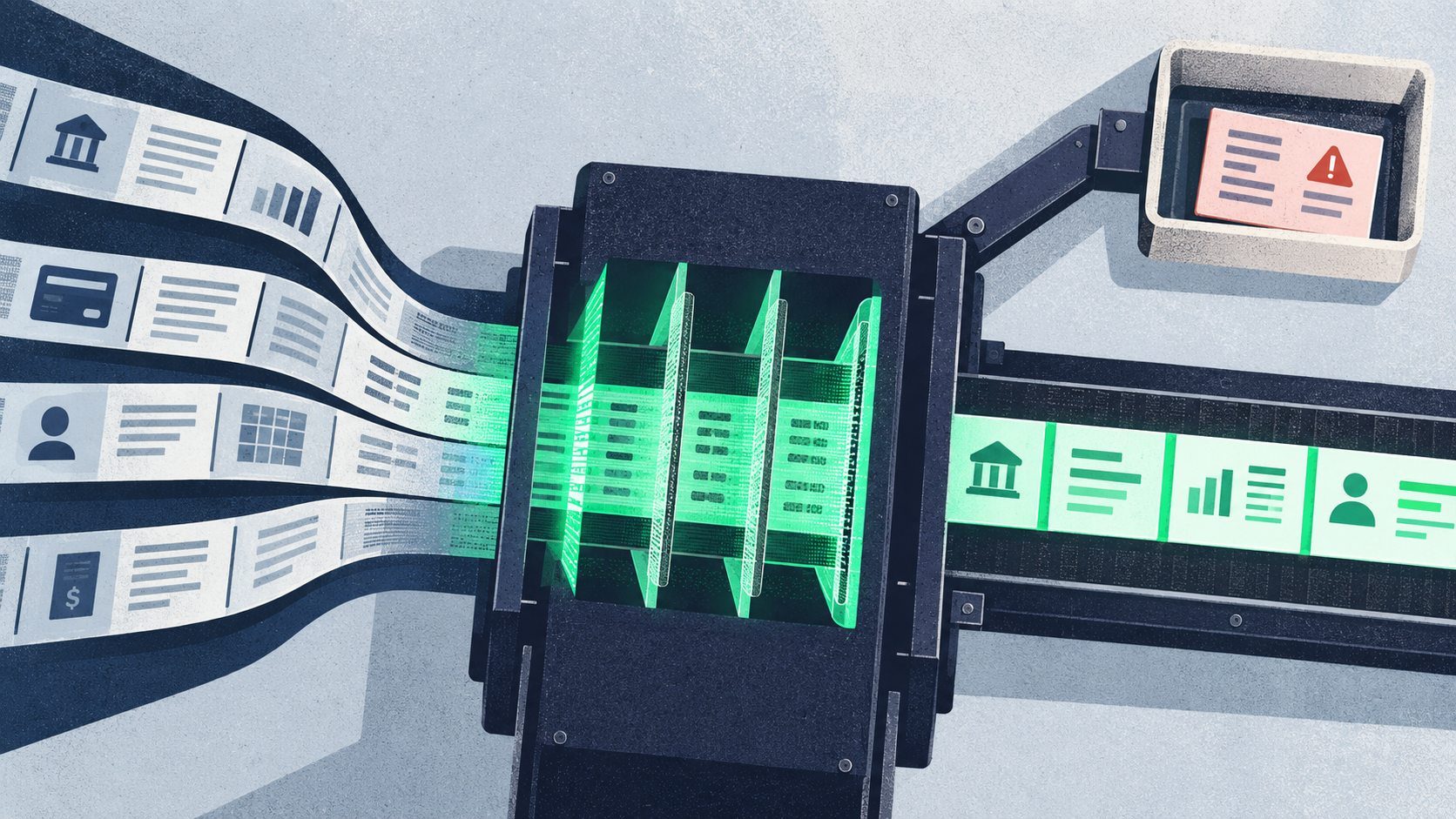
A borrower submits one application. The platform collects and normalizes the required data, evaluates the borrower against underwriting criteria, and determines which lenders or credit products are appropriate.
From there, applications can be routed sequentially or simultaneously based on factors like credit profile, revenue, industry, requested amount, product type, lender appetite, and other eligibility requirements.
The core components typically include:
- Data aggregation: Pulling borrower, banking, credit, identity, and business data into a standardized format
- Decisioning: Applying eligibility rules and underwriting logic to determine borrower fit
- Lender matching: Identifying lenders whose credit boxes align with the application
- Routing: Sending qualified applications to the appropriate lenders automatically
- Workflow automation: Managing documents, status changes, exceptions, and communications
- Offer management: Returning and presenting lender decisions or offers through a unified experience
The result is a lending workflow that can support multiple capital providers without requiring the operator to manually manage every lender relationship and application handoff.
Top Multi-Lender Underwriting Orchestration Providers
The right platform depends heavily on what you're trying to orchestrate.
Some businesses need access to a ready-made lender network. Others already have capital partners and primarily need a configurable decision engine. Enterprise lenders may instead prioritize sophisticated risk policies, data integrations, and governance.
Here are the leading providers to consider.
1. Lendflow
Lendflow is built specifically for businesses that need to connect underwriting, workflow automation, and multiple lending partners within one infrastructure layer.
Rather than requiring teams to integrate separately with every lender, Lendflow Connect provides access to a network of 75+ specialty and bank lenders through a centralized integration. Applications can be matched and routed based on borrower characteristics and lender criteria.
Lendflow also combines orchestration with data and decisioning infrastructure. That means businesses can collect borrower information, analyze documents, configure underwriting logic, and route qualified applications without stitching together a separate platform for every stage.
Best for: Fintechs, brokers, vertical SaaS platforms, marketplaces, and embedded finance companies that want both underwriting infrastructure and access to multiple lenders.
Key capabilities:
- Network of 75+ lenders
- Multi-lender application routing
- Configurable underwriting and decisioning
- Borrower data aggregation
- AI-powered document analysis
- Workflow automation
- API, widget, and hosted deployment options
- Unified borrower experience
- Lender and funnel analytics
The biggest distinction is that Lendflow combines the orchestration technology with an existing lender ecosystem. Businesses that don't already have dozens of lender relationships can use the same infrastructure to solve both problems.
2. Taktile
Taktile is a decisioning platform designed to help financial institutions build, test, and optimize automated decision strategies.
Its visual decision environment allows risk teams to configure underwriting logic without hard-coding every policy change into the core product. Teams can connect third-party data, create rules, test strategies against historical data, and experiment with different decision flows.
That makes Taktile useful when the primary problem is underwriting orchestration rather than lender-network access.
Best for: Fintechs and financial institutions that already have lending or capital relationships and want flexible control over credit decisioning.
Key capabilities:
- Visual decision workflows
- Low-code underwriting logic
- Third-party data integrations
- Simulation and testing
- A/B testing
- Real-time analytics
- AI-assisted workflow development
Taktile can act as a flexible decision layer inside a multi-lender architecture, but organizations generally need to supply and manage the surrounding lender integrations themselves.
3. Provenir
Provenir provides enterprise credit decisioning and data orchestration for financial services companies.
The platform combines configurable decision logic with access to a large marketplace of external data providers. Provenir says its marketplace includes more than 120 data partners covering areas such as credit, fraud, identity, open banking, and alternative data.
That makes it particularly useful for organizations operating complex underwriting strategies across markets or products.
Best for: Larger financial institutions and fintechs that need enterprise-grade decisioning, data orchestration, and governance.
Key capabilities:
- Real-time credit decisioning
- Configurable decision workflows
- Global data marketplace
- 120+ data partners
- Single-API data access
- Fraud and identity data
- Version-controlled decision strategies
- Enterprise compliance controls
Like Taktile, Provenir is primarily a decisioning and data platform rather than a pre-built network of lenders. Businesses building multi-lender workflows may still need to establish and integrate their individual capital partners.
4. Amount
Amount provides digital lending infrastructure for banks and financial institutions, with capabilities spanning loan origination, underwriting, fraud prevention, and account opening.
Its platform is designed around helping financial institutions digitize lending products and automate more of the credit lifecycle.
Best for: Banks and financial institutions modernizing digital lending and origination.
Key capabilities:
- Digital loan origination
- Automated underwriting
- Credit decisioning
- Fraud prevention
- Borrower onboarding
- Banking infrastructure
Amount is most relevant when the goal is building or modernizing a digital lending program. For companies whose central requirement is dynamically routing applications among a broad external lender network, a purpose-built multi-lender orchestration layer may be a closer fit.
5. Ocrolus
Ocrolus approaches underwriting from the borrower-data side of the stack.
Its technology converts financial documents and other borrower information into structured data that lenders can use during underwriting. The platform has a strong focus on document analysis, verification, and lending-specific AI workflows.
Best for: Lending teams where document processing and borrower data analysis are major underwriting bottlenecks.
Key capabilities:
- Financial document analysis
- Data extraction
- Income and cash-flow analysis
- Document verification
- Fraud detection
- Lending-focused AI workflows
Ocrolus can be an important component of an orchestration stack, but it solves a different layer of the problem. A lender or fintech may use Ocrolus to generate underwriting data and then pass that information into a separate decisioning and multi-lender routing platform.
How the Top Providers Compare
ProviderPrimary StrengthBuilt-In Lender NetworkDecisioningData OrchestrationBest FitLendflowEnd-to-end multi-lender orchestrationYesYesYesEmbedded lending, brokers, marketplaces, fintechsTaktileFlexible credit decisioningNoYesYesFintechs and risk teamsProvenirEnterprise decisioning and dataNoYesYesLarge lenders and financial institutionsAmountDigital lending infrastructureNoYesYesBanks and financial institutionsOcrolusUnderwriting data and document analysisNoSupports decision workflowsYesDocument-heavy lending workflows
The most important distinction is between decision orchestration and lender orchestration.
A decision engine helps determine whether an applicant satisfies a particular credit policy. Multi-lender orchestration goes one step further by determining which lender or lenders should receive that application and coordinating what happens next.
What to Look for in a Multi-Lender Underwriting Orchestration Platform
Comparing platforms feature by feature can be misleading because the category covers several different layers of lending infrastructure.
Focus on how the platform handles the full application journey instead.
Lender Network Breadth
If you don't already have capital partners, determine whether the provider offers actual lender connectivity or simply gives you technology for integrating lenders yourself.
Network breadth also matters. Different lenders specialize in different industries, borrower profiles, loan sizes, and financing products. More lender coverage creates more opportunities to find an appropriate destination for each qualified borrower.
Configurable Routing Logic
Routing shouldn't amount to sending every application everywhere.
A modern orchestration platform should let you define which lenders receive an application based on eligibility criteria, borrower characteristics, product requirements, and lender preferences.
The goal is to route each deal intelligently rather than generate unnecessary submissions.
Data Aggregation
Underwriting is only as useful as the information feeding it.
Look for integrations across bank data, credit bureaus, accounting platforms, identity providers, fraud tools, and business data sources. A unified data layer reduces the need to maintain individual integrations and gives decision models standardized inputs.
Decisioning Flexibility
Credit policies change.
Teams should be able to modify thresholds, lender eligibility requirements, routing priorities, and underwriting rules without rebuilding the entire workflow.
Testing and version control become especially important as the number of lenders and policies increases.
Document Automation
Bank statements, tax returns, IDs, financial statements, and other documents can create a manual bottleneck even when routing is automated.
Document extraction and verification should feed structured information directly into underwriting workflows rather than forcing operations teams to re-key borrower data.
Unified Borrower Experience
The complexity of a multi-lender system should stay behind the scenes.
Borrowers should ideally complete one application, upload documents once, and receive relevant offers through a consistent interface regardless of how many lenders participate in the process.
Reporting and Analytics
Orchestration creates a valuable dataset of its own.
Teams should be able to analyze approval rates, lender performance, conversion, routing outcomes, application volume, and funding performance to understand where deals are being won or lost.
Decision Engines vs Multi-Lender Orchestration Platforms
The terms are sometimes used interchangeably, but they solve different problems.
A decision engine answers:
Does this borrower satisfy this underwriting policy?
A multi-lender orchestration platform answers:
Which underwriting policies apply, which lenders are appropriate, where should this application go, and what should happen after each lender responds?
That distinction becomes increasingly important as a lending program grows.
A company with one lender and one credit policy may only need a decision engine. A marketplace or embedded lending platform working with many capital providers needs another layer to coordinate those decisions and relationships.
In practice, sophisticated lending infrastructure often combines both.
When Should You Use Multi-Lender Underwriting Orchestration?
Multi-lender orchestration becomes valuable when adding lenders creates operational complexity rather than simply increasing distribution.
Common signals include:
- Your team manually determines which lender should receive each application
- Applications are submitted separately to multiple lender portals
- Borrowers have to provide the same information more than once
- Each new lender requires a custom engineering integration
- Declined applications aren't automatically rerouted
- Credit policies are maintained across spreadsheets or internal tools
- Operations teams spend significant time checking lender statuses
- You can't easily compare approval or conversion rates across lenders
These problems become more expensive as application volume and lender count increase.
Orchestration turns those individual processes into infrastructure that can be reused across the entire lender network.
Build Multi-Lender Underwriting Workflows With Lendflow
The best multi-lender underwriting architecture connects three things: data, decisions, and capital.
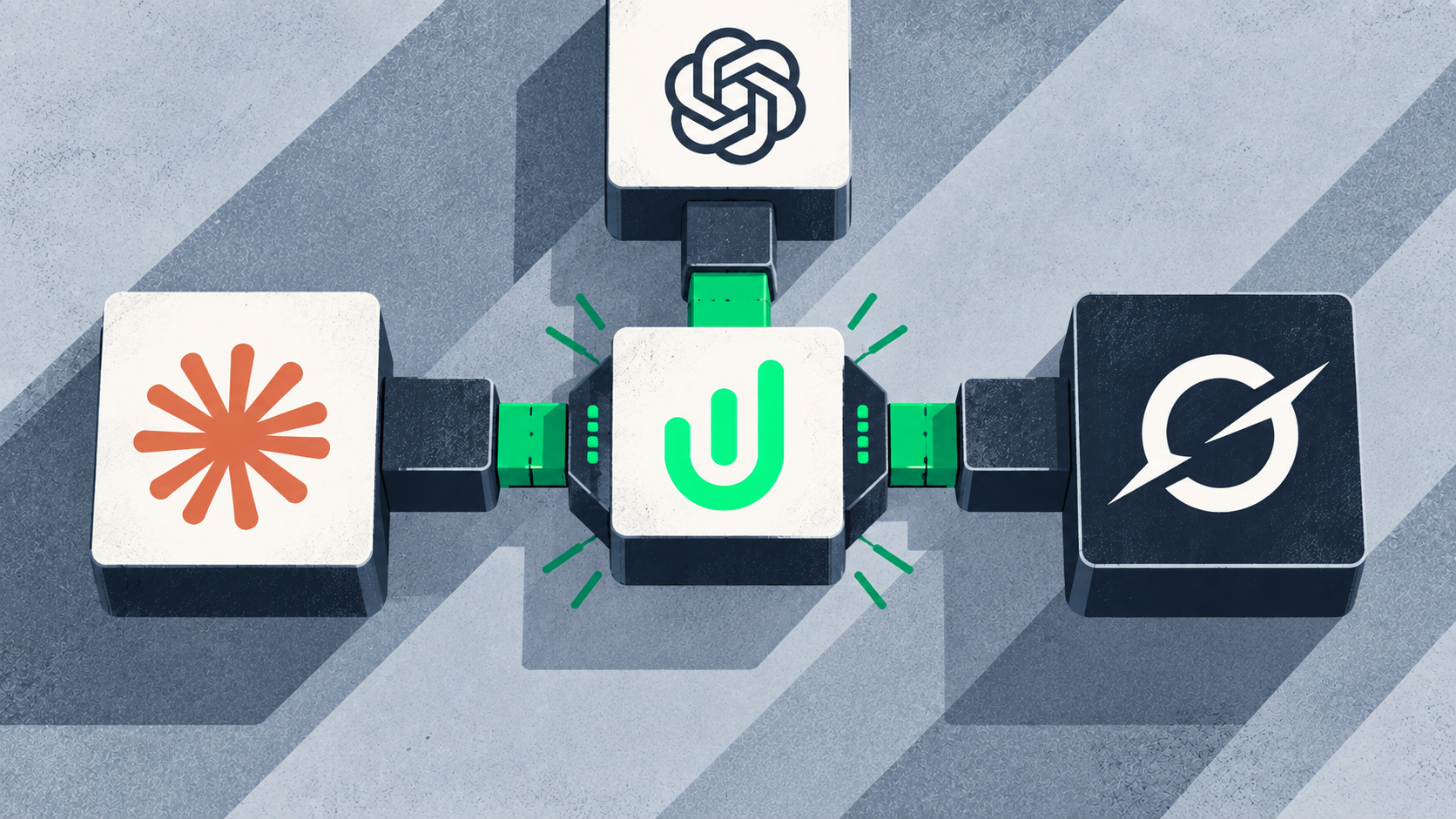
Lendflow brings those layers together through Lendflow Intelligence for borrower data and decisioning, Lendflow Automate for workflow execution, and Lendflow Connect for multi-lender distribution.
Instead of maintaining separate integrations and workflows for every capital provider, businesses can connect to a network of 75+ lenders through one infrastructure layer and automatically route applications based on borrower and lender criteria.
For teams evaluating providers, the deciding question is simple: Do you need software that helps make an underwriting decision, or infrastructure that can coordinate underwriting across an entire lender ecosystem?
If the goal is the latter, look for a platform built around lender connectivity, configurable routing, unified borrower data, and workflow automation—not just a standalone credit decision engine.