[.green-span]What is a PAYDEX score and why lenders check it[.green-span]

A PAYDEX score is Dun & Bradstreet's business credit score, and it tells lenders one thing fast: does this business pay on time? The score runs from 1 to 100 and is built almost entirely on payment history. Below, you will learn what a PAYDEX score is, and how its 1 to 100 range breaks into risk bands. You will see how the score is calculated, how to build and improve it, and where it fits alongside other credit signals lenders weigh.
What is a PAYDEX score?
A PAYDEX score is a business credit score from Dun & Bradstreet that ranges from 1 to 100. A higher number signals a greater likelihood the business pays its debts on time, according to Dun & Bradstreet.
It works for companies much like a FICO score works for individuals. Dun & Bradstreet calls a PAYDEX score roughly equivalent to an individual's FICO rating. It notes that suppliers, banks, and customers review it before engaging a company, per Dun & Bradstreet.
One difference matters most. A PAYDEX score is dollar-weighted and reflects past payment performance, so larger invoices move it more than small ones, according to Dun & Bradstreet.
The 1 to 100 range and what each band means
Dun & Bradstreet sorts scores into three risk categories. The bands give lenders a quick read on delinquency risk.
- 80 to 100: low risk of late payment, per Dun & Bradstreet.
- 50 to 79: moderate risk of late payment, per Dun & Bradstreet.
- 0 to 49: high risk of late payment, per Dun & Bradstreet.
A score of 80 is the common benchmark for good business credit, and it maps to paying invoices right when they come due. To climb above 80 toward 100, a business needs to pay ahead of terms, as Chase and Dun & Bradstreet both describe.
How the score is calculated
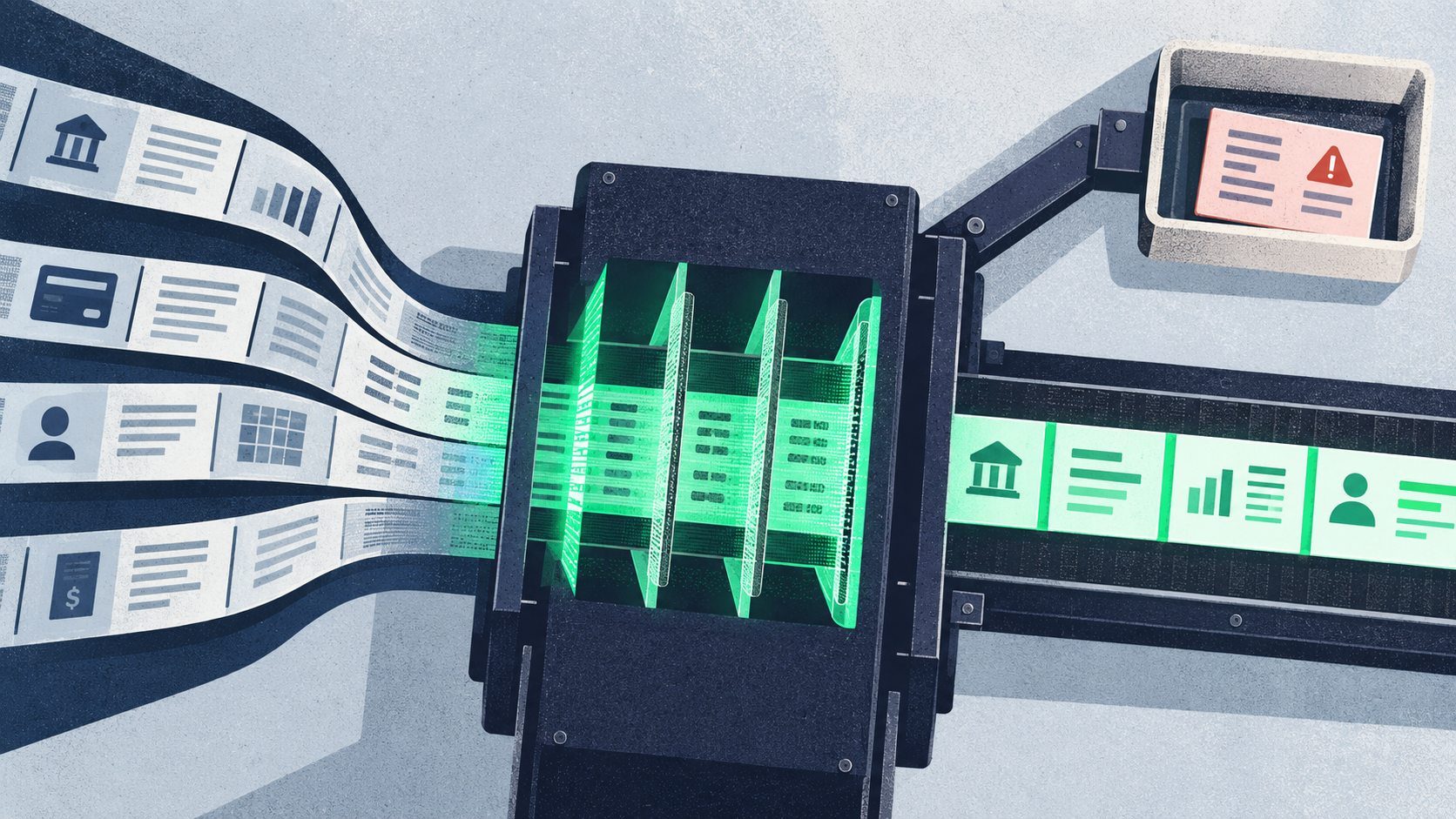
The score is built from Trade Experiences. These are payment records that suppliers and vendors submit to Dun & Bradstreet for review and verification, per Dun & Bradstreet.
Those records can include on-time and early payments as well as overdue debts and bills sent to collections. Payments that go unreported cannot be counted. That is why vendor reporting is as important as the payments themselves.
Why lenders and partners rely on it
Customers, suppliers, lenders, and landlords review PAYDEX scores to decide whether to work with a company. They also use it to set credit terms, according to Dun & Bradstreet.
For a lender, the score is a single, standardized payment signal across a market of businesses. Lenders often prefer to see a score of 80 or higher, though requirements vary by lender and loan type, per Nav.
Where this fits for modern lending teams
A PAYDEX score is one input, not a decision. Dun & Bradstreet does not tell companies whether to extend credit; each lender sets its own acceptable risk levels, as Nav explains.
That is where connected data helps. Lendflow Intelligence turns credit and business data into lending decisions, cutting manual review and moving credit pipelines from days to minutes. Skip disconnected lookups. Use live signals so a PAYDEX score is read next to bank data, application inputs, and repayment history in one place.
For teams originating or embedding credit, Lendflow Connect routes SMB deals across a network of specialty and bank lenders through a single integration. The score becomes one signal in a fuller, faster decision.
How to build and improve a PAYDEX score
Use this sequence to establish a score and move it into the low-risk band.
- Get a D-U-N-S Number. The score is tied to your company's D-U-N-S Number, and it is free at dnb.com, per Nav.
- Open trade lines that report. You generally need at least three payment experiences from two or more vendors who report to Dun & Bradstreet, according to Crestmont Capital.
- Pay on time to reach 80. On-time payments map to the 80 benchmark that lenders treat as good business credit.
- Pay early to climb higher. Paying ahead of terms is what pushes a score above 80 toward 100, per Chase.
- Confirm vendors are reporting. Two of the most effective moves are paying on or ahead of time and making sure suppliers report your payments, per Dun & Bradstreet.
Best practices and common pitfalls
A few habits protect the score once it is established.
- Pay ahead of due dates, not just on them. On-time only caps you near 80.
- Prioritize larger invoices. The score is dollar-weighted, so big bills carry more weight, per Dun & Bradstreet.
- Do not rely on business cards. Most card activity is not reported as a trade experience, so it usually will not move the score, per Ramp.
- Recruit reporting vendors. Unreported payments cannot count toward the score.
- Do not expect it for free. Business credit is not covered by the FCRA, so Dun & Bradstreet is not obligated to provide the score at no cost, per LendingTree.
A PAYDEX score is Dun & Bradstreet's 1 to 100 measure of how reliably a business pays its bills. Aim for 80 or higher by paying on time, pay early to move toward 100, and keep reporting vendors on your accounts. For lenders, the score is a strong payment signal, but it works best read alongside live credit and bank data. Connected data turns a single score into a full risk picture and a faster decision.
Frequently asked questions
What is a good PAYDEX score?
A score of 80 or higher is considered good and sits in Dun & Bradstreet's low-risk band, signaling on-time payment, per Dun & Bradstreet.
How is a PAYDEX score different from a personal credit score?
It focuses almost entirely on payment timeliness and does not consider personal debt or credit utilization, per Ramp.
Do I need a D-U-N-S Number to get a PAYDEX score?
Yes. The score is tied to your company's D-U-N-S Number, which is free at dnb.com, per Nav.
Why doesn't every business have a PAYDEX score?
A score requires reported trade experiences. You generally need at least three payment experiences from two or more reporting vendors, per Crestmont Capital.
Can I get my PAYDEX score for free?
Not fully. Business credit scoring is not covered by the FCRA, so Dun & Bradstreet is not required to provide it for free, per LendingTree.