[.green-span]How Do Business Brokers Access More Lenders? A Practical Guide[.green-span]

Every declined file is a lost commission. This guide answers a key question for new brokers: how do business brokers access more lenders and turn them into funded deals?
How Do Business Brokers Access More Lenders? The Short Answer
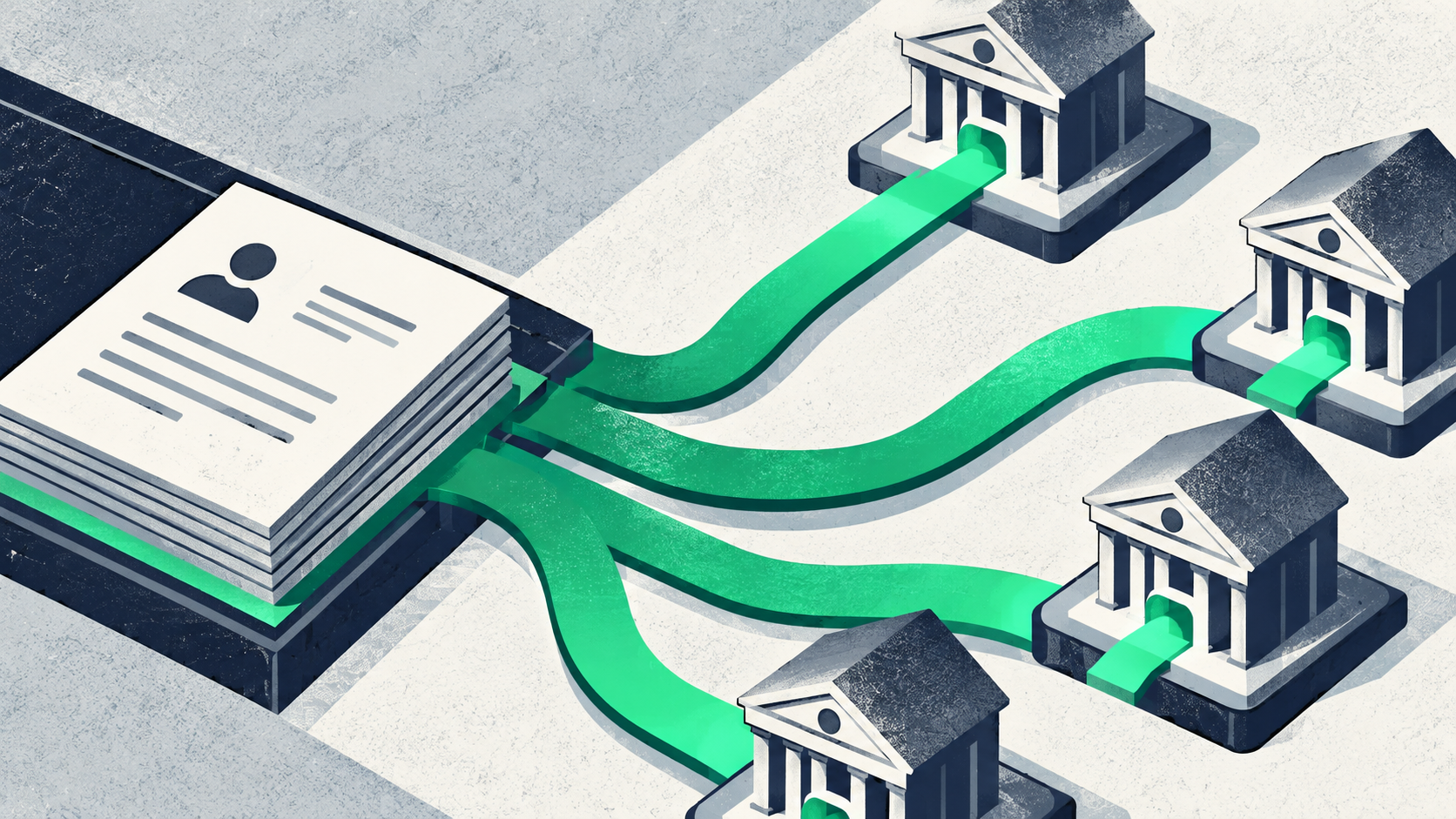
Business brokers access more lenders in three main ways. They sign direct ISO agreements, join multi-lender platforms, and route declined files to second-look lenders. Each channel adds lender options without adding staff.
Here is what those terms mean. A lender network is the group of lenders a broker can send deals to. An ISO agreement (independent sales organization agreement) is a contract that lets a broker submit deals to a lender and get paid when they fund.
A multi-lender platform is software that sends one application to many lenders at once. A second-look lender reviews files that another lender has already declined.
For a business loan broker, more lenders means more offers per deal and fewer dead files. It also means a funding broker can say "yes" to more types of borrowers. Read more about building the right lender network and why breadth matters for a loan brokerage business.
Why a Bigger Lender Network Wins More Deals
Online lender demand grew from 17% to 29% of applicants. The Federal Reserve small business survey found the share of applicants seeking online fintech lenders rose from 17% in 2020 to 29% in 2025. Borrowers are shopping beyond banks—brokers need lenders where borrowers are looking.
Approval odds also depend on where a borrower applies. In the 2025 survey, small-bank applicants were more likely to be fully approved (57%) than those at other lenders, per the Fed approval rates by lender. Each lender type has its own approval box, so a broker with one lender type will lose files that fall outside it.
A small business loan broker with only one or two bank partners hits three limits:
- Product fit: A bank that only offers term loans can't help a borrower who needs invoice factoring.
- Credit fit: Different lenders use different credit criteria, so a file one lender declines may fit another.
- Speed fit: A borrower who needs cash this week may not be able to wait for a slow bank process.
A business finance broker with a wide network can match each file to the right lender the first time. That means faster approvals, happier borrowers, and more commissions per lead.
Types of Lenders to Add to Your Network
SBA lenders funded 77,600 7(a) loans for $37 billion in FY2025. The SBA FY2025 lending announcement reported "6,750 504 loans for $7.8 billion and 77,600 7(a) loans for $37 billion." Without an SBA partner, you leave that market on the table.
Strong credit brokers cover every major product and credit tier. Use this table to spot gaps in your current lender network.
A merchant cash advance (MCA) is an advance paid back from a share of future sales. Purchase of receivables means a funder buys a portion of future revenue at a discount. Lendflow's supported financing types include all seven products in this table.
5 Ways to Access More Lenders
The strongest loan brokerage business mixes relationship channels with technology channels. Relationships win you trust and direct deals—technology gives you reach without adding headcount.
The five methods below build on each other. For more sourcing ideas, see this guide to finding new lending partners.
1. Sign Direct ISO and Referral Agreements
Most lenders that work with brokers run a partner program. You apply, get approved, and sign an ISO agreement or a referral agreement. A referral agreement is a simpler contract where you pass along a lead and the lender handles the rest.
Lenders review a funding broker before they sign. Expect them to ask about:
- Deal volume: How many files you send each month and in which products.
- File quality: Whether your submissions are complete and match their credit box.
- Compliance: Your business licenses, any state licensing or disclosure rules that apply, and how you handle borrower data.
Start with two or three lenders in products you already sell. A loan agent business that proves good files early earns better terms and faster responses later.
2. Network Through Industry Events and Associations
Many lender relationships still start face to face. Commercial finance conferences, broker trade groups, and local business associations put you in the room with lender partner managers.
Don't skip local banks and SBA lenders. A business loan broker who knows a local bank's lending officer can place strong-credit files with that bank directly.
- Bring a one-page summary: List your products, monthly volume, and typical borrower profile.
- Follow up within a week: Send a short note and ask for the lender's partner application.
- Track every contact: Keep a simple list of who you met, what they fund, and next steps.
3. Join a Multi-Lender Platform
Lendflow brokers get 2.4× competitive offers per deal. Skip one-by-one lender applications—submit once and reach many API-connected lenders. An API (application programming interface) is a direct software link that passes borrower data to lenders instantly.
According to Lendflow for brokers, brokers on the platform report these results:
- Faster closes: 35% less time to close deals.
- More offers: 2.4× competitive offers per deal.
- More volume: 42% monthly deal volume growth.
Lendflow Connect gives brokers one application, many lenders, and multiple offers per submission. Brokers also get automated workflows and a white-labeled digital experience that carries their own brand.
4. Route Declines to Second-Look Lenders
Lendflow clients fund 22% more deals with second-look routing. A decline waterfall is a set of rules that sends a declined application to the next lender in line. Learn how a credit waterfall works before you set one up.
A first lender declines the file, the system re-scores it, and it goes to alternative lenders that fit the profile. The borrower gets another chance, and you keep a deal that would have died.
A soft pull is a credit check that does not affect the borrower's credit score. A hard pull can lower the score and is visible to other lenders. Lendflow's second-look declines marketplace delivers these client results and terms:
- More funded deals: 22% more deals funded.
- Recovered revenue: $1.5M recovered in annual commissions.
- Borrower credit protection: No extra hard pull on the borrower's credit.
- Wide reach: No limit on second-look lenders.
- Predictable pay: Payouts settled monthly.
5. Submit Cleaner, Complete Files
Lenders favor brokers who send complete files. A clean file gets reviewed faster, and a lender is more likely to keep working with a broker whose deals are easy to approve.
Strong finance broker services start with a standard document set:
- Application: A complete, signed application with no blank fields.
- Bank statements: Recent business bank statements, often the last three to six months.
- Tax returns: Business and personal returns, mainly for bank and SBA loans.
- Ownership details: Legal business name, owner info, and time in business.
Skip manual uploads and email chains—use automated document handling to collect and check files. Pre-qualified offers hosted on Lendflow help drive faster speed to funding. See how to optimize deal flow to funding from first application to payout.
How to Vet a New Lending Partner
60% of online lender borrowers said costs were higher than expected. Data on online lender borrowing costs shows 60% reported actual costs above expectations, while 4% found them lower. Your name is on every deal you place, so cost surprises hurt your reputation too.
A business financial broker should check each new lender before sending a single file. Use this checklist:
- Track record: The lender has years in business, a clear funding history, and solid reviews.
- Funding speed: The lender gives realistic timelines and meets them.
- Product fit: The lender's products and credit tiers fill a gap in your network.
- Transparent pricing: The lender shares full costs, fees, and terms in writing.
- Compliance: The lender holds required state licenses and provides required disclosures.
- Payout terms: Your ISO agreement spells out how and when you get paid.
If a lender can't answer these points clearly, keep looking. One weak partner can cost you more than a missing product.
Stay Compliant as Your Network Grows
More lenders means more rules to follow. New York, for example, requires brokers to pass along a commercial financing disclosure, a written summary of a financing offer's cost and terms. California's new broker licensing law will require commercial financing brokers to be licensed starting in 2028.
The New York duty is specific. The NY commercial finance disclosure rule says a broker "shall transmit the unaltered disclosures received from the financer to the recipient." This must happen before the broker shares a specific commercial financing offer.
Build compliance into your process from day one:
- Know each state's rules: Check the rules in each state where you do business.
- Pass disclosures through unchanged: Never edit or summarize a lender's required disclosure.
- Keep records: Save a copy of every disclosure you send and when you sent it.
- Ask for legal review: Have a lawyer check your process before you add lenders in new states.
Keep Lender Relationships Strong
Signing a lender is step one—keeping them is where profit grows. A healthy finance broker business treats lenders like long-term partners.
- Send good-fit deals: Submit files that match each lender's credit box to protect your approval rate.
- Communicate often: Answer lender questions fast and share updates on pending deals.
- Review performance by lender: Track approval rates, offers, funding speed, and payouts for each partner.
- Prune weak partners: Drop lenders that rarely approve, pay late, or treat borrowers poorly.
Review your lender list every quarter. Shift volume toward partners who fund fast and pay on time.
Frequently Asked Questions
New brokers ask the same core questions about lenders, pay, and credit. Here are quick answers.
What is the difference between a business loan broker and a lender?
A business loan broker connects borrowers with lenders and helps them compare offers. A lender reviews the application and provides the money.
How do business loan brokers get paid?
Brokers are typically paid a commission set by agreement with the lender or borrower, and amounts vary by product. Your ISO agreement should state your pay terms clearly.
How many lenders should a business broker work with?
Work with enough lenders to cover every product you sell and every credit tier you serve. A multi-lender platform can fill those gaps faster than signing lenders one at a time.
Can brokers help borrowers with bad credit?
Brokers may be able to help by matching borrowers with alternative or second-look lenders whose credit criteria differ from banks'. A decline waterfall can route declined files to those lenders automatically.
How do I know if a lender is legitimate?
Check the lender's state licenses, read independent reviews, and ask for full terms in writing. Walk away from any lender that hides fees or pressures borrowers to sign fast.
Start Closing More Deals With More Lenders
So, how do business brokers access more lenders? They combine direct ISO agreements, industry relationships, multi-lender platforms, second-look routing, and clean files. Then they vet every partner and stay compliant as they grow.
Lendflow brings these pieces together in one place. The proof: $1.5B+ in offers made on Lendflow's platform.
Ready to reach more lenders and fund more deals? Book a demo or talk to the Lendflow team to see how Lendflow can help you scale smarter.