[.green-span]What Is Embedded Lending? How It Works and How to Implement It[.green-span]

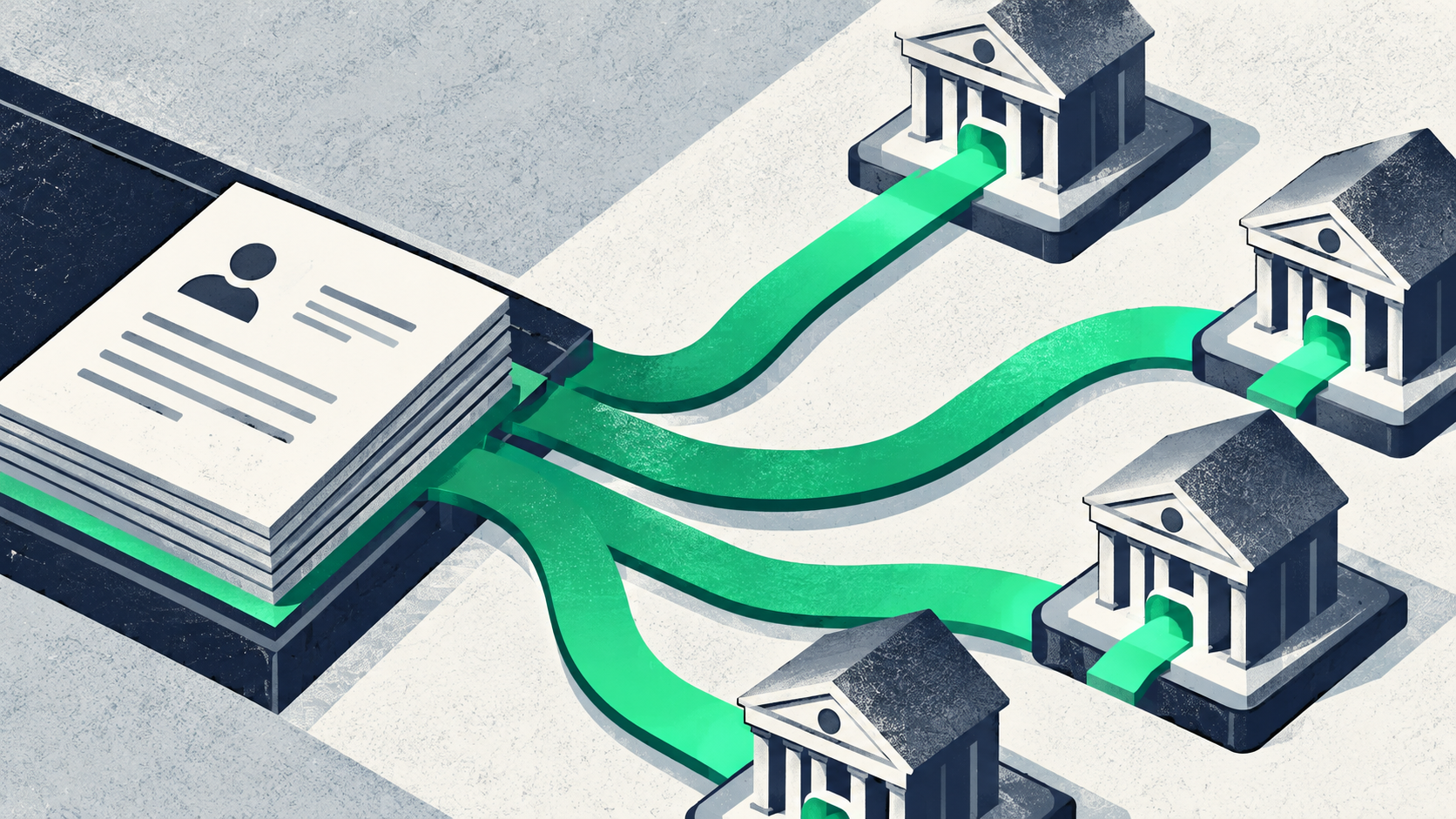
Embedded lending puts credit and loan products inside a non-financial platform, so customers can apply for financing and receive offers without leaving the software or marketplace they already use.
In the traditional model, a customer has to leave the platform, find a lender, complete a separate application, and move through an entirely different financing experience. Embedded lending removes that detour by bringing the financing experience directly into the customer journey.
It is a subset of embedded finance focused specifically on credit. Done well, financing feels like a native part of the platform rather than a separate product bolted onto it.
Lendflow helps companies build these experiences without having to assemble the entire lending stack themselves. Through Lendflow Connect, platforms can embed applications, lender access, pre-qualified offers, and multi-lender routing directly into their products, while Lendflow Intelligence and Lendflow Automate support the underwriting and operational workflows behind the experience.
For a deeper walkthrough, read this guide to embedded lending.
Embedded Lending vs. Embedded Finance vs. BNPL
Embedded finance is the broad category. It describes financial products and services built directly into non-financial platforms, including payments, insurance, banking products, and credit.
Embedded lending is the credit portion of embedded finance. Buy Now, Pay Later, or BNPL, is one narrower form of embedded credit that typically allows consumers to divide a purchase into installments.
For Lendflow customers, embedded lending typically goes beyond a single checkout financing product. Platforms can connect their customers to multiple financing products and lenders, creating a broader credit experience that can support working capital, term loans, lines of credit, equipment financing, SBA products, and other forms of business financing.
Why Embedded Lending Matters Now
Small businesses still face a meaningful financing gap. According to the Federal Reserve Small Business Credit Survey, 42% of applicants received all the financing they sought, while others received only part of what they requested or no financing at all.
At the same time, businesses are increasingly turning to digital lending channels. The Federal Reserve's 2026 report shows that the share of applicants seeking financing from online fintech lenders increased from 17% in the 2020 survey to 29% in the 2025 survey.
Embedded lending takes that shift one step further. Instead of requiring customers to search for financing independently, platforms can surface relevant credit options directly at the point where financing is needed.
That creates an important opportunity for vertical SaaS companies, marketplaces, payments platforms, fintechs, and other digital businesses that already have strong customer relationships.
Lendflow is built around this distribution model. Rather than forcing platforms to become lenders themselves, Lendflow provides embedded lending infrastructure that helps them connect their existing customers with financing while maintaining control of the customer experience.
The market opportunity is also expanding. A MarketsandMarkets forecast estimated the global embedded finance market at $115.8 billion in 2024 and projected it to reach $251.5 billion by 2029.
McKinsey has also highlighted the potential growth of embedded lending as a distribution channel. In Europe, embedded finance accounted for roughly 5% to 6% of retail and SMB lending revenues in 2023 and could reach 20% to 25% by 2030.
For platforms, the question is becoming less about whether customers want embedded financial products and more about how to build the infrastructure necessary to deliver them effectively.
How Embedded Lending Works
Embedded lending typically involves three layers: distribution, lending infrastructure, and capital.
The platform owns the customer relationship and determines where financing appears in the user experience. A licensed lender or bank provides capital and determines whether it wants to approve and fund a particular borrower. The infrastructure layer connects those two sides.
This middle layer is where Lendflow operates.
Lendflow provides the technology needed to collect applications, connect platforms with lenders, pull underwriting data, automate decisioning, route applications, manage borrower communication, and support the borrower through funding.
A typical Lendflow-powered embedded lending flow might look like this:
- A customer sees a financing option inside a SaaS platform, marketplace, or other digital product.
- The customer completes an embedded application using a Lendflow widget, hosted experience, or API-powered workflow.
- Lendflow gathers the borrower information and underwriting data needed to evaluate the application.
- The application can be matched against lender criteria and routed to appropriate financing partners.
- Underwriting data and lender rules determine eligibility and available offers.
- The borrower compares financing options and completes the remaining steps toward funding.
- Automated communications and document workflows help move the application forward without requiring constant manual intervention.
The important distinction is that embedded lending is not simply an application form placed inside another product. Behind the interface, platforms need lender connectivity, underwriting data, decisioning, workflow automation, and a borrower experience that can move an applicant all the way from interest to funding.
Lendflow brings those pieces together within one infrastructure layer.
The Building Blocks of Embedded Lending
A complete embedded lending program requires several components working together.
Embedded Applications and Distribution
The first layer is how customers discover and apply for financing.
Lendflow Connect gives platforms several ways to embed lending, including an embedded lending widget, hosted application flows, and APIs for more customized experiences.
This flexibility allows a company to choose how deeply lending should be integrated into its existing product. Some platforms may want a fast, low-engineering implementation, while others want complete control over the user interface through APIs.
Lendflow also supports pre-qualified offers, allowing financing opportunities to be surfaced earlier in the customer journey rather than requiring every user to begin with a full application.
Lender Connectivity and Multi-Lender Orchestration
Embedded lending also requires somewhere to send the applications.
Building direct integrations and commercial relationships with individual lenders can take significant time. Each lender may have its own application requirements, credit policies, underwriting criteria, product structures, and technical specifications.
Lendflow Connect helps platforms manage this through a single lending infrastructure layer. Applications can be routed across multiple lenders and financing products without the platform having to recreate the entire process for each relationship.
Multi-lender orchestration also helps platforms improve the likelihood that an eligible borrower finds an appropriate financing option.
For example, if one lender declines an application, Lendflow can support waterfall routing that evaluates the application against another lender rather than ending the financing journey immediately.
Data Orchestration and Underwriting
Once an application enters the system, lenders need enough information to evaluate risk.
Lendflow Intelligence helps bring together the data needed for underwriting, including banking, cash-flow, credit, fraud, verification, and other borrower information.
Instead of requiring platforms or lenders to build separate integrations for every provider, these data sources can feed the same underwriting workflow.
Lendflow's decisioning capabilities allow lenders to create attributes, scorecards, rules, and multi-stage underwriting processes around those inputs.
That means the embedded experience on the front end can be connected directly to sophisticated underwriting infrastructure behind the scenes.
Borrower Experience
An embedded lending program does not end when an application is submitted.
Borrowers still need to understand their status, review financing options, provide documents, sign agreements, and complete other steps before funding.
Lendflow's borrower-facing capabilities provide a centralized experience where applicants can move through this process without being passed between disconnected systems.
That continuity matters because a financing experience that begins inside a platform but quickly redirects the customer into multiple portals is only partially embedded.
AI and Workflow Automation
Embedded lending can generate significant application volume. Without automation, that growth can also create more operational work.
Lendflow Automate helps handle repetitive tasks across the application lifecycle using AI-powered workflows and agents.
Capabilities such as document analysis, application assistance, email, SMS, voice, and other communications can help lenders and platforms move borrowers forward without relying exclusively on manual operations teams.
This allows embedded lending programs to scale without requiring operational headcount to increase at the same rate as application volume.
How Companies Implement Embedded Lending
Companies generally choose one of three approaches: build their own infrastructure, white-label an existing solution, or partner with an embedded lending infrastructure provider.
Build Embedded Lending In-House
Building internally gives a company significant control, but it also requires the most engineering and operational investment.
A platform may need to build borrower applications, lender integrations, data connections, decisioning workflows, document collection, servicing handoffs, communications, reporting, and other capabilities.
It must also maintain those integrations as lender requirements and third-party APIs change.
For companies where lending is not the core product, this can mean spending substantial engineering resources rebuilding infrastructure that already exists elsewhere.
White-Label a Lending Platform
A white-label approach allows companies to launch more quickly while maintaining their own branding.
This can work well when the goal is primarily to add a financing experience without deeply customizing every layer of the product.
Companies evaluating this route can explore white-label lending platform options and compare how much control each provider offers over branding, lender relationships, data, and workflows.
Partner With an Embedded Lending Infrastructure Provider
The third option is to use a provider such as Lendflow to power the infrastructure while the platform maintains ownership of the customer relationship.
This approach can combine the speed of a pre-built solution with significantly more flexibility than building around a single lender or financing product.
Lendflow can support the application experience, lender connectivity, data orchestration, underwriting logic, multi-lender routing, borrower workflows, and automation within one infrastructure layer.
Before implementing any approach, review the technical requirements for embedded lending.
A typical implementation follows five steps:
- Define the use case and financing products.
- Establish lender and capital relationships.
- Integrate the embedded application experience.
- Configure underwriting, routing, and operational workflows.
- Launch, measure performance, and optimize.
With Lendflow, many of these components can be configured within the same platform instead of being built and managed independently.
Step 1: Define the Embedded Lending Use Case
Start with where financing fits naturally into the existing customer journey.
A construction software platform might offer equipment or working-capital financing when contractors begin new projects. A marketplace could provide seller financing based on transaction activity. A payments company might offer capital to merchants based on their revenue history.
The use case should determine the financing products, borrower experience, underwriting information, and lender partners required.
Lendflow can support multiple financing products within the same infrastructure, which gives platforms room to expand the program as customer demand evolves.
Step 2: Connect the Right Lenders
A strong embedded lending experience depends on lender coverage.
One lender rarely fits every borrower. Different lenders have different credit boxes, industries, geographies, financing amounts, and product types.
Lendflow helps platforms operate as a neutral intermediary between borrowers and lenders by supporting multi-lender connectivity and orchestration.
Instead of sending every customer into the same financing path, applications can be evaluated against different lender criteria and routed toward appropriate options.
This also creates an important advantage over building a single-lender embedded experience: the platform can provide more financing coverage without rebuilding the front-end product every time it adds another lender.
Step 3: Integrate the Application Experience
The next step is connecting financing to the product.
Lendflow offers multiple implementation paths depending on the level of customization and engineering resources available.
An embedded widget can provide a faster path to launch. Hosted flows can reduce the amount of front-end development required. Lendflow's APIs allow companies that want deeper customization to create lending experiences that are more tightly integrated into their existing products.
Regardless of the approach, the goal is the same: financing should feel like part of the product rather than a referral to an unrelated third party.
Step 4: Configure Underwriting and Routing
Once applications begin entering the platform, the next challenge is determining what happens to each one.
Lendflow Intelligence helps lenders and platforms orchestrate the data and rules behind those decisions.
Applications can pull relevant credit, cash-flow, banking, identity, fraud, and other information. Lenders can then use attributes, scorecards, and configurable underwriting workflows to evaluate eligibility.
Routing logic can determine which lender receives the application based on factors such as loan amount, borrower profile, geography, industry, or credit criteria.
If one option does not work, waterfall logic can route the application toward another eligible lender.
This makes multi-lender orchestration an important part of the embedded lending experience. The borrower sees one financing journey, while the infrastructure manages the complexity of multiple lenders behind it.
Step 5: Automate the Path to Funding
Approval is not the end of the lending process.
Borrowers may still need to provide financial documents, respond to questions, complete verification, sign agreements, or take other actions before funding.
Lendflow Automate helps reduce the manual work associated with these steps.
AI-powered document analysis can help extract and validate information from uploaded documents. Automated email, SMS, voice, and chat workflows can follow up with borrowers, answer questions, and help move incomplete applications forward.
Combined with Lendflow's borrower experience, these capabilities allow the same infrastructure that generated an application to support the customer through the remaining steps toward funding.
Benefits of Embedded Lending
Embedded lending creates value for platforms, borrowers, and lenders, but each group benefits differently.
Benefits for Platforms
For platforms, lending can create a new revenue stream while making the core product more valuable.
A customer that can access financing directly inside the software may have less reason to leave the platform to solve a major business need elsewhere.
Lendflow helps platforms add this capability without turning lending infrastructure into a core engineering project. The same platform can support lender connectivity, applications, underwriting data, borrower workflows, and automation.
Pre-qualified offers hosted on Lendflow have driven 42% faster average speed to funding, while Lendflow embedded-finance customers have operated with significantly smaller teams while supporting comparable funding volumes.
Benefits for Borrowers
Borrowers gain access to financing in the environment where they are already doing business.
Instead of researching lenders independently and completing disconnected applications, they can move from need to financing within a familiar platform.
Multi-lender access can also increase the range of financing options available to an applicant.
Benefits for Lenders
For lenders, embedded lending creates a new distribution channel.
Instead of relying entirely on direct acquisition, lenders can access borrowers through SaaS platforms, marketplaces, fintechs, and other businesses that already have established customer relationships.
Lendflow helps connect these lenders with distribution partners while enabling applications to be routed according to lender-defined criteria.
That allows lenders to expand deal flow without necessarily building a separate integration with every platform that wants to offer financing.
The broader opportunity is substantial. A BCG and Adyen report described embedded finance as a $185 billion opportunity for SaaS platforms.
For software companies looking to monetize embedded lending, lending can become both a financial product and a way to strengthen the underlying customer relationship.
Embedded Lending Examples and Use Cases
Embedded lending can take different forms depending on where the financing need appears.
Vertical SaaS
A vertical SaaS company can offer working capital directly to the businesses using its software.
For example, a contractor using construction software could access financing for materials, payroll, or equipment without leaving the platform.
Lendflow allows SaaS companies to integrate applications and financing offers into these workflows while managing lender connectivity and routing behind the scenes.
Marketplaces
Marketplaces can provide financing to sellers or service providers operating on their platforms.
Products could include term loans, lines of credit, purchase-of-receivables products, or invoice financing.
Because marketplaces often have meaningful information about seller activity, embedded lending can also combine platform data with external underwriting signals to create a richer borrower picture.
Payments and POS Platforms
Payments providers can offer capital to merchants using their payment infrastructure.
Merchant cash advances and other revenue-based financing products are common examples because the financing need is closely connected to the merchant's sales activity.
Lendflow can help connect those customers with financing while allowing the platform to maintain the embedded experience.
Industry Software
Industry-specific software can surface financing at the moment a customer encounters a capital need.
Equipment financing could appear inside transportation or construction software. Working-capital products could be embedded in healthcare, automotive, legal, education, or home-services platforms.
Lendflow supports multiple financing types, allowing the same infrastructure to serve different verticals and customer needs.
You can explore the revenue opportunity further in this guide to vertical SaaS embedded lending.
Why Multi-Lender Orchestration Matters
One of the biggest limitations of a basic embedded lending program is relying on a single lender.
A lender may decline an otherwise financeable borrower simply because the application falls outside its particular credit policy.
Multi-lender orchestration gives the platform another option.
With Lendflow, an application can be evaluated against multiple lender criteria and routed based on fit. If the first lender cannot approve the deal, waterfall logic can allow another financing partner to evaluate it.
This makes the embedded experience more resilient while allowing each lender to maintain its own underwriting criteria.
For platforms, it also means expanding the lender network does not require rebuilding the customer experience each time a new partner is introduced.
How Data Improves Embedded Lending
Embedded lending works best when distribution and underwriting are connected.
A platform may already know meaningful information about the customer, while external providers can contribute banking, cash-flow, credit, identity, fraud, and other data.
Lendflow Intelligence helps orchestrate these sources so they can be used in the same decisioning process.
Lenders can build attributes and scorecards from the underlying information, create multi-stage underwriting workflows, test different approaches, and determine which applicants require additional data.
This matters because embedded lending is not simply about making financing easier to find. The infrastructure also has to help lenders make accurate, explainable decisions efficiently.
How AI Fits Into Embedded Lending
AI is becoming another layer of the embedded lending stack.
Application volume creates repetitive work across document review, borrower outreach, status updates, and application completion. These tasks can create operational bottlenecks even when the front-end application itself is fully digital.
Lendflow Automate brings AI agents and workflow automation into these processes.
Doc Analyzer can help process borrower documents, while AI-powered communications across channels such as email, SMS, voice, and chat can help keep applicants moving.
The goal is not to remove humans from the lending process entirely. It is to automate repetitive work while allowing teams to focus on exceptions and higher-value decisions.
For embedded lending programs, this is particularly valuable because application volume can grow quickly once financing is exposed to a large existing customer base.
How to Choose an Embedded Lending Platform
When comparing embedded lending providers, look beyond the application interface.
The strongest platforms should support the infrastructure required throughout the entire lending lifecycle.
Consider:
Lendflow brings these capabilities together across Lendflow Connect, Lendflow Intelligence, and Lendflow Automate.
Connect powers distribution and lender orchestration. Intelligence powers data and underwriting decisioning. Automate helps handle the operational work needed to move borrowers from application toward funding.
That combination is important because embedded lending is ultimately an end-to-end workflow, not a single API call.
Platforms can also compare embedded finance platforms before deciding which infrastructure model fits their business.
Frequently Asked Questions
What is embedded lending in simple terms?
Embedded lending means putting financing directly inside a non-financial product or platform so customers can apply for credit without leaving the experience they already use.
Lendflow helps companies build these experiences by providing embedded applications, lender connectivity, underwriting infrastructure, borrower workflows, and automation within one platform.
How is embedded lending different from embedded finance?
Embedded finance is the broader category of financial services built into non-financial products. Embedded lending is the part of embedded finance focused specifically on loans and other forms of credit.
Is BNPL embedded lending?
Yes. Buy Now, Pay Later is one form of embedded lending, although it is typically focused on short-term consumer financing at checkout.
Embedded lending can also include much broader business financing products such as working-capital loans, lines of credit, equipment financing, SBA loans, and revenue-based financing.
How do companies implement embedded lending?
Companies can build the infrastructure internally, use a white-label product, or partner with an embedded lending infrastructure provider.
Lendflow provides an infrastructure approach that allows platforms to embed financing while using Lendflow for lender connectivity, application workflows, data orchestration, decisioning, multi-lender routing, and automation.
Who provides the capital in embedded lending?
Capital is generally provided by licensed lenders or banks participating in the embedded lending program.
Lendflow operates as lending infrastructure between platforms and lenders, helping distribute applications, connect borrowers with financing partners, and orchestrate the workflows required to move those applications forward.
Does a platform need to become a lender to offer embedded lending?
Not necessarily. A software company, marketplace, or fintech can provide the embedded customer experience while partnering with lenders that supply the actual financing.
Infrastructure providers such as Lendflow help connect those two sides, allowing platforms to add lending without building a lending operation entirely from scratch.
Can embedded lending use multiple lenders?
Yes, and this can be a major advantage.
Lendflow supports multi-lender orchestration so applications can be matched and routed according to different lender criteria. Waterfall logic can also give an application another path when the first lender is not the right fit.
How long does it take to launch embedded lending?
Timing depends on the complexity of the experience, lender relationships, financing products, and level of customization.
Using pre-built infrastructure such as Lendflow's embedded widgets, hosted flows, APIs, data connections, and lender orchestration can significantly reduce the amount of custom technology a platform needs to build before launching.
Get Started With Embedded Lending
Embedded lending allows platforms to turn financing into a native part of their customer experience.
But delivering that experience requires more than placing an application inside a product. Platforms need a way to connect customers with lenders, collect underwriting data, make and route decisions, manage borrower workflows, and automate the operational steps that lead to funding.
Lendflow brings those capabilities together across one embedded lending infrastructure platform.
With Lendflow Connect, companies can embed lending and connect customers with multiple financing partners. Lendflow Intelligence brings data orchestration, underwriting, scorecards, and decisioning into the same workflow. Lendflow Automate helps streamline documents, communications, and other operational work throughout the application lifecycle.
The result is an embedded lending experience that can extend from the moment a customer discovers financing all the way through underwriting and funding, without requiring the platform to build every layer itself.
Ready to add lending to your product? Talk to the Lendflow team to map the fastest path from your existing customer experience to your first funded loan.