[.green-span]Design Underwriting That Mirrors Your Credit Team's Real Workflow[.green-span]
.png)
Replicating Real Credit Flows
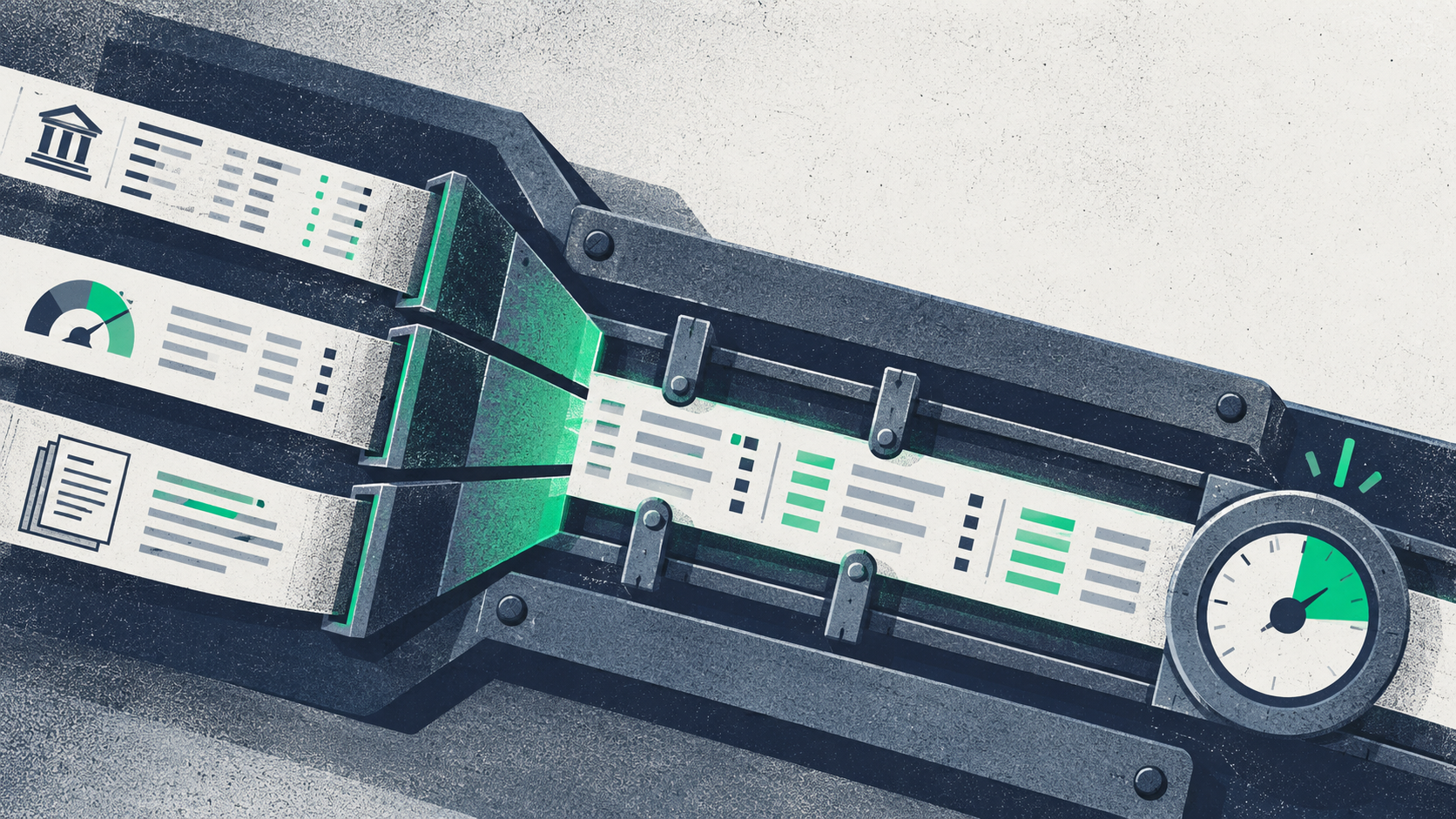
Rather than forcing every credit decision into a single underwriting pass, this new update allows lenders to mirror how underwriting actually happens in practice, reducing the number of manual checks and increasing accuracy for loan approval.
For example, when an application is first submitted, lenders can evaluate initial applicant data and bank statements, while also running KYC, KYB, and fraud checks. Based on this information, the lender can decline, approve, or issue a soft offer contingent on additional documentation.
Once closing documents are collected - for example additional months of bank statements, a debt schedule, a driver’s license - the application automatically moves into final underwriting.
What is traditionally a highly manual, back-and-forth process can now be completed instantly.
Enabling a Smoother Checkout Process
This staged approach, combined with Lendflow's Borrower Platform and Checkout process, reduces complexity for both lenders and customers. In the Borrower Platform, applicants can see exactly where they are in the lending process, they can upload documents, and ask questions in real-time. Once they've selected an offer, they move into Checkout to complete closing documents.
Throughout this journey, applicants are prompted to upload the right documents at each stage. When they submit their initial information, the first evaluation runs immediately. As bank statements, financials, or identity documents arrive, the next stage kicks off automatically. When additional data sources are needed for final approval, they're pulled at precisely the right moment.
This process provides clarity and transparency for the applicant while reducing the traditionally manual work lenders must do to keep an application moving through the process.
Making Complex Logic Manageable
Behind the scenes, this structure makes complex underwriting logic easier to manage over time. Instead of compressing every rule, exception, and edge case into a single decision tree, logic can be distributed across stages in a way that mirrors intent.
Early checks can stay lightweight and fast, later stages can focus on deeper financial analysis, and final validations can concentrate on risk controls and compliance. The result is a system that’s easier to reason and update.
How it All Works Together
All of this builds on Lendflow’s broader orchestration capabilities, which are designed to connect data, decisions, and applicant actions into one cohesive experience. The Borrower Platform gives borrowers a clear view of their application status, prompts them to submit documents at the right time, and allows them to accept offers. Data Orchestration runs automatic underwriting in the background as soon as documents become available. Checkout creates a seamless experience that maintains momentum and closes deals faster. Each component now operates across underwriting stages, reducing the need for constant human oversight to keep deals moving.
Whether you're already using Lendflow for lending infrastructure or exploring ways to modernize your workflows, discover how staged underwriting can create a faster, more seamless experience from application to approval.