[.green-span]What Is the Best Way to Aggregate Credit Data for Lending[.green-span]

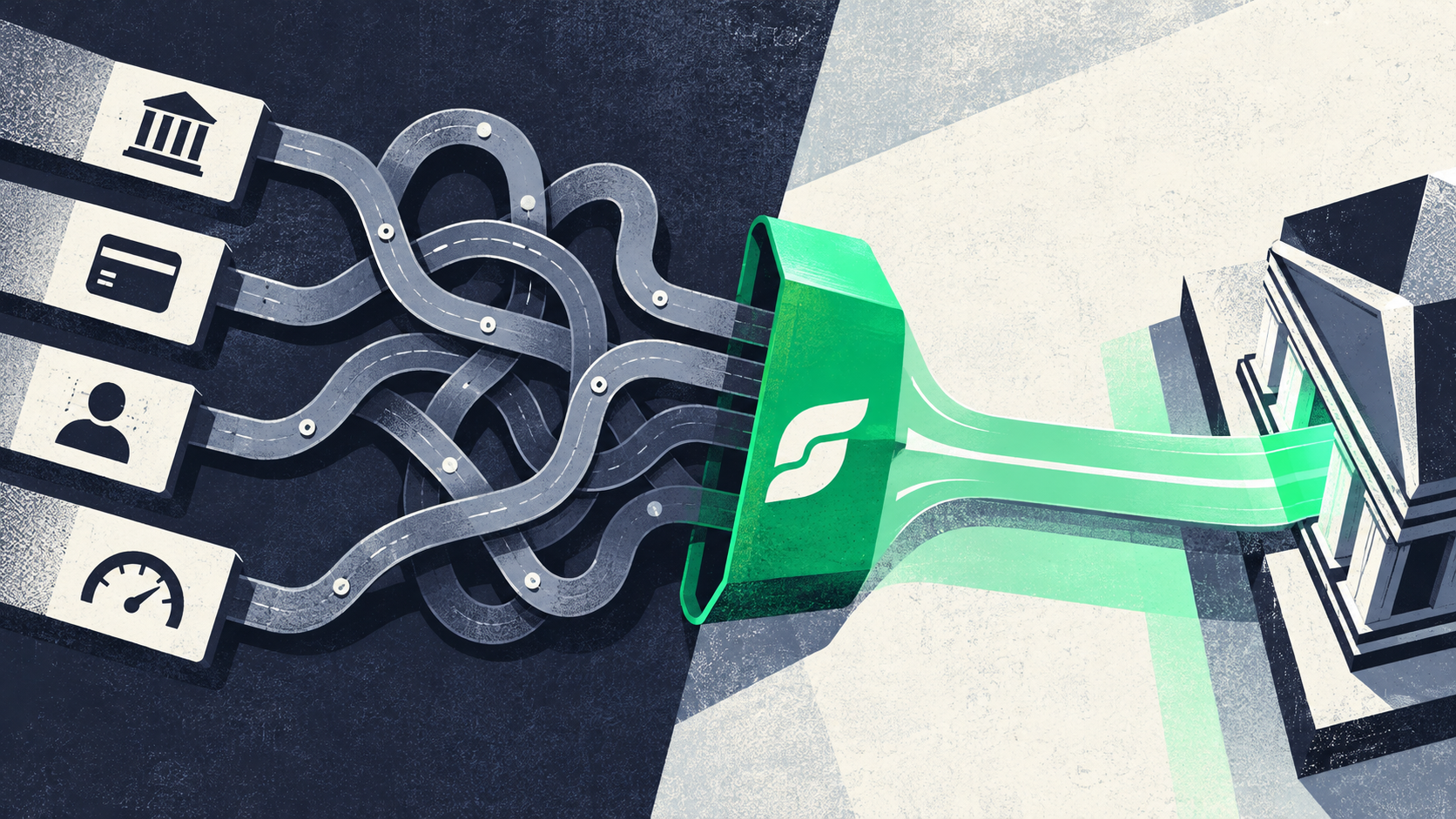
The best way to aggregate credit data for lending is to pull bureau, bank cash-flow, business, and document data through one API-driven layer. That layer should request each source in a rules-based order, capture borrower consent, and return one normalized profile that your decision engine can read.
Credit data aggregation is the process of collecting credit information from many separate sources and combining it into a single view of a borrower. An API, or application programming interface, lets two software systems share data automatically, so no one copies numbers by hand.
Better data matters because many small businesses still leave without the funding they need. Among employer firms, the Fed Small Business Credit Survey reports: "Forty-two percent of applicants received the full amount of financing they sought, 36% received some or most, and 22% received none." The survey covers employer firms and uses a convenience sample, not a random sample, so treat the figures as directional.
Lenders usually choose between two approaches when they build a data stack:
- Single-source pulls: One bureau report or one bank feed shows only part of a borrower's story, so a strong applicant can look risky.
- Orchestrated aggregation: Several sources feed one profile in a set order, so lenders see the full picture and pay only for needed data.
Lendflow built its platform around this approach, with $1.5B+ in offers made in the last 12 months (as of March 2025). The rest of this guide explains which sources to combine, how to collect them, and how to turn them into fast decisions.
The Core Credit Data Sources to Combine
No single source can answer every underwriting question. Bureau files show past borrowing, bank data shows how money moves today, and business records confirm that the company is real.
Most small business lenders combine three groups of data. Each group fills a gap that the others leave open.
Credit Bureau Data
A credit bureau is a company that collects payment and debt history and sells it as credit reports. The three major consumer bureaus are Equifax, Experian, and TransUnion. Business bureaus such as Dun & Bradstreet track how companies pay suppliers and lenders.
Credit scores are a useful signal, but they work best as one input among several. Some people have no credit file at all, which the CFPB calls being "credit invisible." According to CFPB credit invisibility research, "We estimate the share of the U.S. adult population who are credit invisible in 2020 to be 2.7 percent."
That figure covers consumer credit files, not businesses, yet it still matters because many small business lenders review the owner's personal credit. Other applicants have thin files, meaning only a few accounts, which makes their scores less reliable. For setup details, read our guide to credit bureau integrations.
Bank Transaction and Cash-Flow Data
Cash-flow underwriting means judging whether a borrower can repay by studying the money moving in and out of their bank accounts. It shows revenue, expenses, balances, and current debt payments in close to real time, which a bureau report cannot do.
The FinRegLab cash-flow underwriting study analyzed more than 38,000 small business loans from two fintech lenders, with support from Visa and Plaid. It found that "Models that added cash-flow variables to personal credit scores and other traditional inputs predicted default risk more accurately across all borrower segments analyzed."
FinRegLab reported the largest gains for low-score owners of businesses less than five years old. Because the study covered only two fintech lenders, each lender should test cash-flow data against its own portfolio before relying on it.
Business, Alternative, and Document Data
Business data confirms who the borrower is and what the company does. KYB, short for "know your business," is the process of verifying a company's legal identity, owners, and registration. NAICS codes, from the North American Industry Classification System, label a company's industry so lenders can apply the right risk rules.
Alternative data covers signals outside traditional credit files, such as rent and utility payment history. Lenders can also use business data enrichment tools to add company details to a thin bureau file.
Documents like tax returns and bank statements fill the remaining gaps, but reviewing them by hand slows every deal. Lendflow Automate uses AI document extraction agents to pull structured data from PDFs, IDs, tax returns, and bank files, delivering 80% faster document review.
Screen Scraping vs. Open Banking APIs
There are two main ways to collect bank data from a borrower. Screen scraping means a tool logs into the borrower's online banking with their username and password and copies data from the page. Open banking APIs let the bank send data directly to an approved app after the borrower grants permission, without sharing a password.
The table below lists commonly cited differences between the two methods. Actual results vary by provider, bank, and setup.
Many data providers use APIs where banks offer them and fall back to other methods where they do not. Ask each provider which method it uses for the banks your borrowers use most.
Section 1033 of the Dodd-Frank Act gives consumers the right to access their financial data. The CFPB's 2024 personal financial data rights rule implements Section 1033. The rule was designed to move the market from screen scraping toward secure developer interfaces, which are APIs.
The CFPB page on CFPB personal financial data rights states: "On October 29, 2025, the compliance dates of the Personal Financial Data Rights Rule were stayed by the court." The CFPB also issued an advance notice in August 2025 discussing possible amendments to the rule.
Lenders should check the latest status before building around specific dates.
A Step-by-Step Framework for Aggregating Credit Data
A repeatable framework keeps data costs predictable and decisions consistent. The seven steps below work for term loans, lines of credit, invoice factoring, and other small business products.
Each step builds on the one before it. Skipping the early planning steps is the most common reason lenders end up paying for data they never use.
Step 1: Define Decision Requirements for Each Product
Start by listing the questions each product must answer before you approve a deal. A merchant cash advance may focus on daily deposits, while an equipment loan may weigh time in business and owner credit more heavily.
Step 2: Map Each Requirement to a Data Source
Match every question to the source that answers it best. For example, revenue checks map to bank data, identity checks map to KYB data, and payment history maps to bureau data.
Step 3: Set a Credit Data Waterfall
A credit data waterfall is a rules-based sequence that calls one source at a time and moves to the next only when needed. For example, a lender might pull a business bureau report first. If there is no match, it pulls the owner's consumer report, then requests bank data if that file is thin.
Ordering sources by cost and hit rate keeps spending low on easy deals. It also saves the deeper, slower checks for the applications that truly need them.
Step 4: Collect and Store Borrower Consent
Ask for permission in plain language at the moment you need each data type. Record what the borrower agreed to share, when they agreed, and how long you may use the data.
Step 5: Normalize Everything Into One Profile
Normalizing means converting data from different sources into one standard format, so fields like "monthly revenue" mean the same thing everywhere. Lendflow Connect provides single-integration lending orchestration that links brands to 75+ lenders and is SOC 2 Type II compliant.
Step 6: Feed the Profile Into Decisioning
Send the finished profile straight into your rules and models instead of a review queue. The next section explains how this step turns aggregated data into faster approvals.
Step 7: Monitor Performance and Data Quality
Track hit rates, data costs, approval rates, and loan performance for each source over time. Drop sources that add cost without improving decisions, and test new ones in small batches first.
Turning Aggregated Data Into Faster Decisions
Lendflow Intelligence customers see 85% faster time-to-decision and 35% operational cost savings. The product acts as a credit decisioning and analytics layer between data collection in Connect and workflow execution in Automate.
Speed matters because borrowers now compare lenders online. Federal Reserve survey data shows the share of applicants seeking financing at online fintech lenders grew "from 17% in the 2020 survey to 29% in the 2025 survey."
With automated underwriting and decisioning, a clean profile can move from application to decision in minutes. A strong decision layer handles three jobs:
- Applies credit rules: It checks each profile against your policy, such as minimum revenue or time in business, without manual review.
- Scores risk consistently: It runs the same models on every application, so similar borrowers receive similar outcomes.
- Routes declined deals: It sends deals that miss one lender's criteria to other lenders, so qualified borrowers still find funding.
Best Practices and Common Pitfalls
Good aggregation depends as much on process as on technology. These practices help lenders stay compliant, control costs, and keep decisions accurate as volume grows.
- Confirm permissible purpose: The Fair Credit Reporting Act sets rules on permissible purposes for pulling consumer reports, so confirm yours with counsel.
- Keep consent records: Store who agreed, what they shared, and when, so you can answer audits and borrower questions quickly.
- Check vendor security: Ask data partners for a SOC 2 Type II report, an independent audit of how a company protects data over time.
- Avoid over-pulling data: Requesting every source on every deal raises costs and adds friction, so let your waterfall decide what each deal needs.
- Refresh stale data: Bank data from several months ago can miss a recent drop in revenue, so refresh it before funding and renewals.
- Prevent vendor lock-in: Choose an open architecture that lets you add or swap data providers without rebuilding your workflow.
Conclusion
The strongest credit data strategy combines bureau, cash-flow, business, and document data through one orchestration layer. A waterfall controls cost by pulling only what each deal needs, while consent records and secure vendors protect both lenders and borrowers.
Open banking APIs are widely seen as a more secure path than screen scraping, even while the Section 1033 rule's status remains unsettled. When the normalized profile flows straight into automated decisioning, lenders can approve good borrowers faster and keep their teams lean as volume grows.
Frequently Asked Questions
What Is Credit Data Aggregation?
Credit data aggregation is collecting credit information from bureaus, bank accounts, and business records and combining it into one borrower profile.
Is Screen Scraping Still Used?
Yes, some providers still use screen scraping, often when a bank does not offer API access. Many lenders prefer open banking APIs where available, since borrowers typically do not need to share passwords.
What Are the Big 3 Credit Bureaus?
The three major US consumer credit bureaus are Equifax, Experian, and TransUnion.
Does Cash-Flow Data Replace Credit Scores?
No, cash-flow data works best alongside credit scores. FinRegLab's study found that adding cash-flow variables to traditional inputs predicted default risk more accurately.
Is Section 1033 in Effect?
A court stayed the compliance dates of the CFPB's Personal Financial Data Rights Rule on October 29, 2025. The CFPB issued an advance notice in August 2025 discussing possible amendments, so check the latest status before planning around specific dates.
See how Lendflow Intelligence turns aggregated credit data into fast, consistent lending decisions.