[.green-span]SBA Lender Match Tool Alternatives: Faster Paths to the Right Lender[.green-span]
What SBA Lender Match does—and why owners look for alternatives
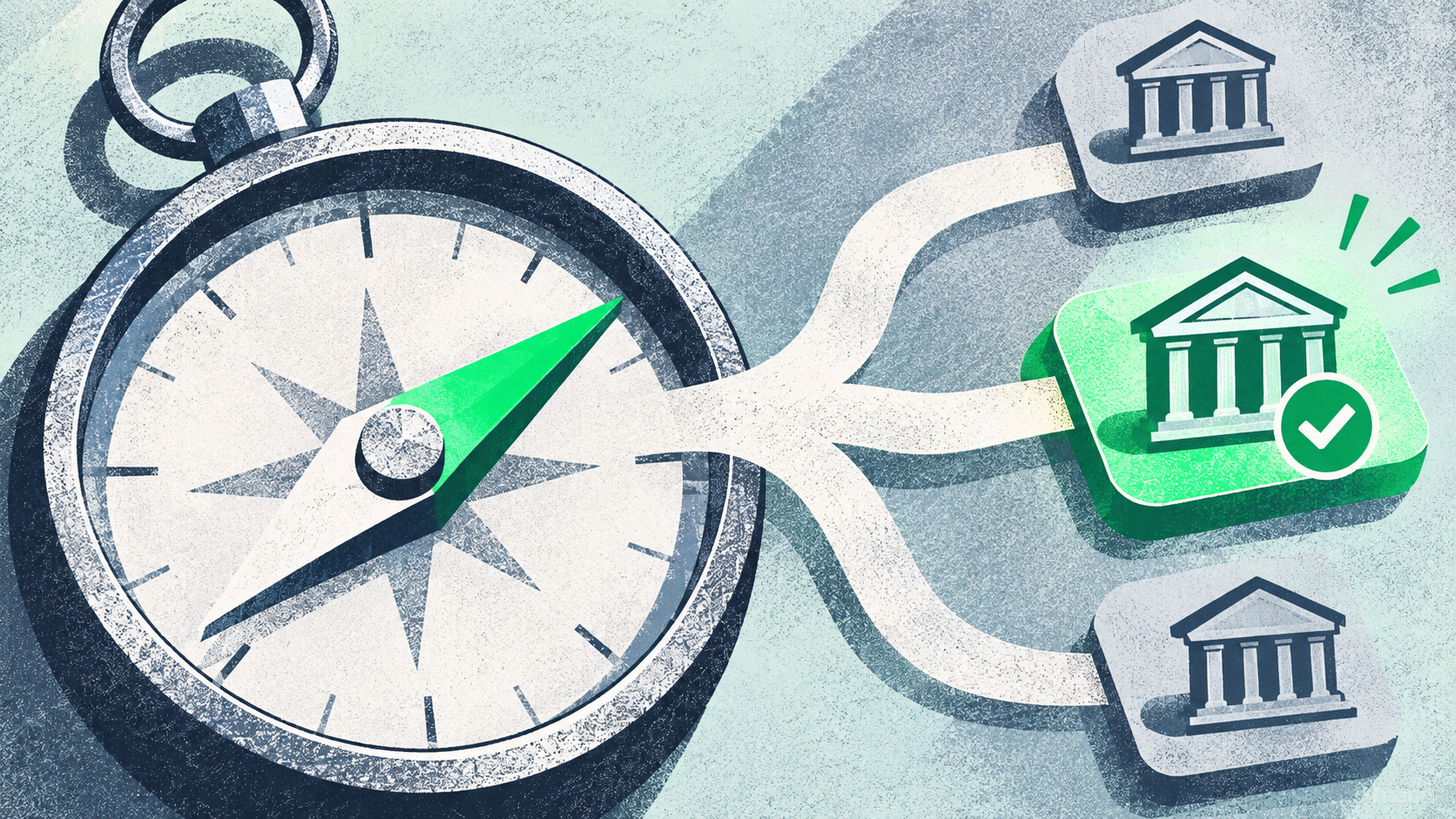
SBA Lender Match is the U.S. Small Business Administration's online referral tool that shares a short profile of your business with participating lenders. According to SBA's Lender Match page, SBA prepares a summary of interested lenders two business days after you submit. The tool isn't a loan application, doesn't guarantee a match or offer, and draws on more than 800 participating lenders.
The strongest SBA Lender Match tool alternatives fall into four groups. They are multi-lender and embedded marketplaces, PLP and CDFI lender directories, direct lenders, and free counseling partners.
Each group closes a different gap in the Lender Match experience. Owners usually start looking elsewhere for one of four reasons:
- Passive wait: You submit a profile, then wait for lenders to signal interest before any real conversation starts.
- SBA-focused scope: Every participating lender offers SBA-approved loans, so the tool centers on SBA programs even though many lenders also offer conventional loans.
- No upfront view of fit: You don't see pre-qualified terms before you talk with lenders, so comparing options takes extra rounds.
- Location-dependent results: Lender interest depends on who participates in your area and how your profile fits their criteria.
SBA counts more than 800 participating lenders, so the harder problem is matching. That means getting accurate business data in front of the lenders most likely to say yes, early enough to compare terms.
Does SBA Lender Match work? Legitimacy and realistic expectations
Yes—SBA Lender Match is a legitimate government tool, and it works as a referral service. SBA doesn't lend money directly. It guarantees loans made by participating lenders, and those lenders make the credit decision.
The SBA 7(a) loan program page from SBA states that the maximum 7(a) loan amount is $5 million. The same page says you always work directly with your lender and not with SBA. Approval, pricing, documentation, and closing all happen on the lender's side.
Most frustration with the tool traces back to two myths. Here's what SBA's own pages say:
- SBA lends directly: False. SBA guarantees loans that banks, credit unions, and other approved lenders make.
- A match equals approval: False. A match means a lender is interested in your profile, and a full application and underwriting still follow.
Set expectations around interest, not outcomes. Responses vary by your business profile and region.
Read any lending match reviews with this design in mind. The tool does what SBA says it does—it makes introductions. If you need speed, product variety, or upfront terms, pair it with one of the alternatives below.
The best SBA Lender Match alternatives
Every alternative trades off three things: speed, scope, and control. Speed is how quickly you see real options. Scope is how many lenders and product types you reach, and control is how much of the outreach you drive yourself.
No single channel wins on all three. Marketplaces lead on speed and scope, directories give you control over SBA-specific outreach, and direct lenders give you a relationship. Running two channels in parallel gives you more offers to compare.
Multi-lender and embedded lending marketplaces
$1.5B+ in offers in the last 12 months. 42% faster speed to funding. Those are Lendflow platform results as of March 2025, and pre-qualified offers hosted on Lendflow drive that average speed gain.
A multi-lender marketplace routes one application to many lenders and product types at once. Instead of waiting for interest, you see pre-qualified offers upfront and compare them side by side. Lendflow's network connects businesses with 75+ lenders across SBA Loans, Term Loans, Lines of Credit, Equipment Financing, Invoice Factoring, Purchase of Receivables, and MCAs.
Some marketplaces sit inside software owners already use—Experian's marketplace, covered below, is one example. This is where matching meets real-time business data. An embedded marketplace can draw on business data you've already shared.
Here's how embedded lending works in practice. A software company adds financing through widgets, landing pages, or APIs, and lenders compete inside that workflow. Experian's embedded lending marketplace is one example built on Lendflow.
Lendflow builds the infrastructure, and lenders on the network make the credit decisions. That separation lets owners compare offers from multiple lenders side by side.
- Best for: Owners who need speed, more than one product type, or a clear view of terms before applying.
- Watch for: Offers still require underwriting, so compare total cost and confirm terms with each lender.
SBA lender directories: PLP and CDFI lenders
If you know you want an SBA loan, you can skip the wait and build your own shortlist. Search for SBA lenders by state, then contact the ones that match your loan size and industry before you apply.
Per SBA's lender guidance, SBA may grant delegated authority to certain lenders to process, close, service, and liquidate certain 7(a) loans without prior SBA review. Lenders using it for standard 7(a) loans work under the Preferred Lender Program (PLP). That authority shifts more of the process to the lender, though it doesn't guarantee faster or cheaper approval.
CDFI Fund certification from the U.S. Treasury's CDFI Fund is a designation for specialized organizations serving low-income communities and people who lack access to financing. CDFIs include community development banks, credit unions, and loan funds.
- PLP lenders: A fit when you want an SBA 7(a) loan and prefer a lender with delegated authority.
- CDFI lenders: A fit for businesses in low-income communities or owners who lack access to financing.
- Scope check: CDFI certification and SBA lender status are separate designations, so confirm which programs each lender offers.
Banks, credit unions, and online lenders directly
Applying directly gives you a relationship and full control over the conversation. It also means repeating the application for every lender you approach.
The Federal Reserve Banks' 2025 Small Business Credit Survey shows how borrowers split their applications. The survey is a convenience sample of U.S. employer firms, published March 2026, so treat it as a signal rather than a census of all small businesses.
- Online lender demand is rising: The share of surveyed applicants seeking financing at online fintech lenders rose from 17% (2020 survey) to 29% (2025).
- Small banks approve more often: Among surveyed firms, small-bank applicants were the most likely to be fully approved, at 57%.
- Online costs surprise borrowers: 60% of surveyed online-lender borrowers reported higher-than-expected borrowing costs, compared with 37% at small banks and 32% at large banks.
- Satisfaction trails at online lenders: Surveyed credit union and bank applicants were more satisfied with their experiences than online lender and finance company applicants.
The tradeoff is speed versus cost transparency. Surveyed online-lender borrowers often found the real cost higher than expected. Surveyed small-bank applicants, by contrast, were the most likely to be fully approved.
Borrower-experience data like this adds context a simple lender list can't. Use it to decide where to apply first and how hard to push on total cost before you sign.
SBA Lender Match vs. the alternatives: side-by-side comparison
The biggest difference between these channels is how much one profile can do for you. Lender Match sends your profile to SBA lenders, while marketplaces route a single profile across many product types.
That matters because many businesses fit a non-SBA product better. Lendflow supports financing types beyond SBA, including term loans, lines of credit, equipment financing, invoice factoring, and MCAs.
Read the table as a set of complements. One profile in a multi-lender channel can surface options across product types, while a directory shortlist keeps SBA programs in play.
Which SBA loan is easiest to get—and what it costs
SBA doesn't rank its programs by ease of approval, but the SBA microloan program page from SBA puts the average microloan at about $13,000. SBA says microloans of up to $50,000 help small businesses start up and expand. If your need is small, put them on your shortlist.
Larger needs move into other SBA programs. Here's how the three main options compare by size:
- 7(a) loans: Up to $5 million through participating lenders, with SBA guaranteeing the loan.
- 504 loans: $25,000 to $5.5 million, per SBA's program comparison table, for major capital assets.
- Microloans: Up to $50,000 through nonprofit intermediary lenders, which SBA says help small businesses start up and expand.
Cost is the next filter. SBA's lender program guidance from SBA caps variable 7(a) rates at the base rate plus 3.0% to 6.5%, depending on loan size. Smaller loans carry the higher spread.
Those numbers are ceilings, not typical rates. Your actual rate depends on the lender, your credit profile, and the loan structure.
Fees add to the total. Lenders pay an upfront SBA guaranty fee on 7(a) loans and may pass that cost on to the borrower. SBA sets fee amounts each fiscal year, and FY2027 began October 1, 2026, so check SBA's current fee notice before you compare offers.
Compare SBA options against business term loans and other products on total cost, not rate alone. Fees, term, and repayment schedule all shape what you pay.
Free resources that complement any matching tool
Matching tools find lenders. Counselors can help you prepare your business plan and financials before you talk to lenders.
SBA works with a network of SBA resource partners, and SBA notes that SCORE mentors offer area-specific advice at no cost. Mentors advise on financing, human resources, and business planning by email, phone, or video.
- SCORE mentors: No-cost, area-specific advice on financing and business plans.
- Small Business Development Centers (SBDCs): Individualized advising and technical assistance that helps small businesses access capital; confirm costs with your local center.
- Local banks and credit unions: Relationship underwriting that weighs your history with the institution alongside your numbers.
Use these resources before you apply and again after a decline. A counselor can review your plan and financials with you before your next application.
How to improve approval odds on any lender matching platform
Preparation can improve your chances of approval on any platform. SBA advises having a business plan, expense sheet, and financial projections ready to increase your chances of securing a loan.
- Prepare core documents: Lenders typically ask for financial statements such as income statements and balance sheets, plus a business plan and projections. Requirements vary by lender, so ask each one for its checklist and use SBA's business planning guidance from SBA to build your plan.
- Keep profile data accurate: Make sure the revenue, time in business, and credit details you enter match your documents.
- Respond fast: Reply to lender questions and document requests the same day to keep your file moving.
- Compare offers on total cost: Compare each offer's rate, fees, term, and prepayment terms, which SBA suggests asking lenders about.
- Use more than one channel: Pair Lender Match with a multi-lender marketplace or a direct lender to widen your options.
- Seek a second look after a decline: Ask about other lenders or products before you restart the whole process.
Platforms make this easier when every step lives in one place. With a unified borrower platform, owners upload documents, track status, and compare offers without juggling separate portals.
A decline doesn't have to be a dead end. Lenders on Lendflow build decline waterfalls so no deal is left on the table, and second-look lending options give owners another path without starting over.
Which SBA Lender Match alternative fits your business?
Match the channel to your need, then run more than one in parallel. Each path below starts with the tool that fits best and adds a second channel to widen your options.
- Long-term SBA need: Use SBA Lender Match and build a PLP and CDFI shortlist at the same time.
- Multiple products or speed: Start with a multi-lender or embedded marketplace to see pre-qualified offers upfront.
- Thin credit or underserved market: Contact CDFI lenders and explore SBA microloans through nonprofit intermediaries.
- Unsure where to start: Book time with a SCORE mentor or your local SBDC before you apply anywhere.
Running channels in parallel shortens the search. You keep SBA options open while you see real offers from lenders across product types.
For platforms, the opportunity is to bring that matching to the owner. Software companies can embed lender matching where small businesses already work—skip long build cycles and launch with widgets, landing pages, and APIs.
Lendflow Connect embedded infrastructure helps teams offer multi-lender financing inside their own product. Book a demo or talk to our team to see how Lendflow can help you connect capital and grow.
FAQs
These answers cover the most common questions about SBA Lender Match and the alternatives.
Does SBA Lender Match work?
Yes, it works as a referral tool that connects you with interested SBA lenders. It doesn't guarantee a match or a loan offer.
Is SBA Lender Match legit?
Yes, it's an official SBA tool. It isn't a loan application, so you still apply with the lender you choose.
What is the easiest SBA loan to get approved for?
SBA doesn't rank programs by ease of approval, but it says microloans of up to $50,000 help small businesses start up and expand. If your need is small, put them on your shortlist.
How long does it take to get matched with a lender?
SBA prepares a summary of interested lenders two business days after you submit a request. Funding time depends on the lender and the loan program.
Can I use SBA Lender Match and other matching platforms at the same time?
Yes, and it's often a smart move. Running Lender Match alongside other channels lets you compare more offers on total cost.
Are there fees for using lender matching platforms?
SBA's Lender Match event listing describes Lender Match as a free online tool. Lenders you work with may still charge loan fees or pass on the SBA upfront guaranty fee.
What information do I need to use a lender matching tool?
Expect to describe your business, how much you need, and how you'll use the funds. Lenders request financial documents once you apply.
What should I do if I don't get any lender matches?
Try a multi-lender or second-look channel, and contact CDFI lenders in your area. A SCORE mentor or SBDC advisor can help you prepare your business plan and financials.
What is the difference between PLP and CDFI lenders?
SBA may grant PLP lenders delegated authority to process, close, and service certain 7(a) loans without prior SBA review. CDFIs hold a Treasury CDFI Fund designation for serving low-income communities and people who lack access to financing.