[.green-span]How to detect fake bank statements before you fund[.green-span]
Fake bank statements are the fastest-growing document threat in lending, and they are already sitting in your application queue. In Alloy's 2025 State of Fraud Report, 60% of fraud decision-makers at banks, credit unions, and fintechs reported that fraud rose over the past year. Nearly one-third incurred more than $1 million in direct fraud losses.
This guide shows lending and operations teams how to detect fake bank statements at scale. You will learn the red flags that still catch forgeries, a step-by-step verification framework, and how automation catches what manual review misses. The goal: stop bad deals before they fund, without adding headcount.
Why fake bank statements are surging
Bank statements are the document fraudsters target most. Inscribe's 2026 State of Document Fraud Report found that 85.6% of fraud leaders name them the most vulnerable document type.
The tooling has caught up to demand. Off-the-shelf templates and editing apps let almost anyone export a PDF that looks authentic to the naked eye. Generative AI made it faster. Inscribe reports that AI-generated document fraud increased fivefold between April and December 2025.
The stakes match the volume. The FTC reported consumers lost more than $12.5 billion to fraud in 2024, a 25% jump over the prior year.
Prevalence keeps climbing. Inscribe's 2026 report found roughly 6% of documents processed across its network in 2025 were flagged as fraudulent, about 1 in 16. Cotality's 2025 Annual Fraud Report estimated 0.86% of mortgage applications carried fraud risk in Q2 2025, about 1 in 116.
The three types of fake bank statements
Not every fake is built the same way, and each one needs a different detection approach.
- Fabricated from scratch. Built from a template or generator, these contain entirely invented account details and often copy a real bank's fonts and branding.
- Altered genuine statements. The applicant takes a real statement, then inflates balances, removes negative entries, or adds fictitious deposits.
- AI-generated. Fraudsters now produce deepfake documents that can pass initial digital verification unless a reviewer runs forensic analysis.
The distinction matters at the file level. An edited statement began as a real issuer file that someone changed and saved. A generated statement was assembled to look real and never went through the bank's statement job.
Red flags that expose a fake bank statement
Manual red flags still catch amateur work. Keep these on a reviewer checklist.
- Mismatched fonts and sizes. Fraudsters paste sections from different sources, so mixed typefaces in one document signal tampering.
- Suspiciously round numbers. Real transactions rarely land on perfect figures. Repeated $5,000.00 or $10,000.00 deposits warrant scrutiny.
- Math that does not add up. Each running balance should equal the previous one plus credits minus debits. Fraudsters who alter amounts often forget to update it.
- Impossible dates. A payroll deposit on a Sunday, or a wire on a federal holiday, points to a fabricated date.
- Bank details that do not match. Confirm the bank name, logo, address, routing number, and customer service phone against official records.
- Balances that do not fit the applicant. Deposits or ending balances that clash with the client's financial profile deserve a second look.
One caution: these tells catch easy fakes, not good ones. Inscribe reports that the formatting tells reviewers were trained to spot are largely gone from AI-generated statements. Treat a clean visual scan as a starting point, never as proof.
How to detect fake bank statements: a step-by-step framework
Move from eyeballing pages to a repeatable process that holds up across high volume.
- Check arithmetic and continuity first. Ending balance should equal beginning balance plus credits minus debits. Running balances should follow line by line, and dates should not jump backward.
- Cross-check against the rest of the file. Business revenue should align with the tax return, and payroll deposits should match W-2 or 1099 income. Systematic mismatches mean one document was altered.
- Read the file history and metadata. Editing after creation shows up as changes made after the original export. A generated file shows no issuer production chain.
- Verify the source, not the PDF. Use bank connection tools that pull data directly from the account. A refusal to connect in favor of a PDF is itself a red flag.
- Score the risk and route the decision. Assign an explainable risk score to each applicant. Send clean files forward and hold flagged ones for review.
- Automate for volume. Manual forensics do not scale to hundreds of applications, so build these checks into intake.
How Lendflow automates bank statement verification
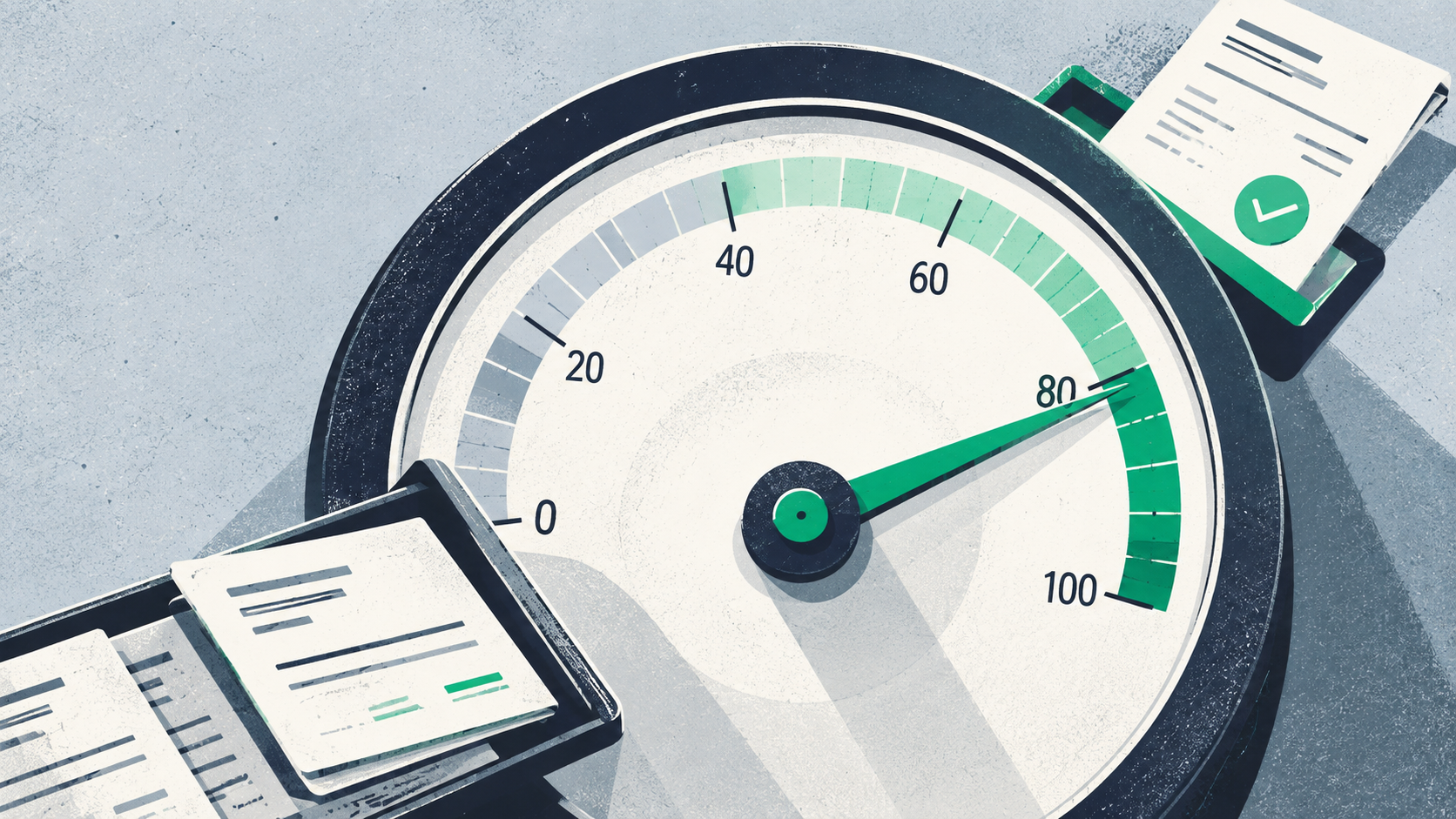
Lendflow builds these controls into the lending workflow, so teams verify documents in minutes rather than days. Lendflow Automate runs a Doc Analyzer agent that pulls structured data from PDFs, IDs, tax returns, and bank files. A Trust Score agent then returns an explainable composite risk score for each applicant. It delivers 80% faster document review and 65% faster time-to-decision, without a heavy rebuild of existing systems.
Lendflow Connect lets borrowers connect accounts and upload documents inside your branded experience. That lets you verify at the source instead of trusting a static PDF. Lendflow Intelligence adds ecosystem-level fraud indicators, benchmarking patterns across lenders that a single portfolio cannot see.
Best practices and common pitfalls
Strong programs pair sharp reviewers with automation and a clear compliance posture.
- Do not rely on a visual scan. Polished formatting is no longer proof of authenticity, so require source and metadata checks on higher-risk files.
- Verify outside the document. The most reliable signal comes from confirming the truth against the source, not the file itself.
- Give your team memory across applications. A missing shared record is a real vulnerability. One fraudster using five company names can look like five separate customers.
- Watch review-queue pressure. Teams processing dozens of applications a week cannot forensically review every page. Automate first-pass screening so reviewers focus on flagged files.
- Treat detection as a compliance requirement. Bank Secrecy Act obligations include Suspicious Activity Report filing. Weak controls invite scrutiny from the OCC, FDIC, CFPB, and FinCEN.
Conclusion
Fake bank statements are cheap to make, hard to spot by eye, and expensive to miss. The teams that stay ahead pair reviewer red flags with a repeatable framework. Check arithmetic, cross-reference the full file, read metadata, verify at the source, and score every applicant.
The lasting fix is automation. Run these checks on every document, approve real borrowers faster, and keep fraudulent files out of your funding pipeline. Learn More.
FAQs
What is the fastest way to detect a fake bank statement?
Start with arithmetic and continuity. Check that each running balance equals the previous balance plus credits minus debits, the most reliable manual method. For volume, automated document analysis flags tampering in minutes.
Can you spot an AI-generated bank statement by looking at it?
Often no. Inscribe reports that the formatting tells reviewers once relied on are largely gone from AI-generated statements. Competent fakes need metadata, issuer, and artifact checks that a two-minute glance cannot perform.
Why are bank statements targeted more than other documents?
They unlock credit. Payroll deposits, average daily balance, and ending cash are core underwriting inputs. That makes bank statements the highest-value document in most applications.
Is submitting a fake bank statement illegal?
Yes. Creating counterfeit bank statements is illegal and can carry fines and imprisonment. Lenders also hold their own regulatory duties to detect and report suspected fraud.
How does Lendflow help detect fake bank statements?
Lendflow Automate extracts and validates data from bank files, tax returns, and IDs, then assigns an explainable Trust Score to each applicant. It delivers 80% faster document review and 65% faster time-to-decision, so teams verify at scale without adding headcount.


.png)