[.green-span]Consumer Lending Platforms: What They Are, How They Work, and What to Look For[.green-span]
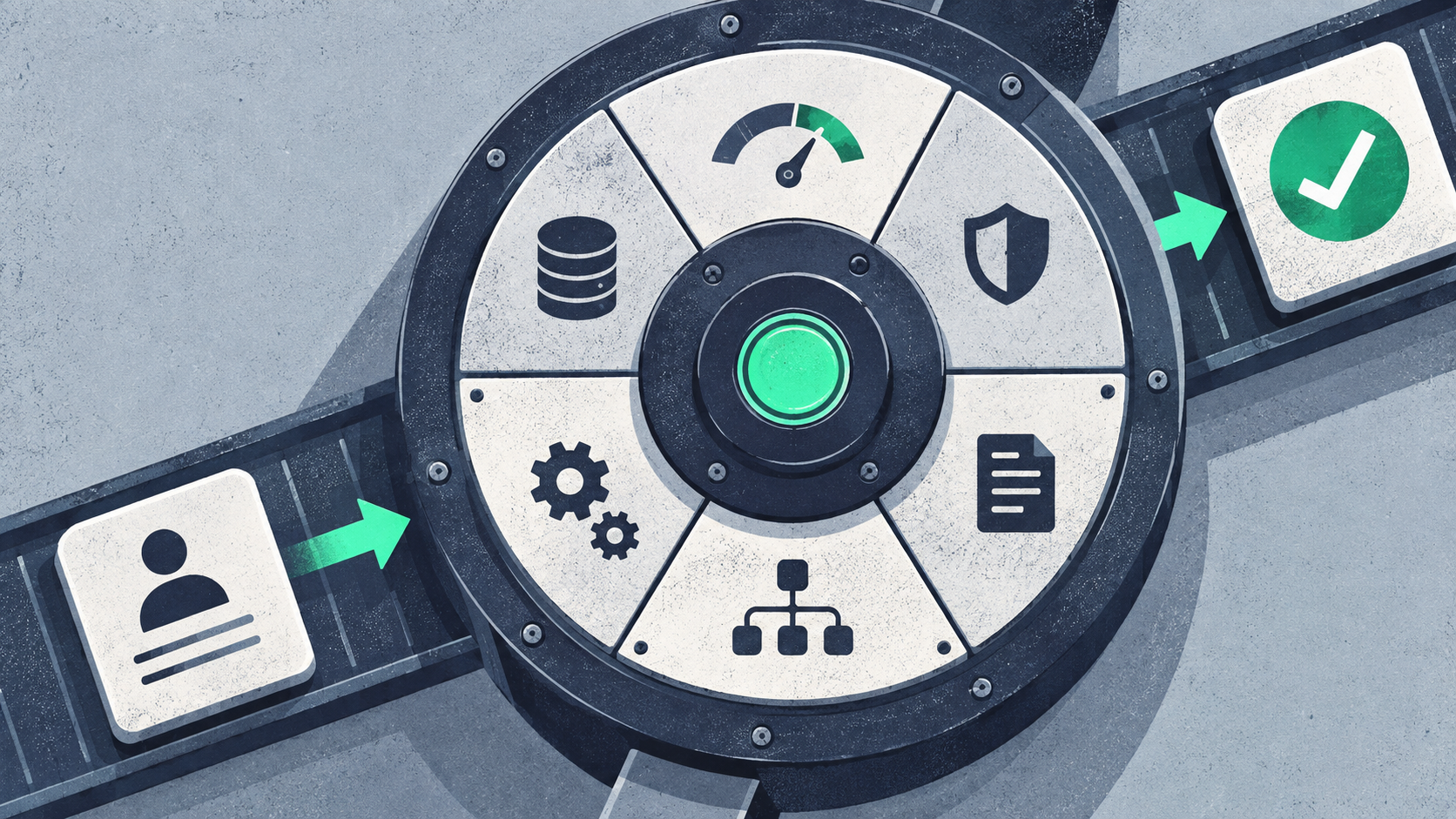
A consumer lending platform provides the infrastructure to manage these processes in one place. Depending on the platform, lenders can use it to collect applications, connect data sources, automate underwriting, manage documents, communicate with borrowers, and move qualified applicants toward funding.
As AI becomes a larger part of lending operations, these platforms are also evolving beyond basic loan origination software. Modern lending infrastructure can increasingly help teams automate decisions, orchestrate data, and manage workflows across the entire lending lifecycle.
What Is a Consumer Lending Platform?
A consumer lending platform is software that helps financial institutions and lending companies manage the process of originating and servicing consumer credit.
Rather than relying on separate tools for applications, data collection, underwriting, document management, borrower communication, and other operational tasks, lenders can use a platform to connect these workflows.
The exact capabilities vary by provider, but a modern consumer lending platform may support:
- Digital loan applications
- Credit bureau and financial data integrations
- Automated underwriting and decisioning
- Document collection and analysis
- Borrower communication
- Workflow automation
- Offer presentation
- E-signatures and closing
- Compliance workflows
- Reporting and analytics
The objective is not simply to digitize an existing manual process. The larger opportunity is to connect the different stages of lending so data and applications can move through the process with fewer manual handoffs.
Why Are Consumer Lending Platforms Becoming More Important?
Borrower expectations have changed significantly as more financial services have moved online. Consumers increasingly expect lending experiences to offer the same speed, transparency, and convenience they receive from other digital products.
That puts pressure on lenders to improve both the front-end experience and the infrastructure behind it.
The shift is also happening within traditional financial institutions. According to the FDIC's 2024 Small Business Lending Survey, 31% of banks reported using FinTech in their small business lending operations, while another 22% were discussing or developing its use. The survey itself was conducted in 2022, so the FDIC noted that actual adoption by 2024 was likely higher.
Despite that adoption, significant opportunities for automation remain. The same FDIC research found that only 8% to 9% of banks were using FinTech in pre-loan functions such as application submission, processing, underwriting, and approval quality control.
While those figures relate specifically to small business lending, they demonstrate a broader shift occurring across lending: financial institutions are adopting more technology, but many core workflows still have room for greater automation.
What Should a Consumer Lending Platform Do?
The right platform depends on the lending product and operating model, but lenders should generally look beyond basic application intake.
A modern platform should help connect the major components of the lending process.
1. Create a Better Digital Application Experience
The application is often the borrower's first direct interaction with a lender. Long forms, repetitive requests, unclear requirements, and disconnected systems can introduce unnecessary friction before underwriting even begins.
Consumer lending platforms can create digital application experiences that dynamically collect the information required for a particular product.
They can also connect application data directly with downstream workflows, reducing the need for teams to manually transfer information between systems.
2. Connect Credit and Financial Data
Applications alone rarely provide enough information to make a lending decision.
Lenders may need credit bureau information, bank account data, identity information, income verification, fraud signals, and other third-party data. When every source requires its own integration and data structure, complexity increases quickly.
A lending platform can act as a data orchestration layer, bringing multiple sources into a more consistent workflow and making that information available to underwriting systems.
3. Automate Underwriting and Decisioning
One of the largest opportunities for lending technology is reducing the amount of repetitive work required to evaluate an application.
Automated workflows can collect relevant information, calculate attributes, apply eligibility criteria, route applications through different underwriting stages, and flag exceptions for human review.
AI is beginning to expand what is possible here. In McKinsey's analysis of multiagent systems used to prepare credit memos, the firm found credit analyst productivity gains ranging from 20% to 60%, depending on the circumstances, along with roughly 30% faster decision-making.
These findings should not be interpreted as universal benchmarks for lending automation, but they illustrate how AI-assisted workflows can reduce the amount of time analysts spend assembling and interpreting information.
4. Automate Document Collection and Review
Documents are another common source of operational friction.
Borrowers may need to provide identification, income documentation, bank statements, or other supporting information. Operations teams then have to determine whether everything has been submitted, validate the documents, extract relevant information, and request missing items.
A modern consumer lending platform can automate parts of this process by establishing document requirements, tracking submissions, extracting information, and routing exceptions to employees when human review is required.
5. Improve Borrower Communication
Fast underwriting does not necessarily create a good lending experience if borrowers do not know what is happening.
Automated email, SMS, chat, and voice communication can help lenders keep applicants informed, request missing information, answer common questions, and guide borrowers through outstanding steps.
The importance of trust is particularly clear in consumer lending. J.D. Power's 2025 U.S. Consumer Lending Satisfaction Study found that trust scores were 203 points higher, on average, when personal loan customers perceived that their lender provided a secure process that protected their personal information.
Transparency matters as well. Unexpected fees were the most commonly reported problem among personal loan customers who experienced an issue, reinforcing the importance of communicating terms and requirements clearly throughout the process.
How AI Is Changing Consumer Lending Platforms
AI is moving lending automation beyond predefined rules and simple task automation.
Traditional lending software generally follows explicitly configured workflows: when one condition occurs, the system performs a predetermined action. AI-powered systems can potentially take on more complex tasks involving unstructured information, communication, document interpretation, and workflow coordination.
Potential applications include:
- Summarizing applicant and credit information
- Extracting data from documents
- Identifying missing information
- Drafting credit memos
- Communicating with borrowers
- Routing applications based on eligibility
- Assisting analysts with application review
- Coordinating tasks across multiple lending systems
Adoption, however, is still developing.
A McKinsey and IACPM survey of 44 large financial institutions found that 52% had made generative AI adoption a priority. At the same time, only 27% were piloting information synthesis for credit decisioning, and just 12% of North American respondents had deployed any generative AI use case.
The takeaway is not that lending has already been transformed by AI. Instead, the industry is moving from experimentation toward practical implementation, with governance, explainability, and human oversight remaining important considerations.
Consumer Lending Platform vs. Traditional Loan Origination Software
Traditional loan origination systems and modern lending platforms can overlap significantly, but they are not always designed for the same purpose.
The distinction ultimately comes down to how much of the lending process the technology can coordinate. Lenders increasingly need infrastructure that connects data, decisioning, automation, and borrower experience rather than another isolated system.
What to Look for When Choosing a Consumer Lending Platform
When evaluating platforms, lenders should consider both what they need today and how their lending operations may evolve.
Key questions include:
- Can the platform integrate with the credit and financial data providers we already use?
- Can we configure underwriting rules without rebuilding workflows from scratch?
- Does it support multiple lending products and underwriting strategies?
- Can manual steps be automated while preserving human review for exceptions?
- How are borrower communications handled?
- Can document requirements and analysis be automated?
- How easily does the platform integrate with existing systems?
- What controls exist around AI-generated actions and decisions?
- Can workflows evolve as our credit policy changes?
- Does the platform provide the security and compliance capabilities required for handling sensitive financial data?
Platforms should also make it easier to change lending processes over time. A system that works for one product or underwriting strategy but requires extensive development whenever requirements change can become a bottleneck as the lending program grows.
How Lendflow Supports Modern Lending Workflows
Lendflow provides lending infrastructure designed to connect the different systems and workflows involved in originating credit.
Rather than requiring lenders to build separate infrastructure for data, underwriting, automation, and distribution, Lendflow brings these capabilities together through three core areas: Lendflow Intelligence, Lendflow Automate, and Lendflow Connect.
Lendflow Intelligence helps teams orchestrate data and build configurable decisioning workflows. Lenders can connect financial and credit data, create attributes and scorecards, manage multi-stage underwriting, and automate decisions while retaining control over their credit policies.
Lendflow Automate extends automation into operational workflows with AI agents for voice, SMS, email, and chat, along with document analysis and application assistance. Human-in-the-loop functionality allows teams to automate repetitive work while escalating applications or interactions when employee involvement is required.
Lendflow Connect provides infrastructure for distributing and routing lending opportunities, including embeddable experiences, hosted flows, APIs, pre-qualified offers, and multi-lender orchestration.
Together, these capabilities allow lenders and fintech companies to build lending experiences around a connected infrastructure layer instead of stitching together a growing collection of point solutions.
The Future of Consumer Lending Platforms
Consumer lending platforms are moving toward a model where applications, data, underwriting, documents, communication, and borrower experiences operate as parts of the same workflow.
AI will accelerate that transition, but adoption is likely to be incremental rather than immediate. Lending decisions involve sensitive financial information, regulatory requirements, model governance, and significant consequences for borrowers, making explainability and oversight essential.
The strongest platforms will therefore not simply automate as much as possible. They will give lenders more control over where automation is appropriate, where AI can improve efficiency, and where a person should remain involved.
For lenders evaluating their technology stack, that shift changes the central question. Instead of asking which individual tools can automate particular tasks, the more important question is how the entire lending process can work together.
Frequently Asked Questions
What is a consumer lending platform?
A consumer lending platform is technology that helps lenders manage digital loan origination and related workflows. It can include application intake, data collection, underwriting, decisioning, document management, borrower communication, closing, and automation.
What types of loans can consumer lending platforms support?
Depending on the provider, consumer lending platforms can support products such as personal loans, installment loans, lines of credit, home equity products, auto financing, and other forms of consumer credit.
How does automation improve consumer lending?
Automation can reduce repetitive operational tasks such as collecting information, reviewing documents, calculating underwriting attributes, routing applications, and communicating with borrowers. This can allow lending teams to focus more of their time on exceptions and higher-value decisions.
How is AI used in consumer lending?
AI can assist with document analysis, information extraction, application review, credit memo preparation, borrower communication, and workflow orchestration. Adoption in credit decisioning remains relatively early, particularly as lenders work through governance, explainability, and risk requirements.
What is the difference between a lending platform and a loan origination system?
A loan origination system typically focuses on managing the process of originating a loan. A broader lending platform may connect origination with data orchestration, automated underwriting, AI agents, document analysis, borrower experiences, and other systems across the lending lifecycle.
What should lenders look for in a consumer lending platform?
Lenders should evaluate integration capabilities, data connectivity, underwriting flexibility, automation, borrower experience, security, compliance, AI governance, scalability, and how easily workflows can be updated as lending products and credit policies change.
Build a More Connected Lending Experience
As lending becomes increasingly digital, lenders need infrastructure capable of connecting the entire journey from application and data collection through underwriting, communication, and funding.
Lendflow combines data orchestration, decisioning, workflow automation, AI, and lending connectivity to help financial companies build and scale more efficient lending experiences.
Learn more about Lendflow or book time with our team to explore how a modern lending platform can support your lending workflows.