[.green-span]SBA Loan Program Changes in 2026: What Lenders and Brokers Need to Know[.green-span]
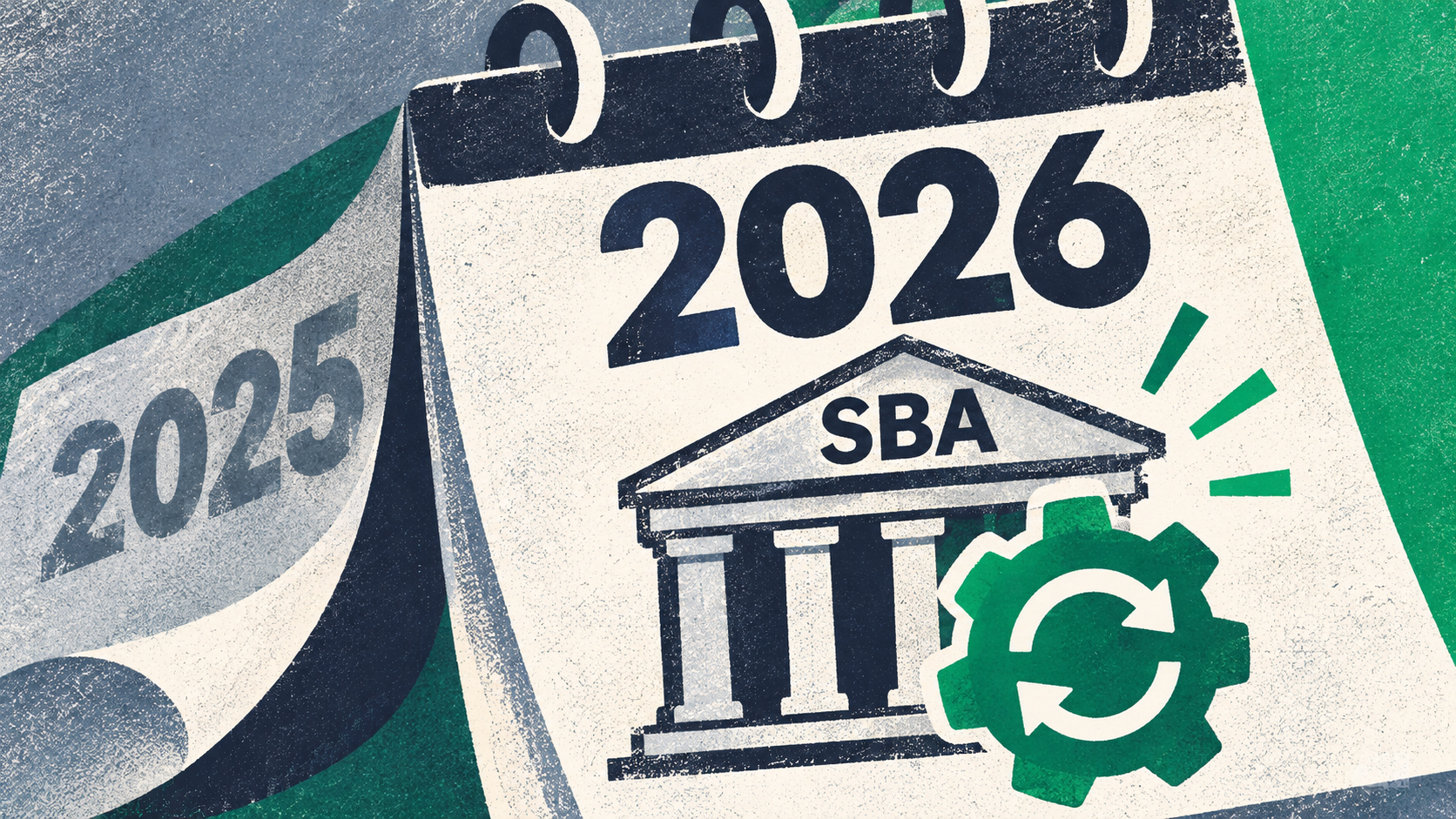
The SBA lending landscape changed significantly in 2026. New eligibility standards, underwriting procedures, expanded financing options, and technology modernization are reshaping how lenders originate loans and how brokers guide small businesses through financing. Here are the developments that matter most and what to expect heading into 2027.
The Biggest SBA Program Changes in 2026
1. Updated underwriting under SOP 50 10 8.1
Effective October 1, 2026, SOP 50 10 8.1 updated the SBA's procedures for 7(a) and 504 loans, including credit analysis, financial documentation, ownership transactions, guarantees, and refinancing. For 7(a) lending, personal financial statements and credit reports generally need to be current within 90 days instead of 120 days. Lenders also face more detailed requirements when reviewing historical and interim financial information.
For 504 loans, the minimum debt service coverage ratio increased from 1.00 to 1.15, alongside greater emphasis on global cash flow analysis. Accurate financial collection and early eligibility screening are therefore increasingly important. See the SBA SOP resources.
2. Business acquisition loans face greater scrutiny
The updated procedures distinguish initial acquisitions, business expansions, owner buyouts, and employee ownership transactions. Initial acquisitions and owner buyouts generally require 1.25 debt service coverage, compared with 1.15 for business expansions. Initial acquisitions also generally require a 10% equity injection. Qualifying ownership transactions require independent valuations, and transactions with a purchase price of $3 million or more require a Quality of Earnings report.
For business acquisition brokers, this makes pre-submission diligence especially valuable. Brokers should verify cash flow, document equity sources, assess seller financing, and flag valuation requirements before approaching lenders. Borrowers may need to budget additional time and money for diligence.
3. Citizenship and residency eligibility tightened
Beginning March 1, 2026, SBA policy required all direct and indirect owners and SBA-required guarantors of 7(a) and 504 applicants to be U.S. citizens or U.S. nationals with a principal residence in the United States or its territories. Lawful permanent residents are excluded under this policy, and the previous limited foreign-ownership exception was removed.
These restrictions can disqualify otherwise creditworthy businesses with mixed ownership structures. Lenders and brokers should confirm ownership eligibility before requesting a complete loan package.
4. Combined SBA financing can reach $10 million
Not every update tightened access. Since July 2026, qualifying businesses can combine up to $5 million in 7(a) financing with up to $5 million in 504 financing, subject to program requirements. This expanded combined limit can help businesses finance projects involving fixed assets and working capital. Manufacturers and companies investing in facilities or equipment may particularly benefit. See the SBA announcement.
5. Credit scoring, trade lending, and fees changed
The SBA began sunsetting its SBSS score requirement for 7(a) Small loans in January 2026, shifting emphasis to applicable lender credit analysis and underwriting procedures. Changes to the International Trade Loan program in May broadened lender flexibility while retaining its enhanced 90% SBA guarantee.
Fiscal year 2027 fee schedules, effective October 1, 2026, introduced targeted upfront guaranty fee relief for certain qualifying loans of $700,000 or less in manufacturing, food supply chain, and rural categories, alongside separate relief for eligible veteran-owned SBA Express loans. Lenders should confirm the specific eligibility and fee notice before quoting borrower costs.
How the Changes Impact Lenders, Brokers, and Small Businesses
For lenders: More detailed credit files and eligibility checks can increase processing work, but expanded financing options also create new origination opportunities. Configurable underwriting rules, reliable document collection, and audit trails help teams apply the current SOP without slowing every deal.
For brokers: Prequalification matters more than ever. Identifying ownership issues, acquisition documentation gaps, and cash flow concerns early can reduce unnecessary submissions and match applicants with appropriate lenders and financing structures.
For small businesses: Some applicants gain access to larger financing packages or targeted fee relief. Others face stricter ownership requirements, more documentation, or higher underwriting thresholds. Current financial statements, ownership records, and realistic debt-service projections can make applications more predictable.
What SBA Lenders Should Expect in 2027
A major upcoming development is the SBA's Intelligent Capital Access Platform (iCAP), announced November 5, 2026. The platform introduces real-time application validation, dynamic documentation requirements, shared lender-reviewer workflows, transaction tracking, and integrated fraud screening. It is intended to modernize legacy loan origination processes in phases.
The SBA's announced schedule anticipates iCAP origination access for all lenders by January 1, 2027, a new 7(a) origination API in December 2026, and migration from the ETRAN origination interface by June 2027. The SBA also identifies 504 origination, servicing, and liquidation as future roadmap priorities, not completed capabilities. Read the iCAP announcement.
Beyond these milestones, lenders should prepare for further implementation guidance rather than assume additional eligibility or fee changes are finalized. Teams that can update intake forms, decision rules, and integrations quickly will be better positioned as requirements evolve.
How Lending Technology Can Help Teams Adapt
SBA lending increasingly depends on accurate data, flexible workflows, and faster coordination among borrowers, brokers, and lenders. Lendflow helps lending teams centralize applications, collect and validate documents, configure scorecards, automate borrower follow-up, and route deals across lender programs. Its AI-enabled workflows can reduce manual coordination while leaving underwriting decisions and regulatory responsibility with the lender.
For lenders expanding SBA operations and brokers managing complex acquisition or commercial financing requests, the goal is not to bypass new requirements. It is to identify issues sooner, eliminate duplicate work, and create a clearer experience for small businesses. Learn more about Lendflow.