[.green-span]How to Speed Up Loan Approvals Without Adding Credit Risk[.green-span]
Slow approvals cost lenders good applicants. This guide shows how to speed up loan approvals stage by stage, with a risk check paired to every fix.
How lenders speed up loan approvals
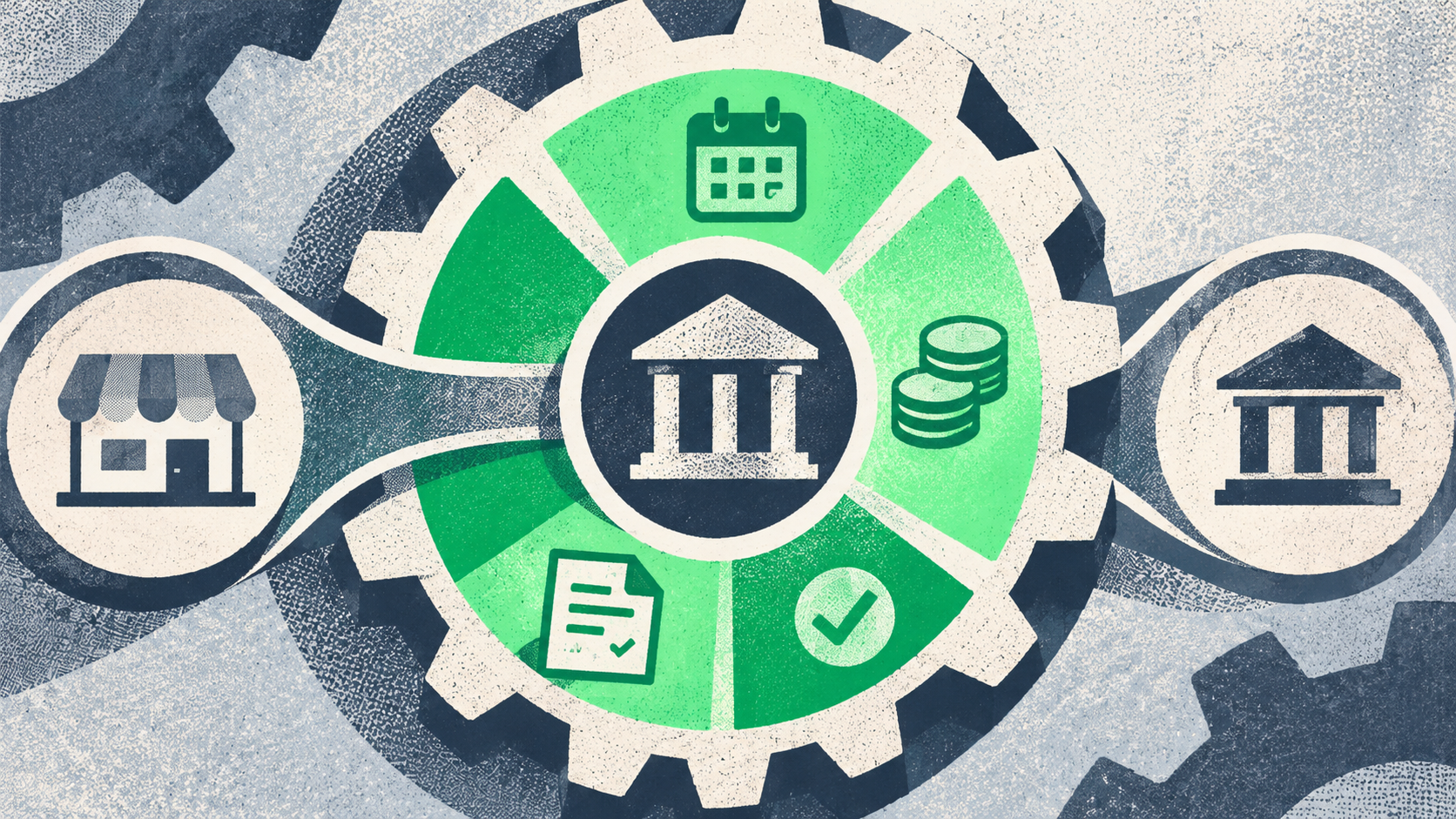
Lenders speed up loan approvals by removing five bottlenecks: application friction, document collection, manual verification, underwriter queues, and funding handoffs. Fix each one with soft-pull prequalification, connected data, automated decision rules, and exception routing. Then track a risk metric next to every speed metric, so faster never quietly means riskier.
42% faster speed to funding: Lendflow reports that pre-qualified offers hosted on its platform drive this average gain.
Speed now shapes which lender a borrower picks. Federal Reserve research shows online lender applicants prioritize speed, with nearly two-thirds naming speed of decision or funding as their top priority.
More firms are applying at those lenders, too. The Federal Reserve Small Business Credit Survey found the share of applicants using online lenders rose from 17% in 2020 to 29% in 2025. The survey covers small employer firms and uses a weighted convenience sample.
Find where time to decision is lost
Time to decision is the time between a submitted application and a yes, no, or counteroffer. The ICE Mortgage Monitor found the average purchase loan took 36.8 days to close in March 2026.
Only 11 of those days ran from application to rate lock, and 26 more came after it. ICE tracks mortgages only, but the lesson carries over: measure each stage, and the real delay shows up.
Application, documents, and verification
The first three stages slow down for simple reasons. Long forms make borrowers stop and come back later. Small errors cause rework, like a business name that doesn't match its EIN (the tax ID the IRS gives a business).
- Application friction: Long forms ask for data the lender could pull from other sources. Each extra field gives the borrower another reason to quit.
- Document collection: Borrowers upload PDFs that arrive expired, partial, or hard to read. Staff then rekey the numbers by hand.
- Manual verification: Teams run KYC (know your customer) and KYB (know your business) checks one at a time. Each check waits for someone to open the file.
Underwriting queue and funding
The last two stages stall when every file waits for a person. In a manual setup, clear approvals and clear declines sit in the same underwriter queue as hard cases. McKinsey's lending revolution analysis put average time to decision at traditional banks at three to five weeks for small business and corporate loans.
That figure dates from 2018 and draws mostly on European banks. Treat it as a manual baseline, since it isn't a current US benchmark.
- Underwriter queue: Simple files wait behind complex ones. The line grows fastest when volume spikes.
- Missing-item loops: An underwriter spots a gap, emails the borrower, and waits. Each round trip restarts the clock.
- Funding handoffs: E-sign, final checks, and disbursement often run in separate systems. Approved borrowers wait while staff pass the file along.
Match every bottleneck to a fix and a risk control
Each delay has a common cause and a matching fix. Each fix also needs a risk control, so the loan approval process gets faster without raising losses.
Read each row left to right. If you can't name the risk control, the fix isn't ready to launch.
Prequalify early with soft pulls and instant data connections
$1.5B+ in offers: That's how much was offered on Lendflow's platform in the last 12 months (as of March 2025). Pre-qualified offers are the source of the 42% faster speed to funding noted above.
A soft pull is a credit check that doesn't affect the borrower's credit score. A hard pull is a full credit inquiry that other lenders can see, and it can lower the score slightly. Lendflow's guide to soft-pull prequalification covers the differences in more detail.
Prequalification uses a soft pull and basic business data to estimate fit before the full application. Skip the long form for borrowers who won't qualify—use prequalification to route good fits to the right product first.
A decline waterfall sends a declined applicant to the next lender or product that may fit. Lendflow's Data Orchestration lets lenders connect with top integration partners in minutes and build decline waterfalls, so no deal is left on the table.
Replace document uploads with connected data
Connected data means the borrower links an account, and the lender pulls records straight from the source. Skip PDF bank statements—use direct connections to get current, machine-readable data.
- Bank data: Shows deposits, balances, and cash flow without statement uploads.
- Accounting data: Shows revenue, expenses, and receivables straight from the books.
- Bureau data: Shows credit history from consumer and business credit bureaus.
Some files will still arrive as documents, such as tax returns. For those, automated document data extraction tools like Lendflow's Doc Analyzer identify, classify, and pull data from tax returns, bank statements, and invoices.
Cash flow underwriting means judging a borrower by the money moving through their accounts, alongside credit scores. In FICO's UltraFICO announcement, FICO reports a 7% relative increase in approvals with no incremental risk. That result is FICO-reported and covers consumer credit, so test it on your own book first.
Rules for consumer-permissioned data are still in flux. Section 1033 of the Dodd-Frank Act gives consumers a right to access their financial data. Per the CFPB personal financial data rights page, the agency issued a final rule on October 22, 2024.
The CFPB opened a reconsideration of that rule on August 22, 2025. Check the rule's current status with legal counsel before building a process that depends on it.
Connected data works best inside one borrower flow. A digital borrower checkout experience like Lendflow's Borrower Platform keeps data links, document checks, progress tracking, and e-sign in one place.
Automate decision rules and route only exceptions to underwriters
80% smaller teams: Lendflow's embedded finance customers run with 80% smaller teams while converting similar funding volumes.
Auto-decision means software approves or declines an application using set rules, with no human review. Exception routing sends only the unclear files to an underwriter.
The same 2018 McKinsey analysis found that in the most sophisticated examples, 70% to 80% of SME (small and midsize business) decisions were fully automated. The rest were routed to credit review.
- Write three outcomes: Set clear rules for approve, decline, and refer. Refer covers anything the rules can't settle.
- Backtest before launch: Run the rules on past applications and compare them to real outcomes. The same McKinsey analysis describes backtests where an automated engine predicted default risk better than human reviews.
- Route edge cases to people: Send thin files, policy exceptions, and fraud flags to underwriters. Their time goes to cases that need judgment.
- Automate follow-up: Let AI agents request missing items and remind borrowers. Underwriters stop chasing paperwork.
An automated credit decisioning engine runs these rules on banking, business credit, and fraud data. Lendflow Automate adds AI lending operations automation for document handling, routing, and borrower follow-up.
For step-by-step mechanics, see our guide to underwriting automation that speeds funding. Building an engine in-house takes time and engineering staff, so weigh the trade-offs in our guide to build vs. buy decisioning.
Measure speed and quality together
A faster process only helps if loans still perform. Pair every speed metric with a risk or quality metric, and review both on the same schedule.
A few terms help here. Early default means a loan goes delinquent in its first months, and first-payment default means the borrower misses the very first payment. Override rate is the share of automated decisions a person reverses, and pull-through rate is the share of approved borrowers who actually fund.
Set a baseline for each pair before you change anything. Then change one stage at a time, so you know which fix moved which number.
Checklist: how to speed up loan approvals in 30 days
This plan turns the guide into a first month of work. Each step builds on the one before it.
- Measure each stage: Log the time spent in application, documents, verification, underwriting, and funding. Start with the slowest stage.
- Set paired metrics: Record a baseline for time to decision, auto-decision rate, override rate, and early default.
- Add prequalification: Put a soft-pull check before the full application. Send declines into a decline waterfall.
- Connect data: Replace bank statement uploads with direct bank and accounting connections.
- Write and backtest rules: Draft approve, decline, and refer rules. Test them on past files before launch.
- Route exceptions: Send only referred files to underwriters, and automate missing-item follow-up.
FAQ
These short answers recap the core questions behind faster approvals. Each one ties back to a fix from this guide.
How can lenders speed up loan approvals?
Lenders speed up approvals by prequalifying with soft pulls, swapping uploads for connected data, automating clear decisions, and routing only exceptions to underwriters. They also track a risk metric beside each speed metric.
What slows down loan approval most?
The slowest stage differs by lender, so measure each one before you fix anything. Manual underwriter queues and missing-document loops are frequent causes.
Does faster approval increase default risk?
It can if rules are loose or untested. Backtest rules on past loans, then watch early default and override rates after launch.
What is the difference between prequalification and pre-approval?
Prequalification is an early estimate of fit, usually based on a soft pull and basic data. Pre-approval is a firmer conditional offer that usually follows a hard pull and verified information.
How does automated underwriting work?
Automated underwriting applies set rules to credit, bank, and business data to approve, decline, or refer each application. Referred files go to a human underwriter for review.
What is a good auto-decision rate?
There's no single target, since it depends on your product, data, and risk appetite. Raise it step by step, and only while override and early default rates hold steady.
Launch faster approvals in days with Lendflow
Skip long build cycles—use Lendflow's widgets, landing pages, and APIs to launch embedded lending in days. Book a demo or talk to our team to see how Lendflow can help you scale smarter.