[.green-span]Now Available: Lendflow's Commercial Real Estate Financing Workflow[.green-span]
Commercial real estate financing involves evaluating both the property and the borrower. Property value, occupancy, rental income, loan-to-value ratios, and sponsor liquidity all influence lending decisions. For brokers, coordinating this information across lenders can mean extensive paperwork and follow-up. Lendflow's new Commercial Real Estate Financing Workflow simplifies the process with a guided digital application, centralized document collection, and access to lender offers. It supports acquisitions, refinancing, and construction financing requests.
A Dedicated Financing Experience for Commercial Real Estate
The workflow supports owner-occupied and investment properties, with potential SBA 504 and conventional financing options depending on eligibility and lender availability. Brokers can use Lendflow's white-label capabilities to deliver a branded experience to their customers while managing financing requests through one platform.
Step 1: Select Commercial Real Estate Financing
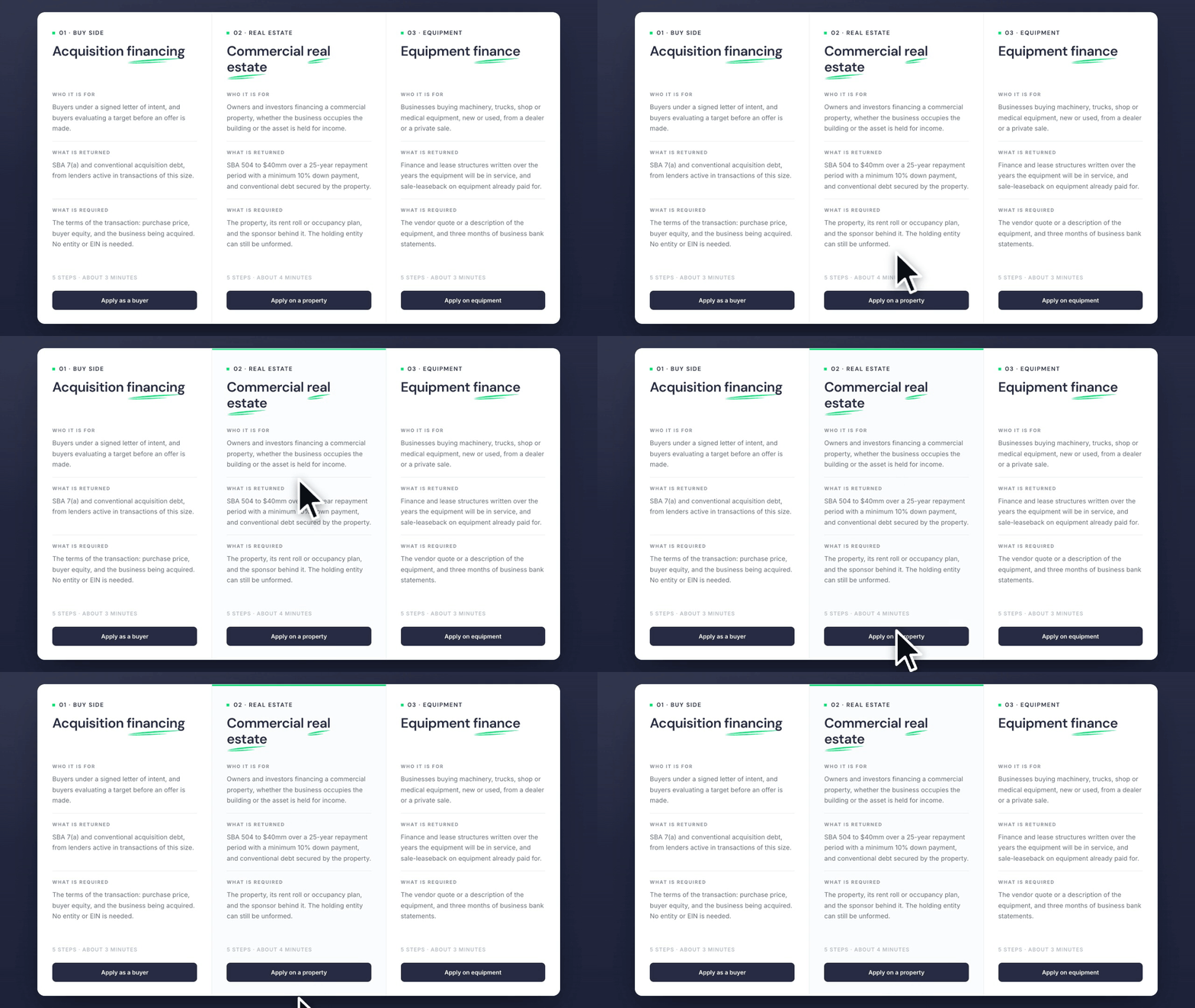
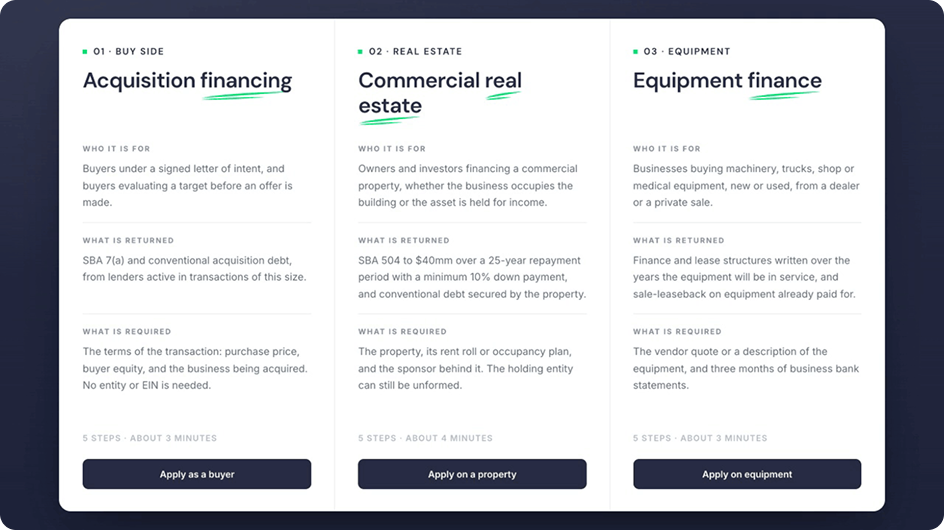
Applicants begin by choosing commercial real estate financing alongside acquisition and equipment financing. The selection screen explains who each product serves, the types of financing available, and what applicants need to get started.
Step 2: Enter Property and Transaction Details
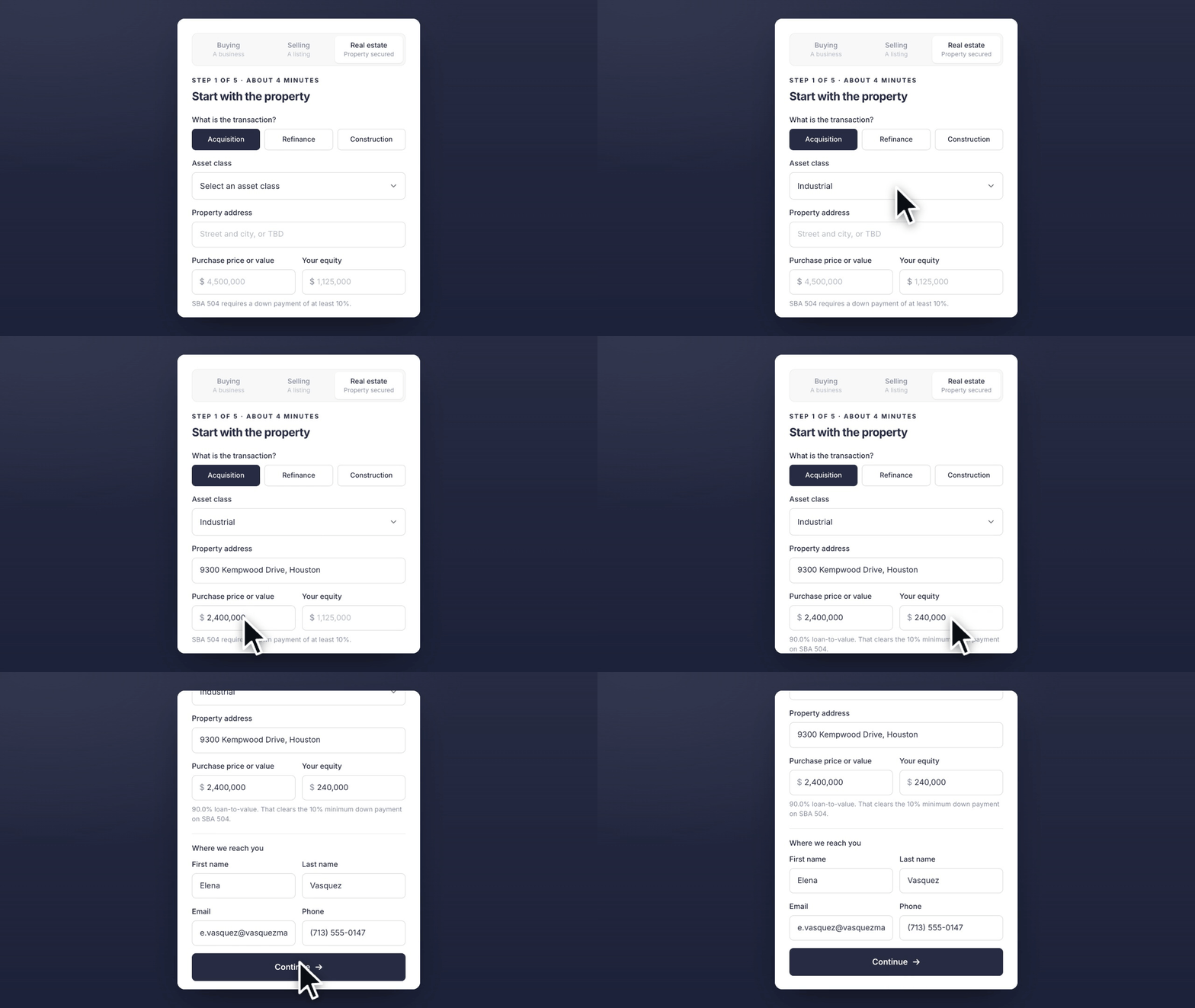
The borrower selects acquisition, refinance, or construction and enters the property asset class, address, purchase price or value, and available equity. The application provides contextual guidance, including down payment information for certain programs.
Step 3: Provide Asset and Occupancy Information
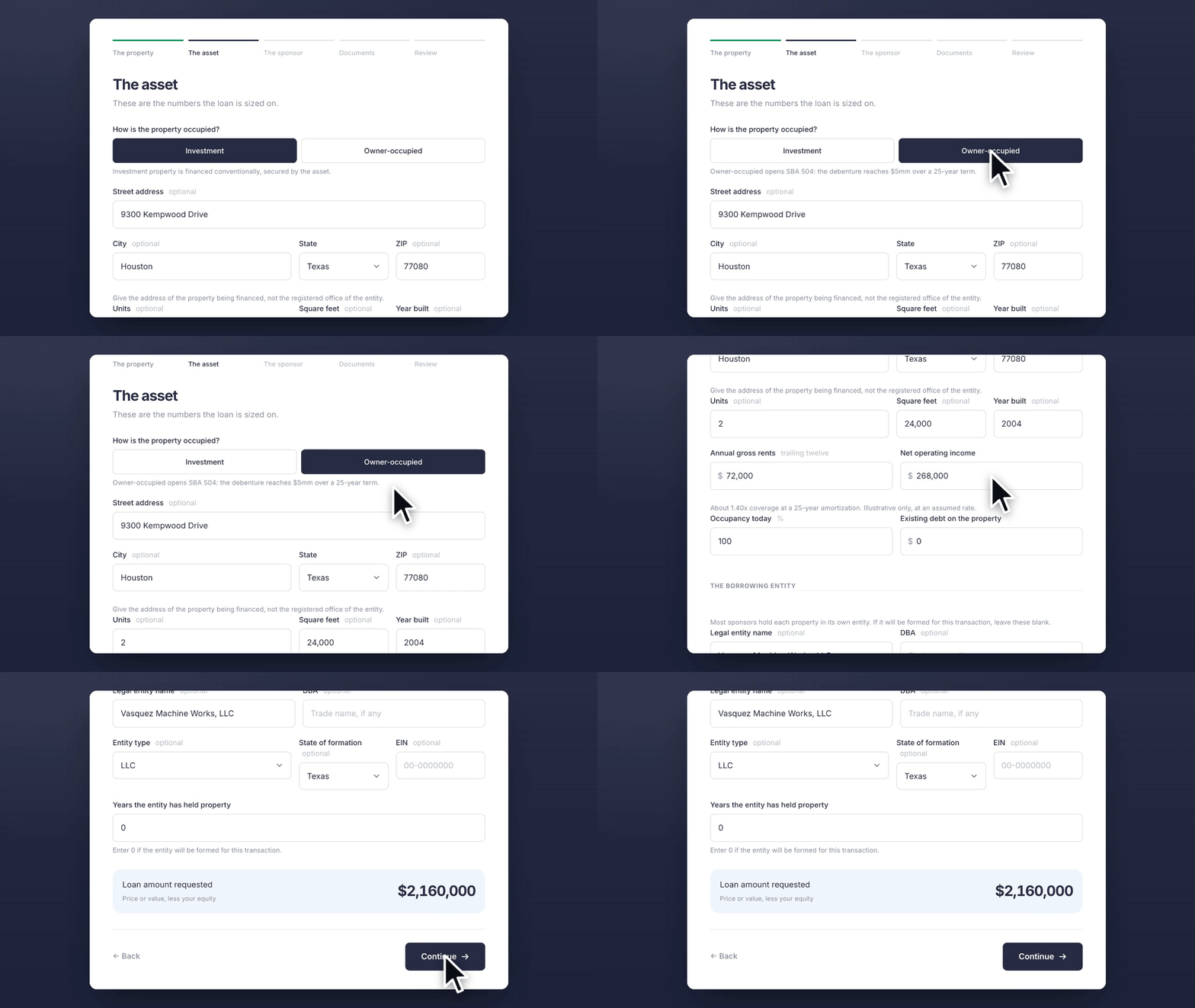
Applicants identify whether the property is an investment or owner-occupied asset. They can provide property location, units, square footage, and year built to help lenders evaluate the asset and its intended use.
Step 4: Capture Sponsor and Guarantor Qualifications
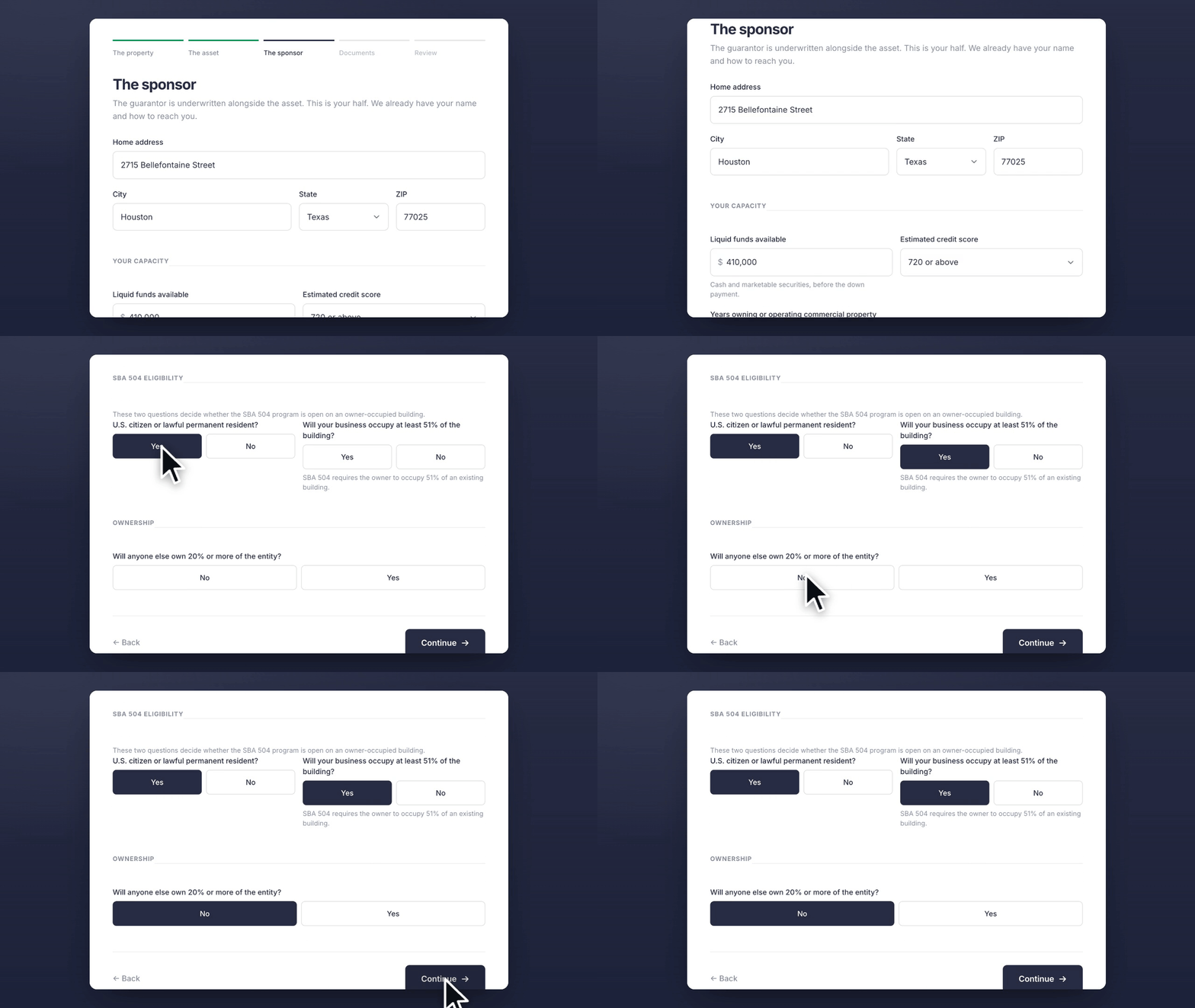
The application collects sponsor details, including residential address, liquid funds available, and estimated credit score. These details help lenders assess the guarantor's financial capacity alongside the property's characteristics.
Step 5: Upload Supporting Financial Documents
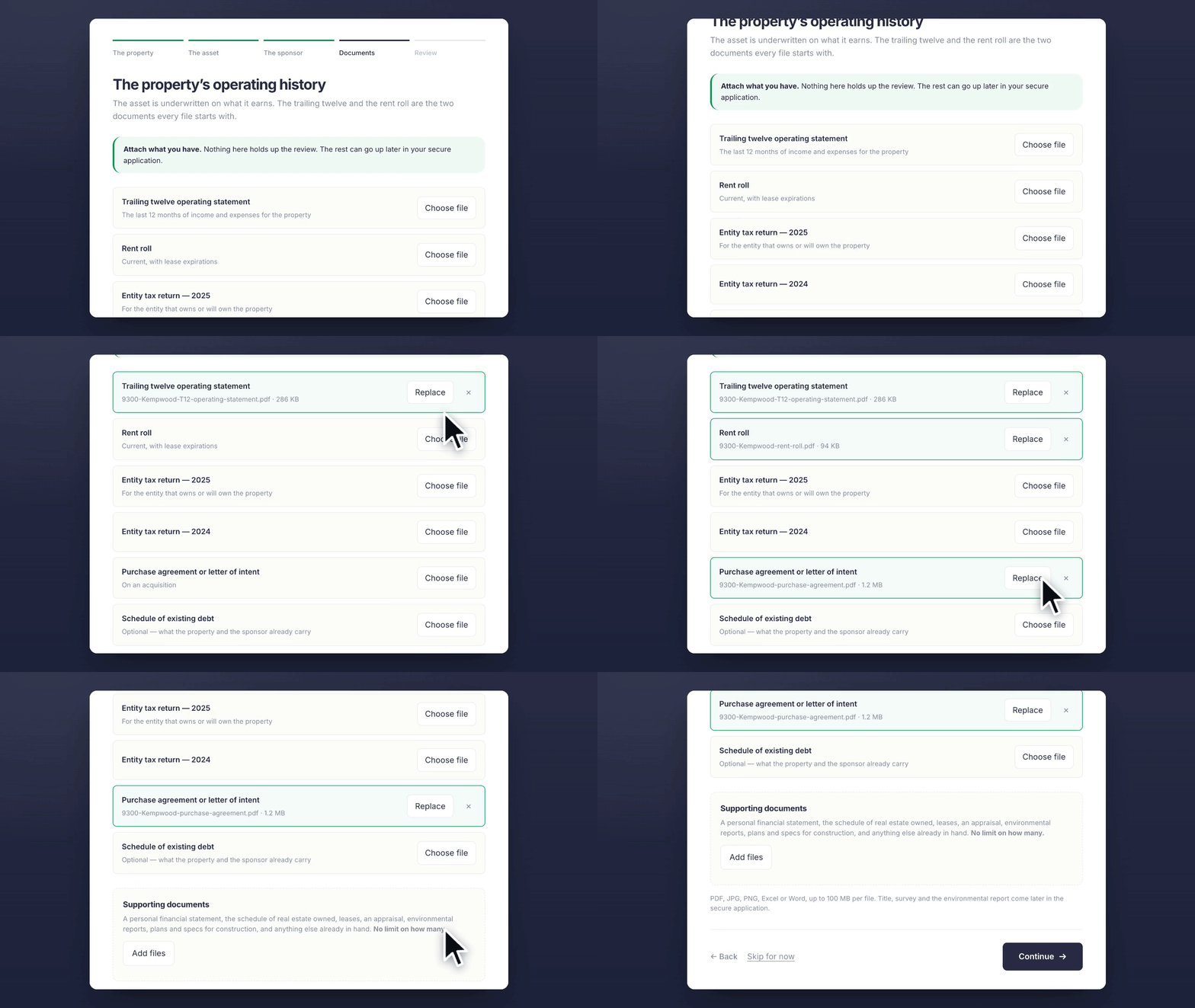
Applicants can attach trailing twelve-month operating statements, current rent rolls, entity tax returns, and other financial documents. Missing documents can be supplied later through the secure application portal, allowing the initial review to move forward without waiting for every file.
Step 6: Review and Submit the Financing Request
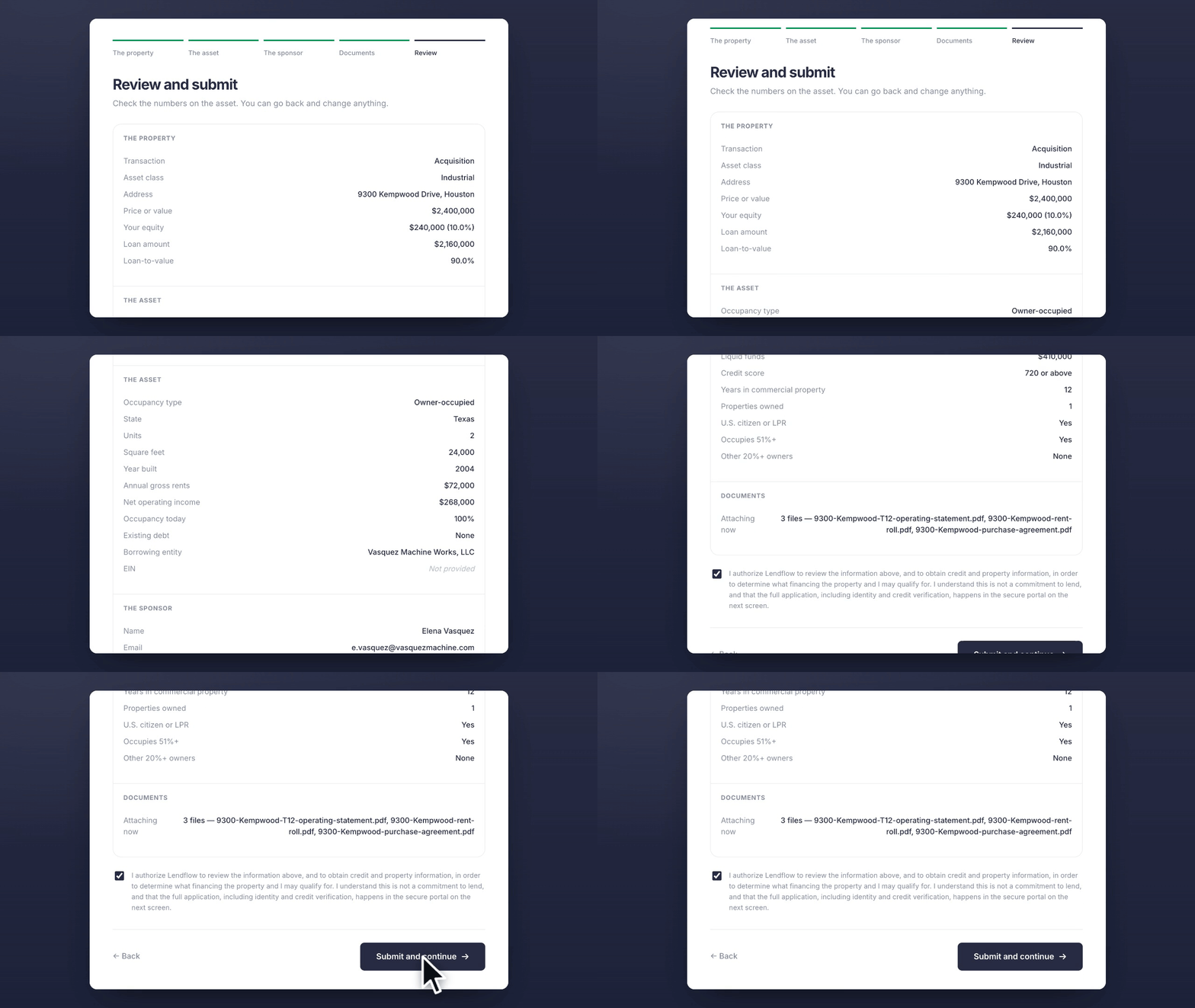
Before submitting, applicants review their transaction details in a consolidated summary, including property value, equity, loan amount, and loan-to-value ratio. They can go back and correct information before submitting.
Step 7: Connect With Lending Partners
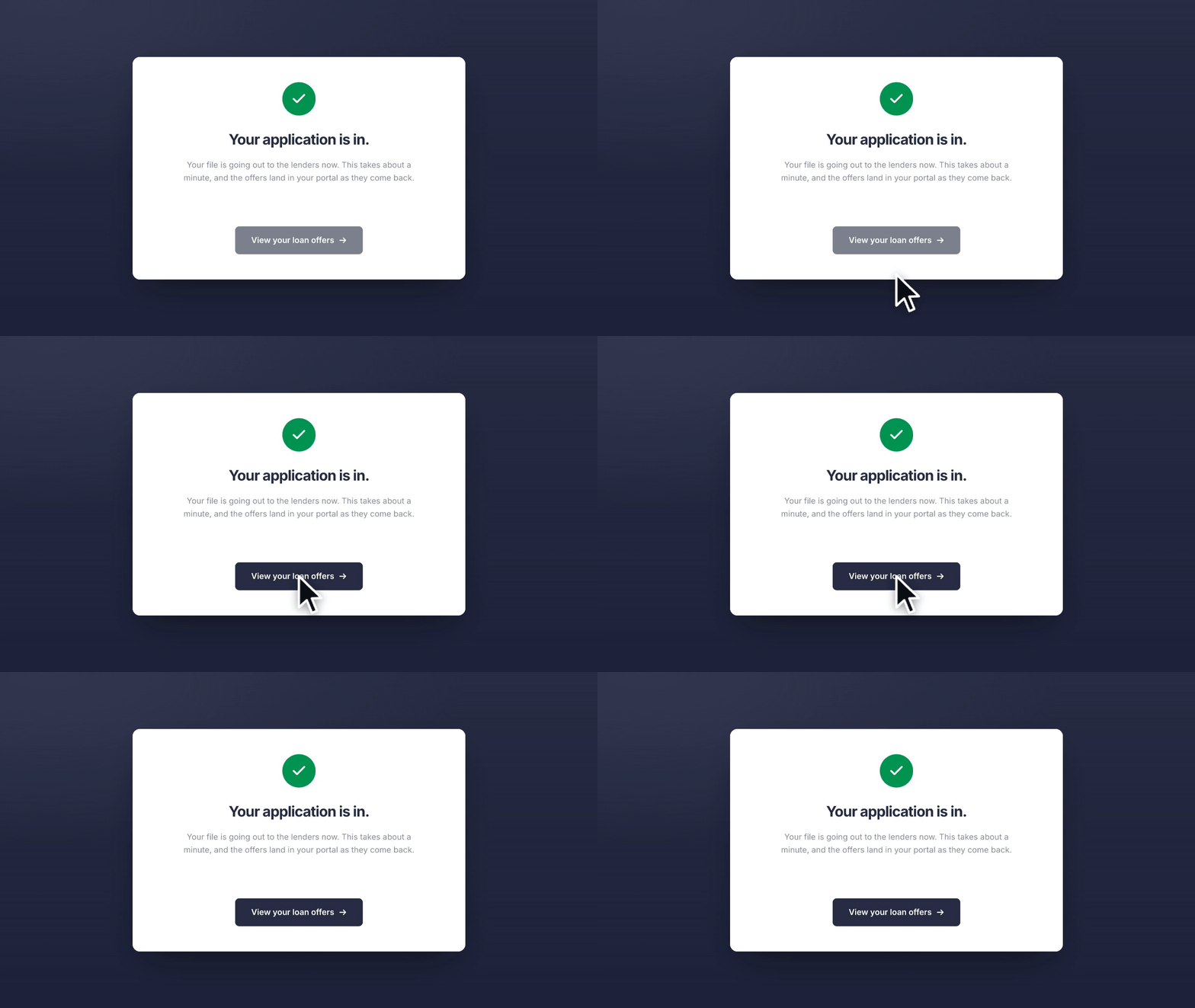
After submission, Lendflow moves the financing request into its lending workflow. Applicants receive confirmation and can use their portal to track next steps, while brokers avoid managing separate application processes for each lender.
Step 8: Review Financing Offers in One Portal
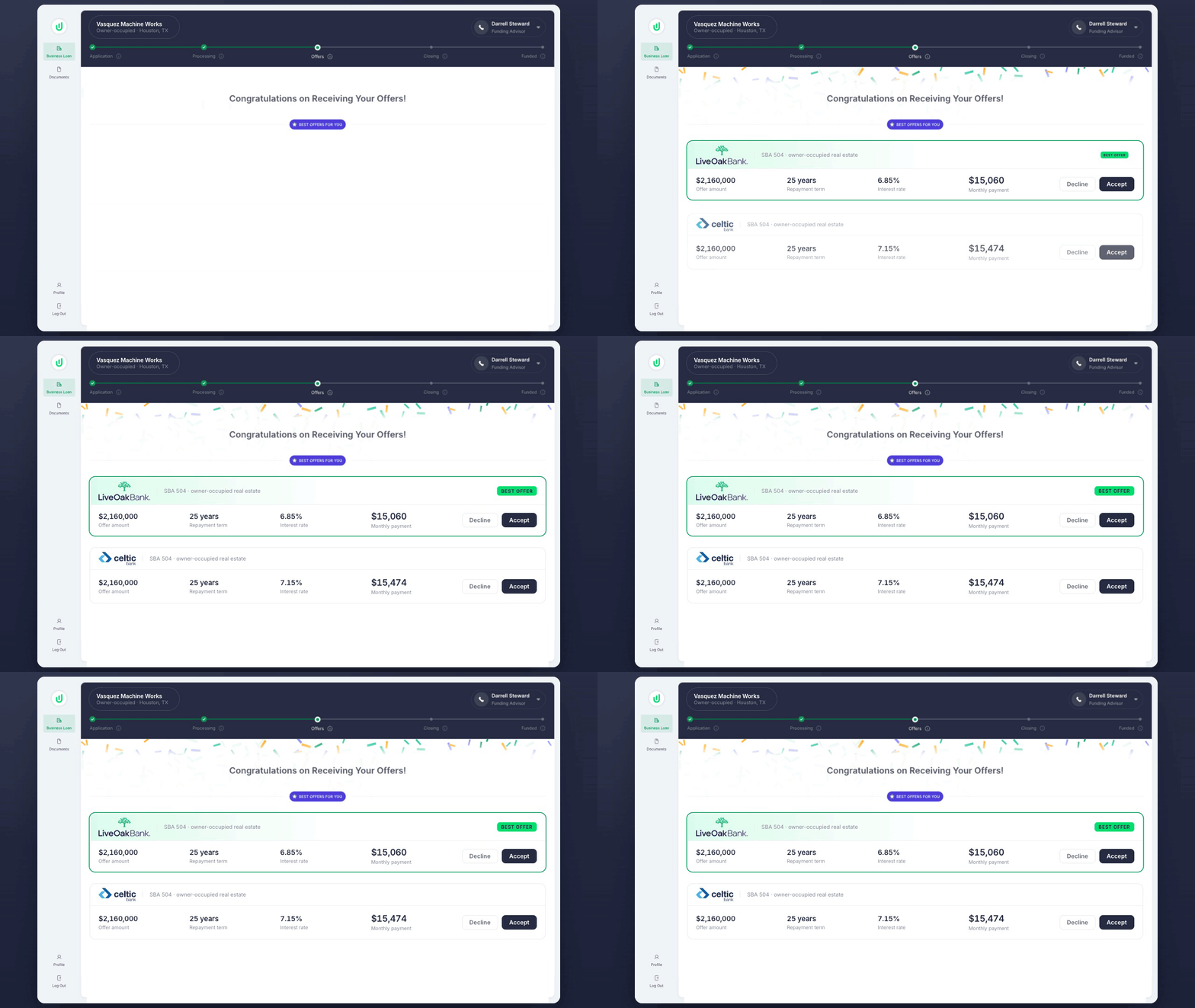
As eligible offers become available, borrowers can review financing options through Lendflow's Borrower Platform. The portal centralizes offers, application progress, and documents. Offer terms and timing depend on lender review and transaction specifics.
Helping CRE Brokers Scale With Less Manual Work
Managing CRE financing across emails, disconnected applications, and manual document requests can slow down transactions. Lendflow consolidates application intake, document collection, lender connectivity, and offer management into one workflow, allowing brokers to focus on customers and closing transactions.
Get Started With Lendflow
Lendflow's Commercial Real Estate Financing Workflow gives brokers and financing partners a more organized way to manage property-backed lending. Contact the Lendflow team to learn more about available financing options, white-label capabilities, and how to bring the workflow to your customers.