[.green-span]Credit Data APIs: A Guide for Lenders and Fintechs[.green-span]

For lenders and fintechs, the API is the delivery mechanism. The larger challenge is deciding which data to retrieve, how to normalize it, when to pull it, and how it should influence a credit decision.
What information can a credit data API return?
Available information depends on the bureau, product, permissible purpose, and whether the applicant is a consumer or business. Common fields include:
- Credit scores and reason codes
- Open and closed tradelines
- Payment history and delinquencies
- Balances, limits, and utilization
- Inquiries and account age
- Collections, bankruptcies, or other reportable records
- Commercial payment experiences and business risk attributes
Major bureaus expose credit products through developer or integration channels. For example, Experian's developer portal includes consumer credit profile and business decisioning products, while available use cases and contracts differ by product.
Direct bureau API vs. unified credit data API
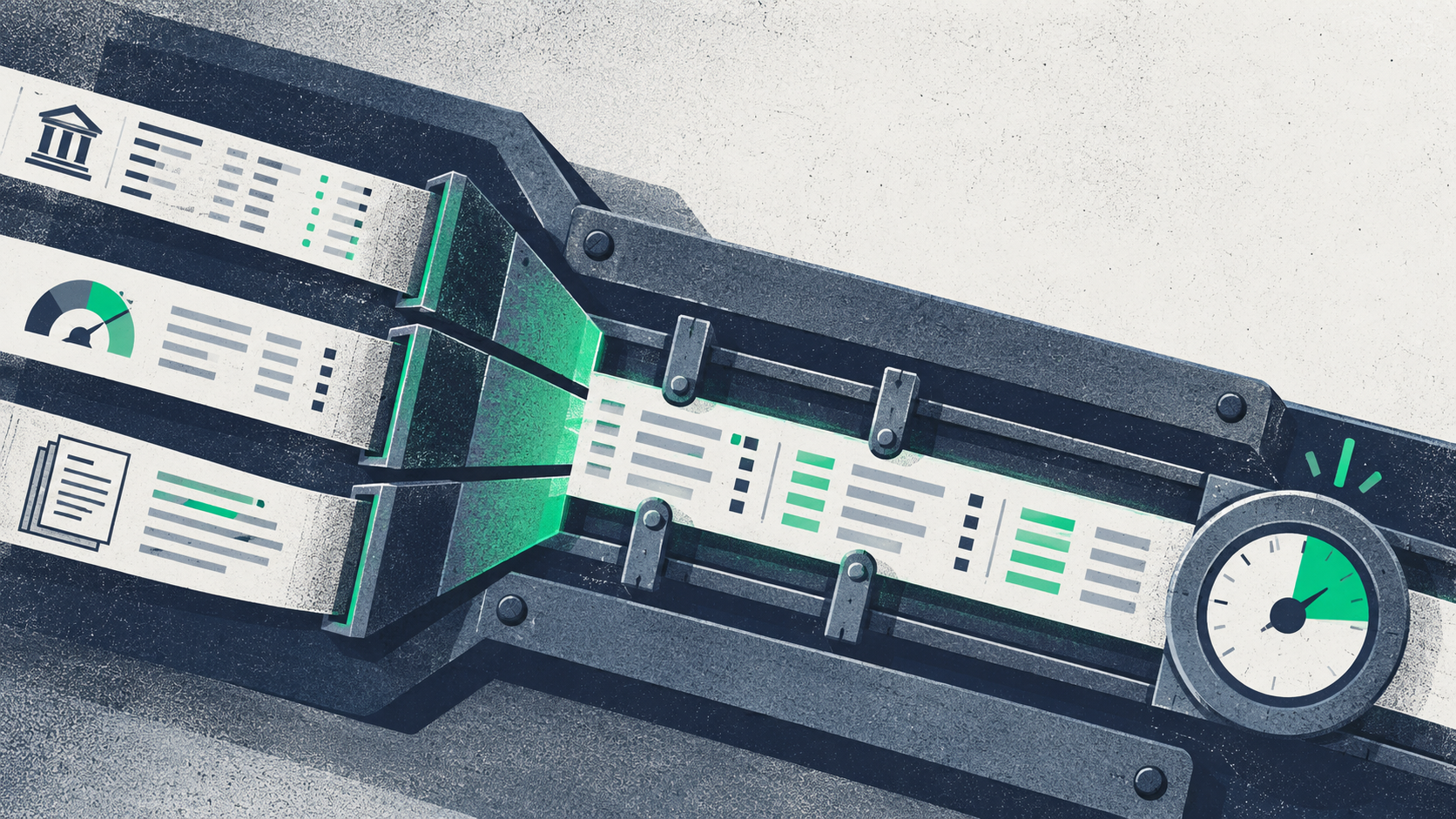
Lenders can integrate directly with a bureau or use an aggregation layer that provides access to multiple sources.
<table> <thead><tr><th>Factor</th><th>Direct bureau integration</th><th>Unified credit data API</th></tr></thead> <tbody> <tr><td>Connections</td><td>Separate build for each bureau</td><td>One primary integration</td></tr> <tr><td>Schemas</td><td>Provider-specific formats</td><td>Normalized response</td></tr> <tr><td>Contracting</td><td>Direct provider relationships</td><td>Potentially consolidated</td></tr> <tr><td>Control</td><td>Maximum direct control</td><td>More orchestration flexibility</td></tr> <tr><td>Maintenance</td><td>Owned per integration</td><td>Managed through an infrastructure layer</td></tr> </tbody> </table>
Direct integrations can make sense for high-volume teams with established bureau relationships and specialized requirements. A unified API can be useful when speed, normalization, multi-provider access, and lower maintenance are higher priorities.
How credit data fits into underwriting
Credit history is usually one component of a broader risk view. Consumer credit may help a small business lender understand an owner's repayment behavior, while commercial credit can show the business's payment performance and obligations. Bank and accounting data add a more current view of cash flow and financial capacity.
A workflow might first verify the applicant and basic eligibility, then pull a soft inquiry for prequalification and reserve a hard inquiry for a later stage when appropriate. The exact sequence should align with the lender's product, disclosures, authorizations, and compliance program.
What to evaluate in a credit data API
Coverage and report type
Confirm whether the API supports consumer, commercial, single-bureau, multi-bureau, soft-pull, hard-pull, prescreen, monitoring, or other required use cases. Similar-sounding products may have very different authorized uses.
Normalization and documentation
Clear schemas, stable field definitions, test environments, error handling, and versioning can materially affect implementation. For multi-bureau strategies, normalization prevents every decision rule from needing separate logic.
Workflow controls
Teams should be able to determine when a report is requested, what happens if a source is unavailable, and whether an application should proceed, retry, or enter manual review.
Compliance and explainability
Credit data access is regulated and purpose-specific. If information contributes to an adverse action, the lender must be able to provide accurate reasons required by applicable law. The CFPB has emphasized that complex technology does not remove the obligation to state specific principal reasons.
Security and auditability
Evaluate authentication, encryption, access controls, logging, retention, incident processes, and the provider's security program. Sensitive credit information should not be distributed more broadly than the workflow requires.
How Lendflow simplifies credit data access
Lendflow helps lenders connect credit data with the rest of their underwriting inputs. Rather than treating a bureau response as an isolated report, teams can normalize credit fields, combine them with bank, identity, business, and document data, and use them in configurable decision stages.
This lets a lender build workflows such as initial eligibility, credit evaluation, cash-flow analysis, and exception review without maintaining disconnected logic for each source. Attribute Builder and scorecards can transform raw inputs into consistent policy variables, while explainable decision outputs help teams understand which factors affected an outcome.
Planning an implementation
Before connecting production data, document the fields each credit policy actually uses and map them to the proposed response. Test thin files, frozen reports, identity mismatches, timeouts, and missing scores as carefully as successful pulls. Teams should also define who may initiate a request, how credentials are managed, which events enter the audit log, and how the workflow behaves if the primary source is unavailable. This preparation prevents a technically successful API connection from becoming an operational bottleneck.
Frequently asked questions
Can an API pull a credit report instantly?
An authorized API can often return information in real time or near real time, subject to product terms, identity matching, availability, and the required consumer permissions.
Is a credit data API the same as a credit decisioning API?
No. A credit data API supplies information. A decisioning system applies policies, rules, or models to that information.
Can one API connect to multiple bureaus?
Yes. Aggregators and some bureau products support multi-bureau access, but coverage and permitted use cases must be verified for the specific product.